10€ for each bike; border formalities…

(pictures to follow soon)

We knew that we were to expect corruption on both sides of the border so we devised a plan; good cop bad cop. I was naturally going to adopt the good cop role and Louise that of the unbending, outraged, purse holder white woman whom you don’t want to mess with…

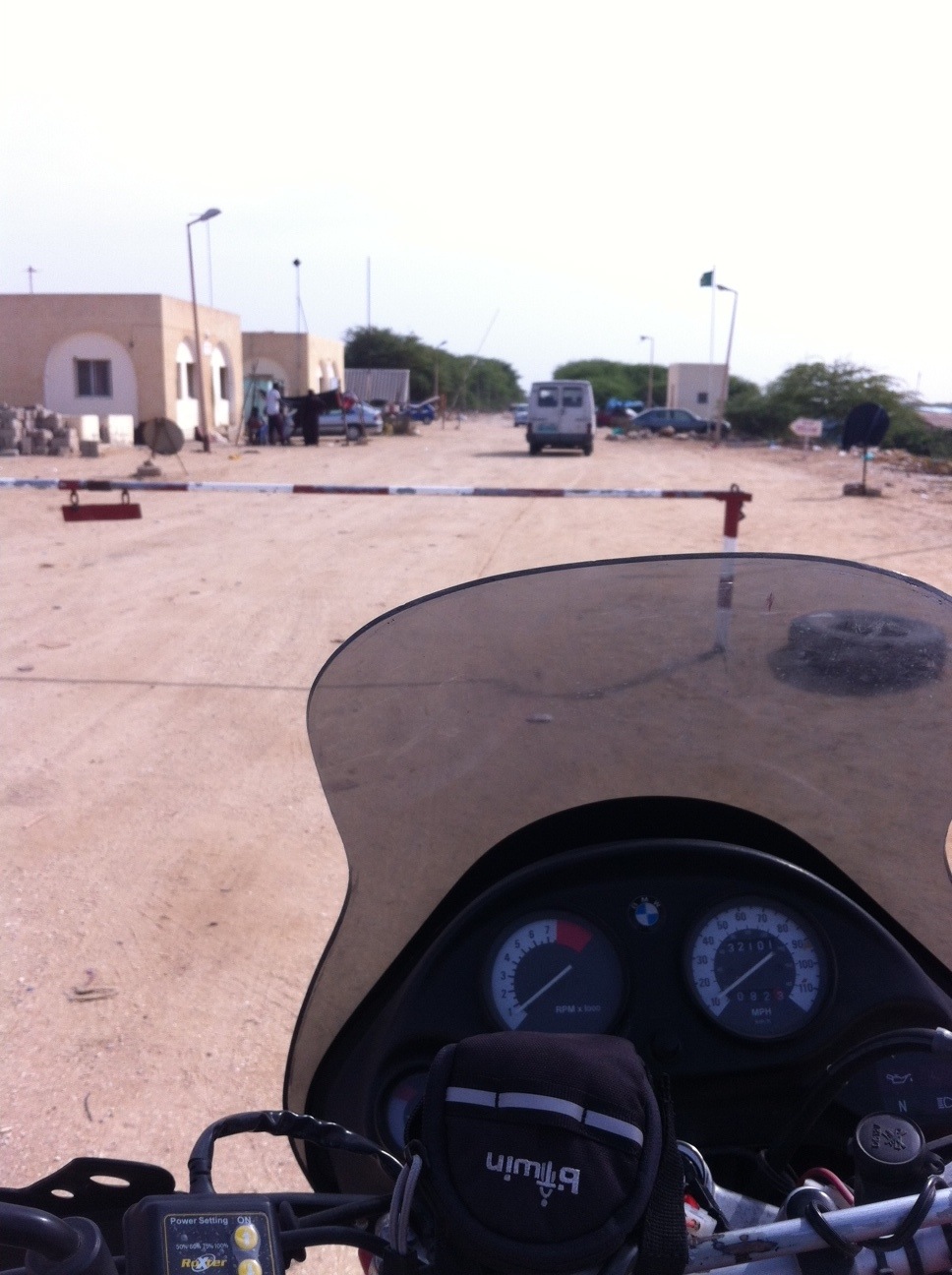
First we came across the Mauritanian gendarmerie who asked me for 10€ per bike. I was on my own because, as the man of the couple, they’d asked me to follow them into their office. I told him I knew this was corruption and he said yes, it’s not obligatory to pay but he’d be very grateful. Nice chap. So I gave him what Mauritanian currency I had left as he asked politely; the equivalent of about 2€ and he thanked me profusely.

Next was the Mauritanian customs. They needed 10€ per bike to let us out… This time Bad Cop was in charge and after much huffing and puffing, and the officer explaining that he’d “been there since 8am so he needs to be paid extra” we paid him 10€. We even got a phoney receipt for it but he wouldn’t give us a bottle from one of the many cases of wine he had stashed in his office.

The third part of the process was to deal with the Mauritanian police. In order to get our passports stamped they needed 10€ per bike… Here both bad cop and good cop were outraged; how could a respectable service like the Islamic Republic of Mauritania’s police be as corrupt as the gendarmerie and the customs?? Louise caught one of them grinning and pointed it out. In the end they said “this is the Mauritanian police, you won’t be given trouble by us, please be on your way and bonne route”. 0€.

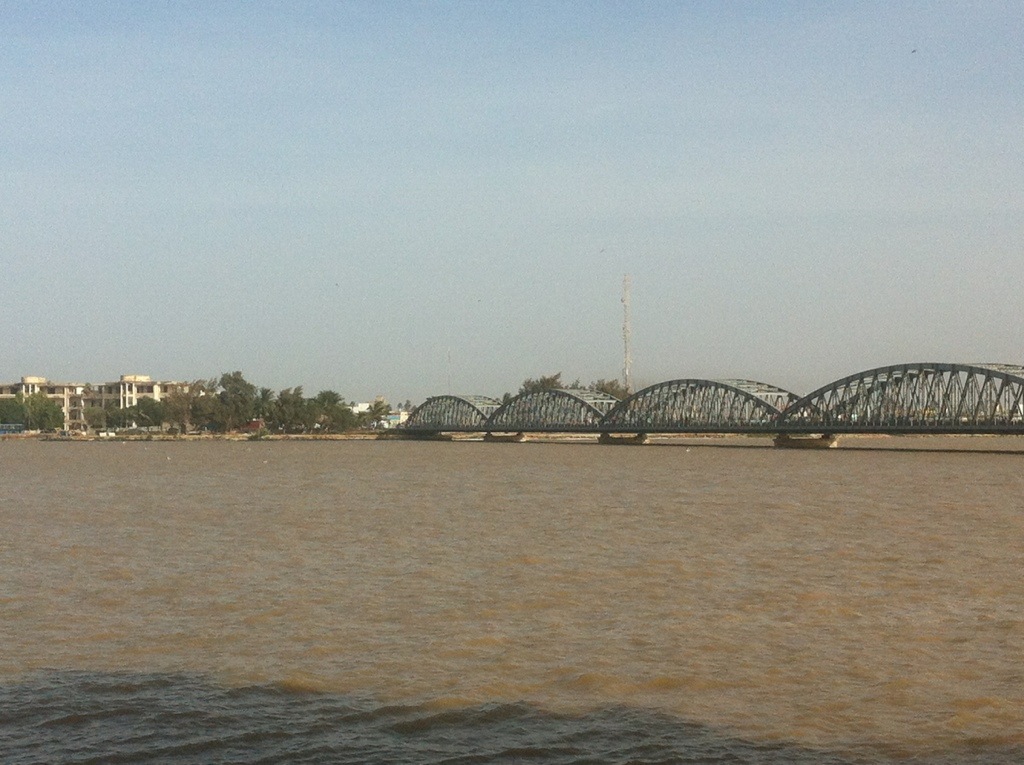
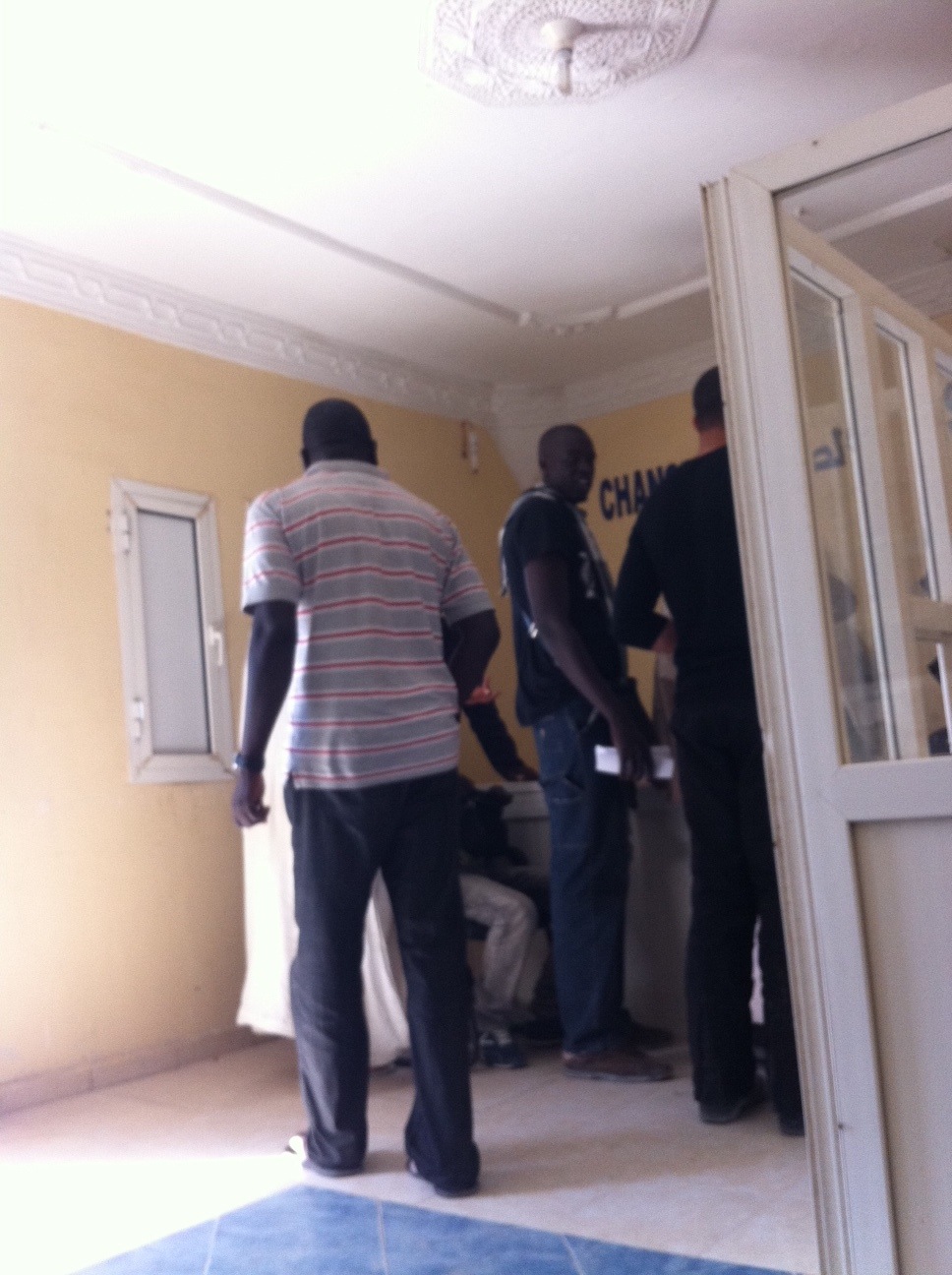
Now came the Senegalese side of the border. But first we had to pay a fee to cross the bridge. This was to be paid either in CFA or in Euro, but it was twice as expensive in Euros. We didn’t have CFA so we were shown where we could get them changed; passed the customs and police, inside the coffee shop. Here we were, walking into Senegal with no one even seeing us, let alone caring. If it wasn’t for the bikes we could have continued walking all the way to Saint Louis!

Now that the bikes were on the Senegalese side of the river we had to contend with the Senegalese police. A very official man in a football outfit watching Arsenal playing Fulham on tv. We tried to hook him by talking football but he was a nasty one. He needed 10€ per bikes to let us in. “Its official, everyone has to pay”. There seemed to be a pattern here… He wasn’t budging and after we argued about us having a reservation or not for our first night in Senegal Louise became the good cop, said we were very sorry we didn’t have a reservation, picked my passport from his desk and pushed me away. He had already stamped everything and he was missing good action on TV so we walked away without giving him a dime. We’ll done Louise! 0€.

The last official process was to get a temporary import for the bikes. This was to be done at the customs and I was concerned about this. I had read many different and conflicting tales about how, without a carnet de passage for the bikes (warranty paid at home) we could be made to pay a high price. I had also read that they didn’t give “passavants” to bikes older than 5 years old. But to our surprise the custom officer was very friendly and professional and gave us a 48h temporary import document for which he asked the equivalent of £12 for both bikes. Seemed legit to me. We had to get it prolonged in Dakar or Saint Louis as he didn’t have the authority to give us more time.

We now went back to our friend the coffee shop owner/currency exchange agent/ lady who bosses everyone around to get our very official looking insurance documents for the bikes. This lady was extraordinary, she wore a beautiful African dress with big sun glasses, two mobile phone and a calculator. She was obviously in charge as she shouted orders at the “helpers” who hung around there. She was very nice to us but she was a keen business lady. The cost of insurance for 10 days was the equivalent of 30€ for the two bikes.

We’d done it! We were in Senegal with our bikes! What a relief. And what a contrast too; the road was in perfect condition and the 30km to Saint Louis were a breeze. So many things were different on this side of the border; we saw many young men jogging along the road, lots of women (had hardly seen any since entering Western Sahara) wearing exuberantly colorful dresses and jewelry. The vegetation was lush, bananas were growing on trees, and roadside traders were selling all sorts of beautiful fruits. We were waved through checkpoints by gendarmes who gave us a welcoming salute and a big smile. After crossing Saint Louis, on our way south to the famous Zebrabar, we came across a colony of apes jumping across the road and into the bush. After weeks in North Africa and in the Sahara we were now truly in West Africa!
20121112-171110.jpg

The Diama piste shortcut…

“150km south of Nouakchott, turn right after the water tower” said one man… it took us a while to find the shortcut but did so eventually. This was after a stop to refuel in a small market village on the way. The fuel pumps looked new but weren’t working. Thankfully the owner had some barrels at the back and we bought 10 litres of his finest “sans plomb”. It was comedy though when he asked me to hold the barrel high above the bike while he sucked the petrol out of a length of hosepipe; he wasn’t very competent at this as he did get a couple of mouthfuls. What wasn’t comedy is when he spilled petrol in Louise’s helmet which was hanging upside down from the handlebar… Schoolboy error. Louise had to stop a couple of km later as she felt her forehead burning and we proceeded to wash her helmet liner with shampoo by the side of the road. 24h later her hair still had a faint petroleum scent to it. Does this make her a ‘petrol-head’?

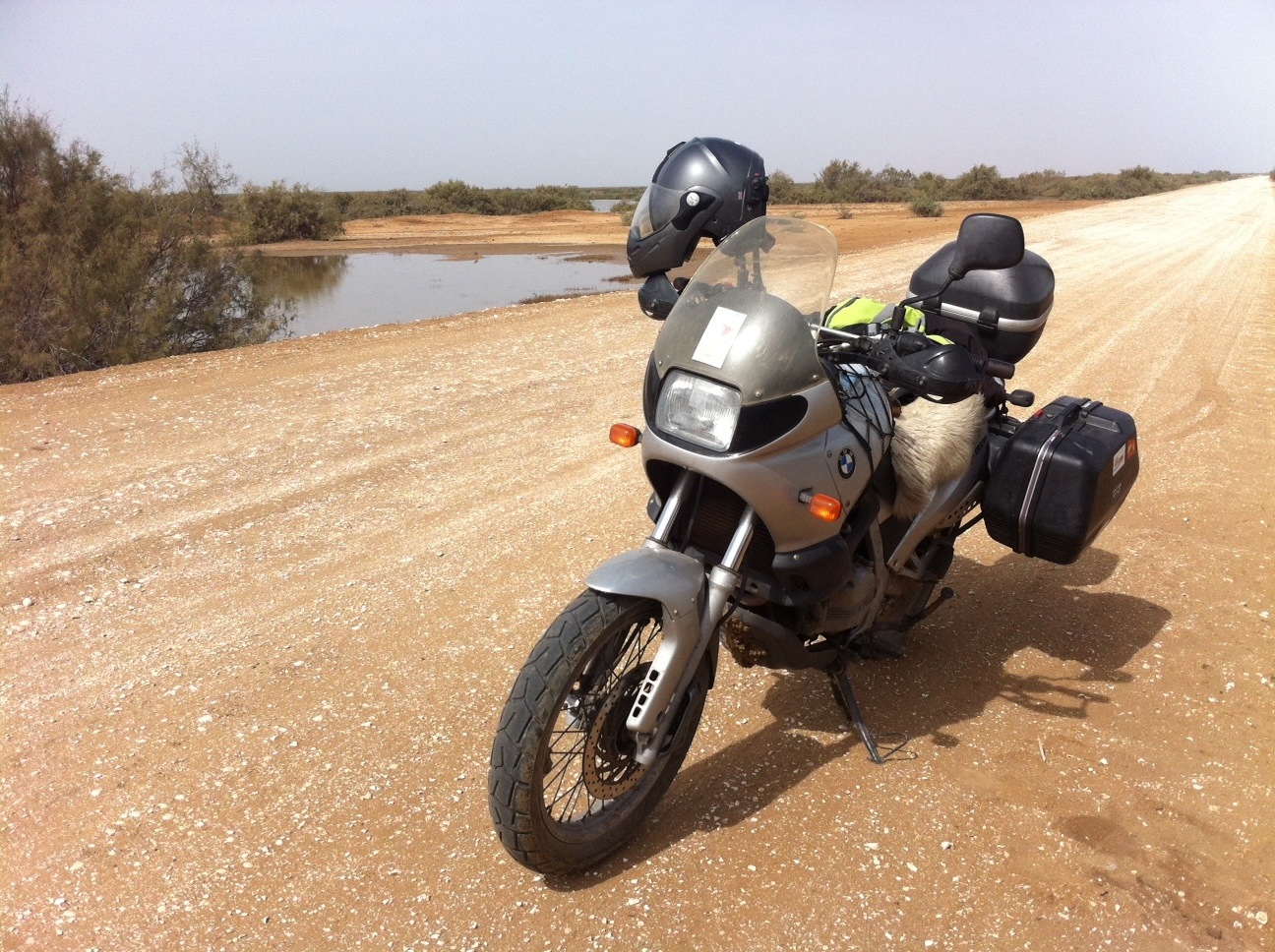
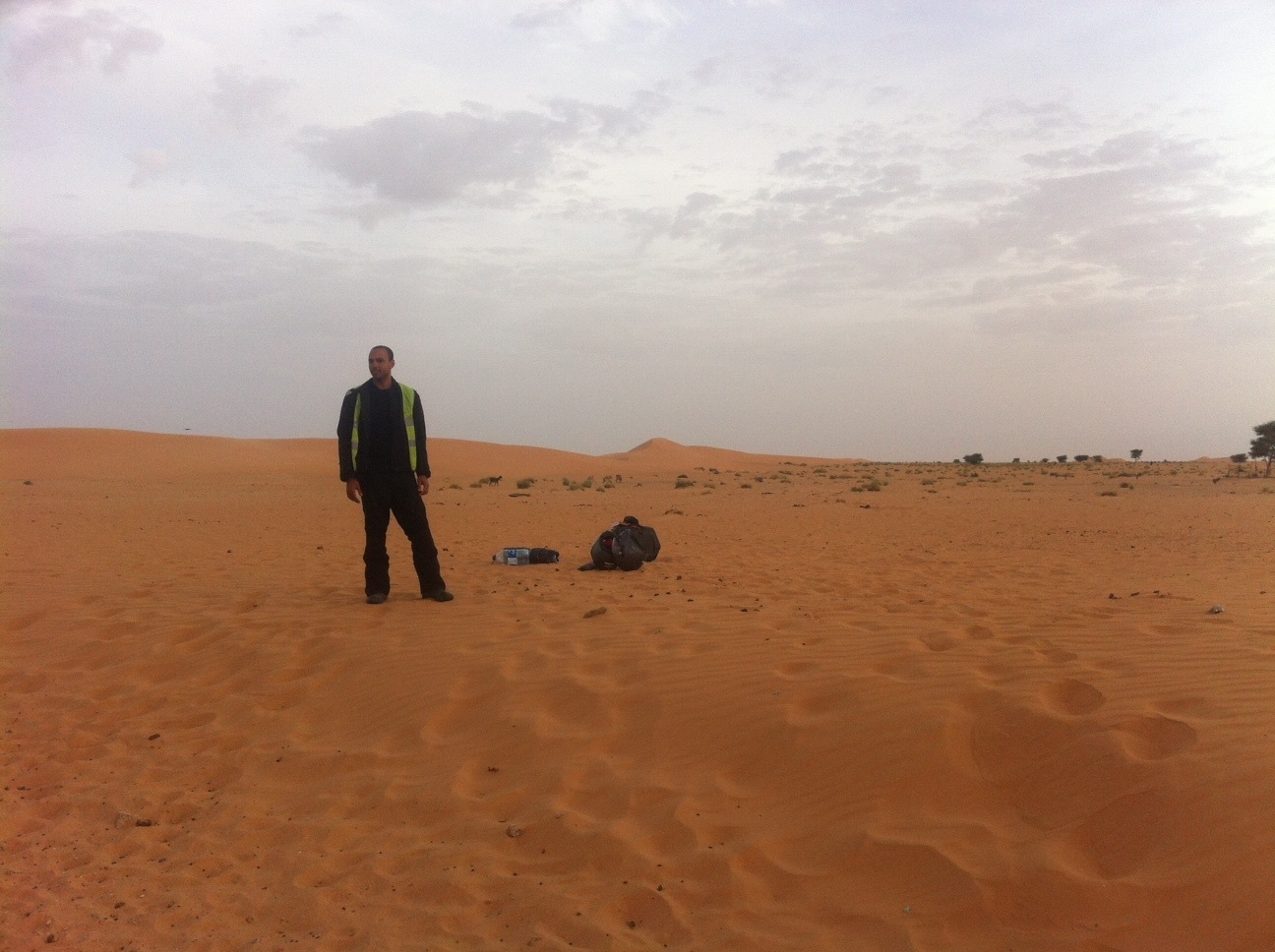
All this delayed us and we only made it to the shortcut around 11am when the sun started beating down on us. The track wasn’t as good as we’d been told. In fact there were two tracks. One was an old track made of dried mud and patches of soft sand, the other was a road under construction which was composed of packed gravel and white sand… We battled with the first track, then tried our luck with the road under construction but the further we went the softer the sand became. I was really impressed by Louise’s riding skills in soft sand, she was nimble and did good progress. I, on the other hand, was trying too hard and battling against the bike. I exhausted myself to a point at which I actually became quite worried about my health; I was out of breath and overheating, there was no way I would make it to the end if I continued like this; I was on the verge of a heat-stroke. We took a 20 minutes break under a tree, I stripped down to my undies and cooled down. The 6 litres of water we were carrying were now down to about 1.5L. Louise then did a recce and found that the mud track which was running parallel was now better so we crossed over to that one. It was indeed easier to ride on but still challenging.

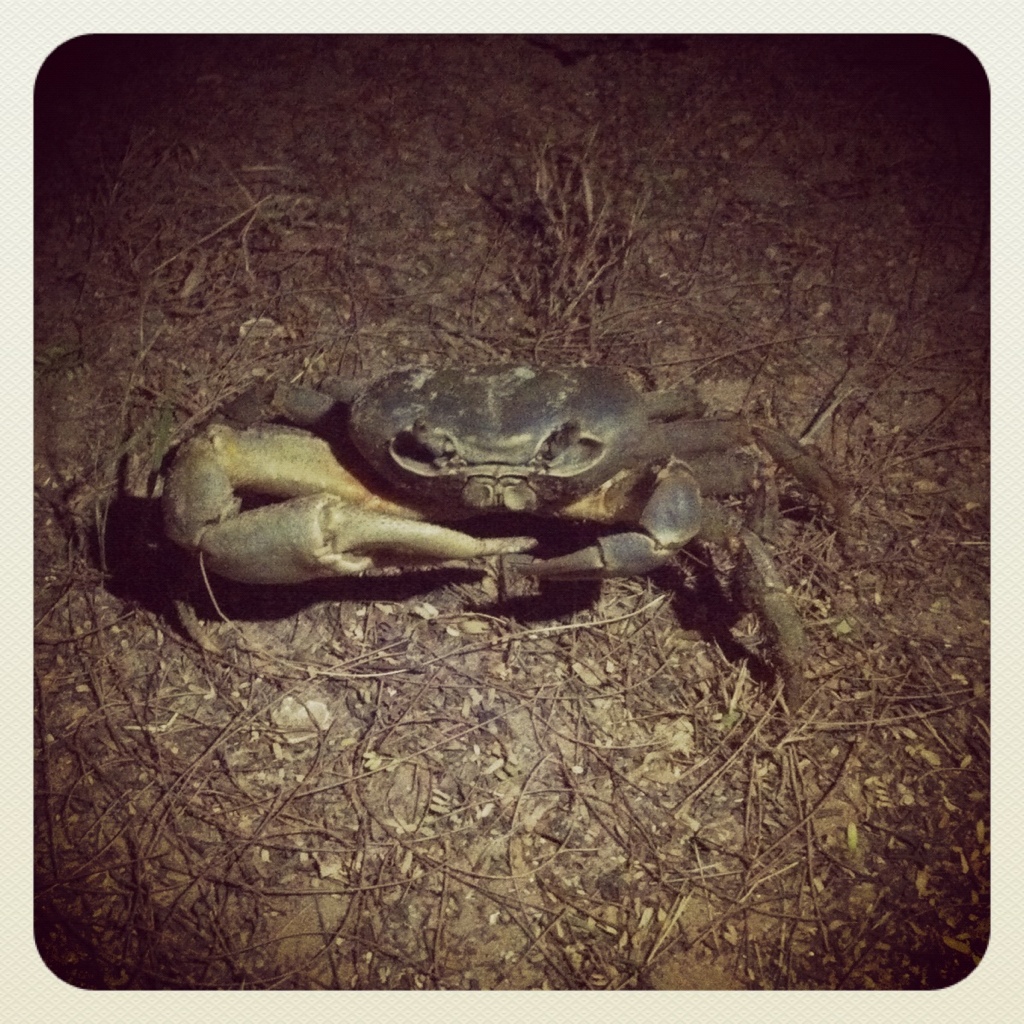
All this was forgotten in the blink of an eye when, after a sharp turn 20km from the border we found ourselves in the delta of the Senegal river and its luxuriant tropical swamp. We cheered when we saw ponds with waterlilies and reeds and I nearly crashed when, through my helmet intercom came the screeching noise of Louise shouting “WARTHOGS!!”. She had spotted 3 of them running into the mangrove. We saw hundreds of cranes, pelicans, cormorants and an eagle. Then we reached the border…

20121112-170437.jpg

20121112-170547.jpg

NKT

(pictures to follow soon

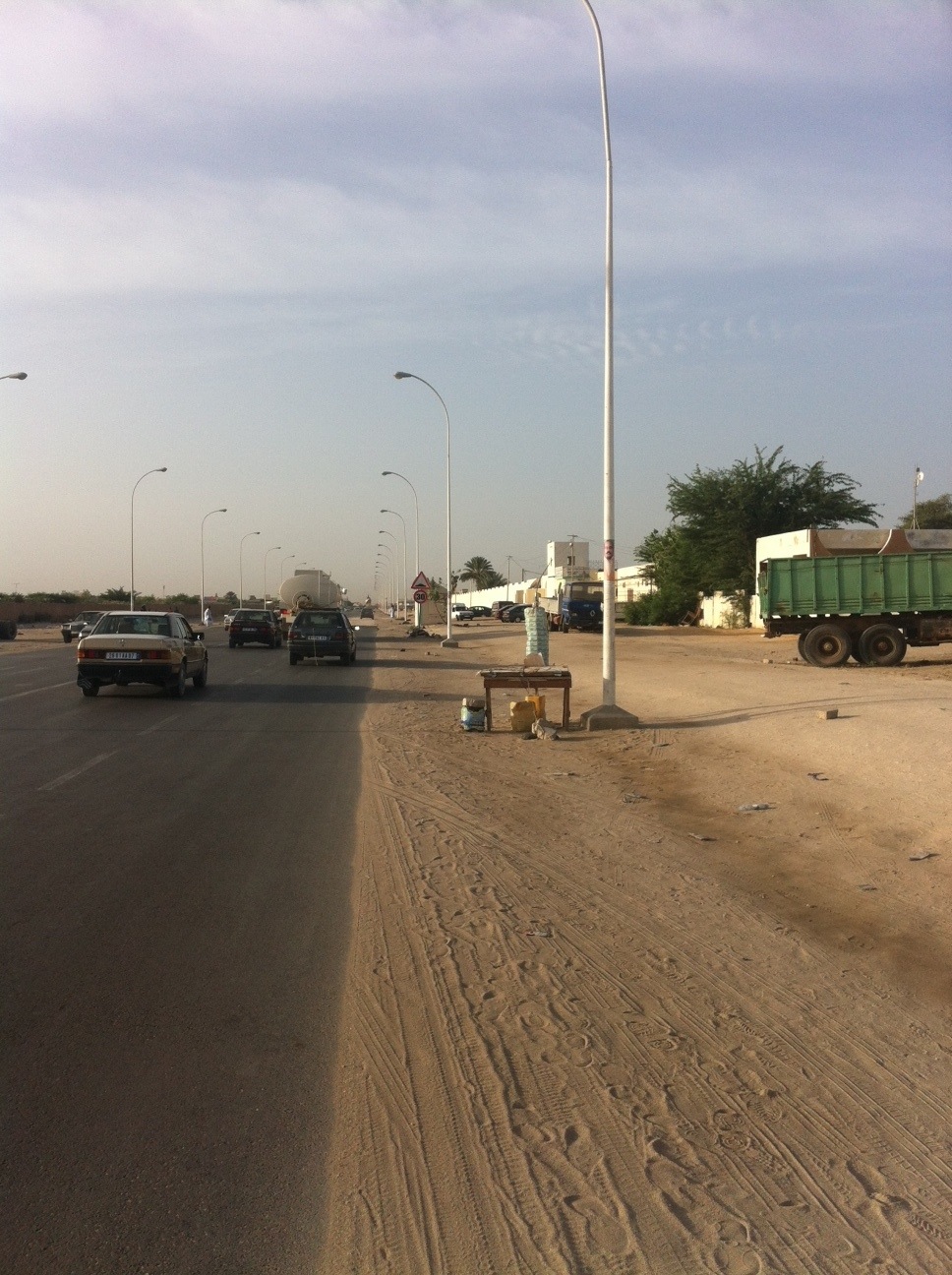
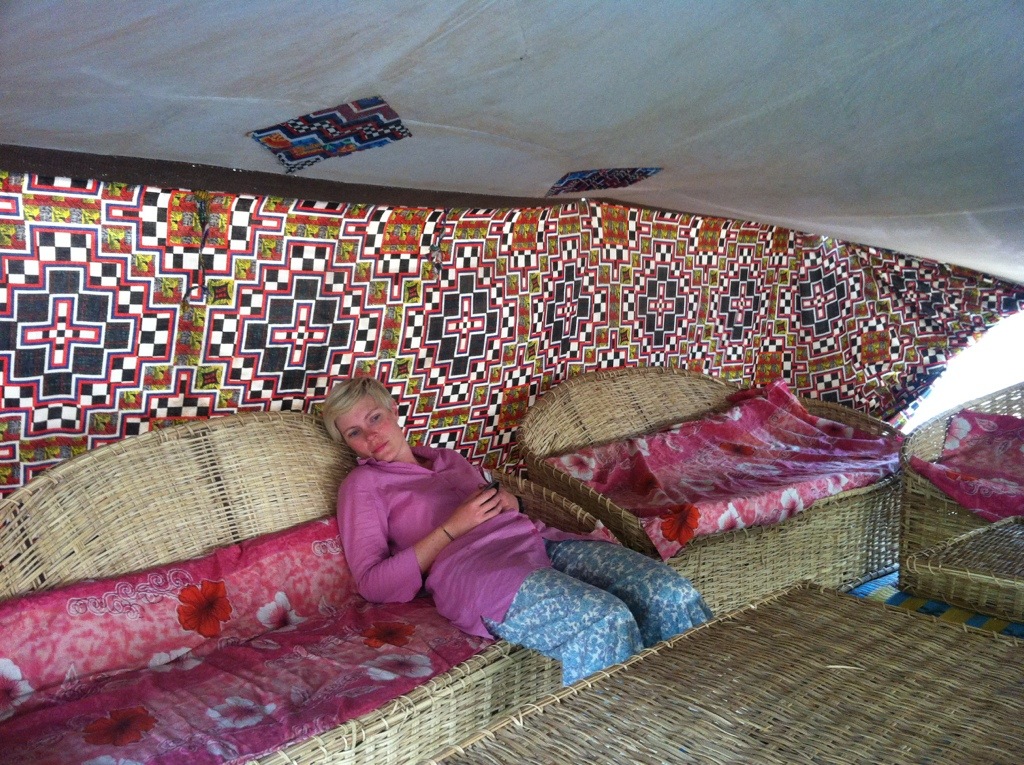
Nouakchott is interesting to say the least, an experience in itself. It is the capital city of one of the five poorest countries in the world, where a scandalous proportion of the population lives in slavery. There seems to have been absolutely no urban planning and the few tarred roads we rode on had potholes the size of a small car. I’ve been in many poor countries before and there is always an interesting history to cities; faded glory or at least evidence of a semblance of organisation in their past, but not here. I can’t begin to describe how poor, bleak, hot and dusty Nouakchott is. Thankfully we stayed in Auberge Sahara which is a little haven. They fed us a nice dinner of vegetables which we had been craving for a few days (there’s only so far one can go on white bread and omelettes). They also had air conditioning and loo paper; the height of luxury.
br />;
20121112-170058.jpg
During dinner we met a group of middle aged French men who were also on their way to Senegal. From the conversations I overheard I could make out that they were married to Senegalese women… nothing wrong with that, but quite interesting when one was the size of his van and the other one had glass lenses like the bottom of coca cola bottles…and a gold chain around his neck. Anyway, I digress, they were very friendly even-though they were carrying a bottle of pastis with them which they didn’t offer to share. We exchanged stories and they spoke about a new shortcut to the track that leads to the border crossing of Diama. There are two border crossing to Senegal; Rosso, which is notorious for its corrupt officials, aggressive touts and where daylight robbery is rampant, and Diama, where little traffic passes as it is at the end of a 90km dirt track. We had made up our mind long ago to cross from Diama but knew that the track would take us a while to complete as we are not experienced off-roaders. So the promise of an easy shortcut to the track which would nearly halve the 90km was alluring. We took note and decided to find it in the morning<;

20121112-170305.jpg

Mauritania propper

(pictures to follow soon)

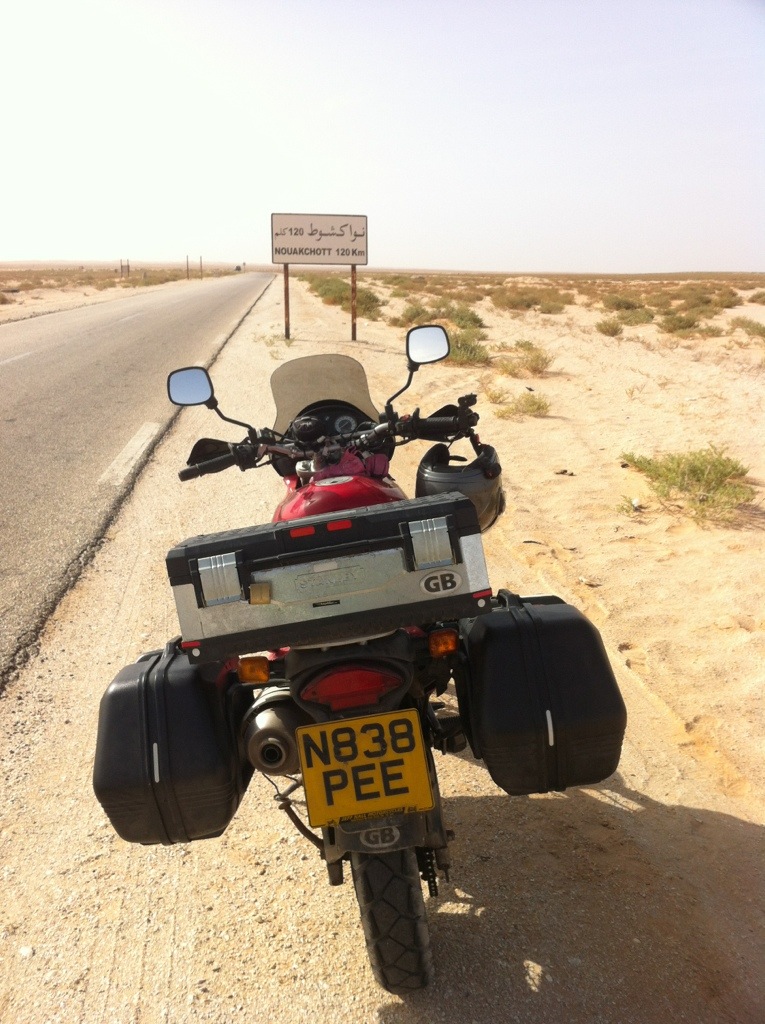
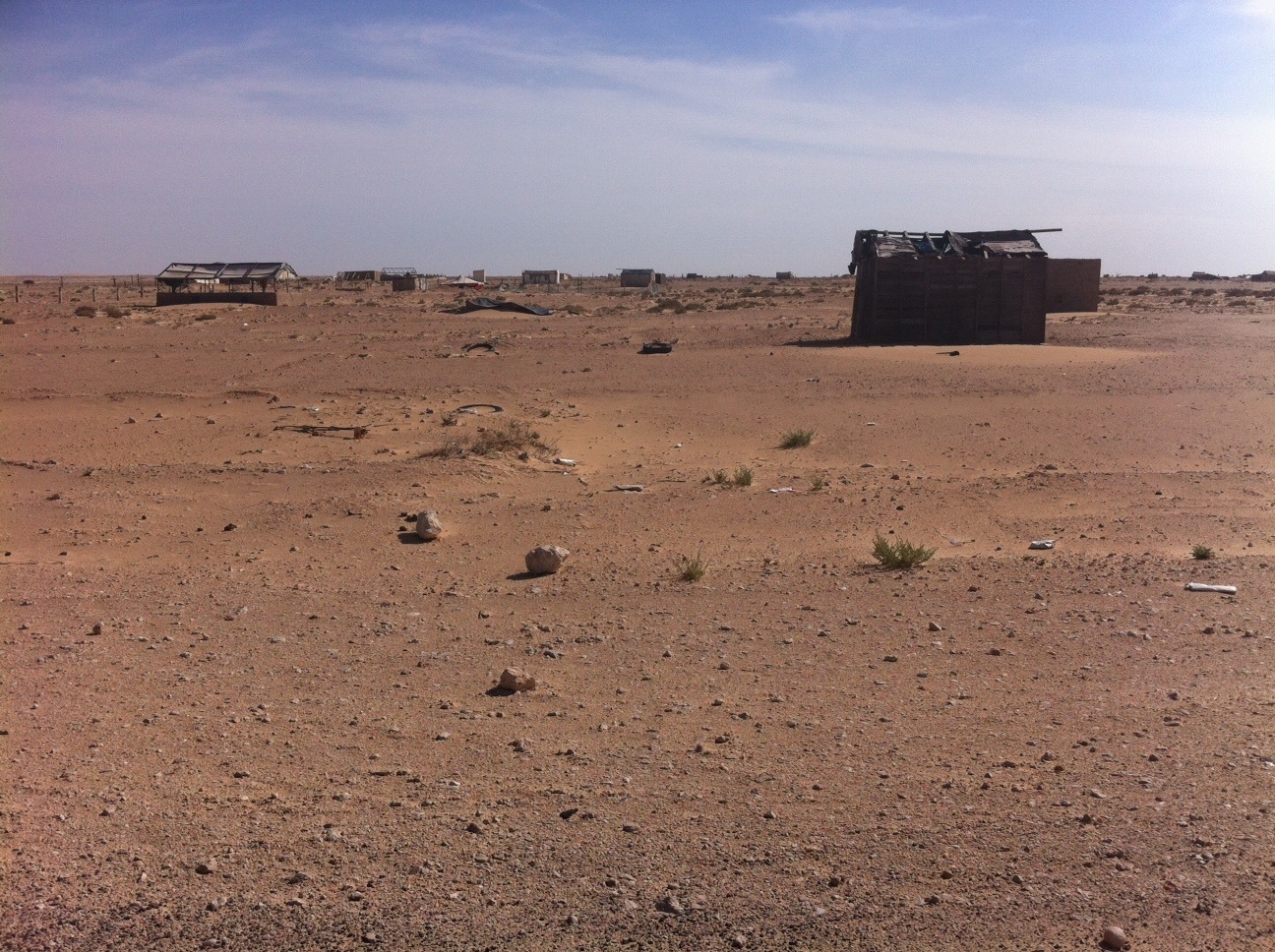
After a bad night’s sleep camping on a sand dune behind the petrol station we made an early start towards Nouakchott, the capital of Mauritania. It was only 250km away and so it was easy riding. We saw different faces of the Sahara desert with rolling orange dunes and flat stretches of white rocks with a sprinkling of vegetation. This was a comparatively deserted desert though, from the border to the capital we only crossed a couple of villages; settlements along the road really. Their wooden shacks were leaning in the same direction as the wind and people were sitting idle in front of them. We did note though that they all had decent cars parked next to them. It was interesting that the Mauritanian desert also felt poorer than that of Western Sahara; as soon as we had crossed the border the roadside was littered with burned out/crashed cars and decomposing bodies of camels and donkeys. I don’t know the explanation for either but suspect that the former may be the result of a late night/high speed encounter with the latter…

Arriving in Nouakchott was very interesting; we weren’t prepared for the heat. I suspect it was in the high 30s Celsius, which is mild there, but nearly unbearable for us riding in all our motorcycle gear. We stopped at a petrol station and were surprised that the pump attendant wanted to buy our euros. Talk of confidence in the local currency! This was the second station we visited though, the first one didn’t have unleaded petrol and the attendant barely got up from the oil stained mattress on which he was napping, right by the pumps. He had been bothered a few moments before our arrival by a man on a camel… Was he picking up diesel for his car? We don’t know but it was funny to see a camel waiting at a petrol station.

20121112-170002.jpg

Crossing into Mauritania

Guest post by Louise Wilson.

From various sources of information we were advised to reach the border when it opened at 8.30.
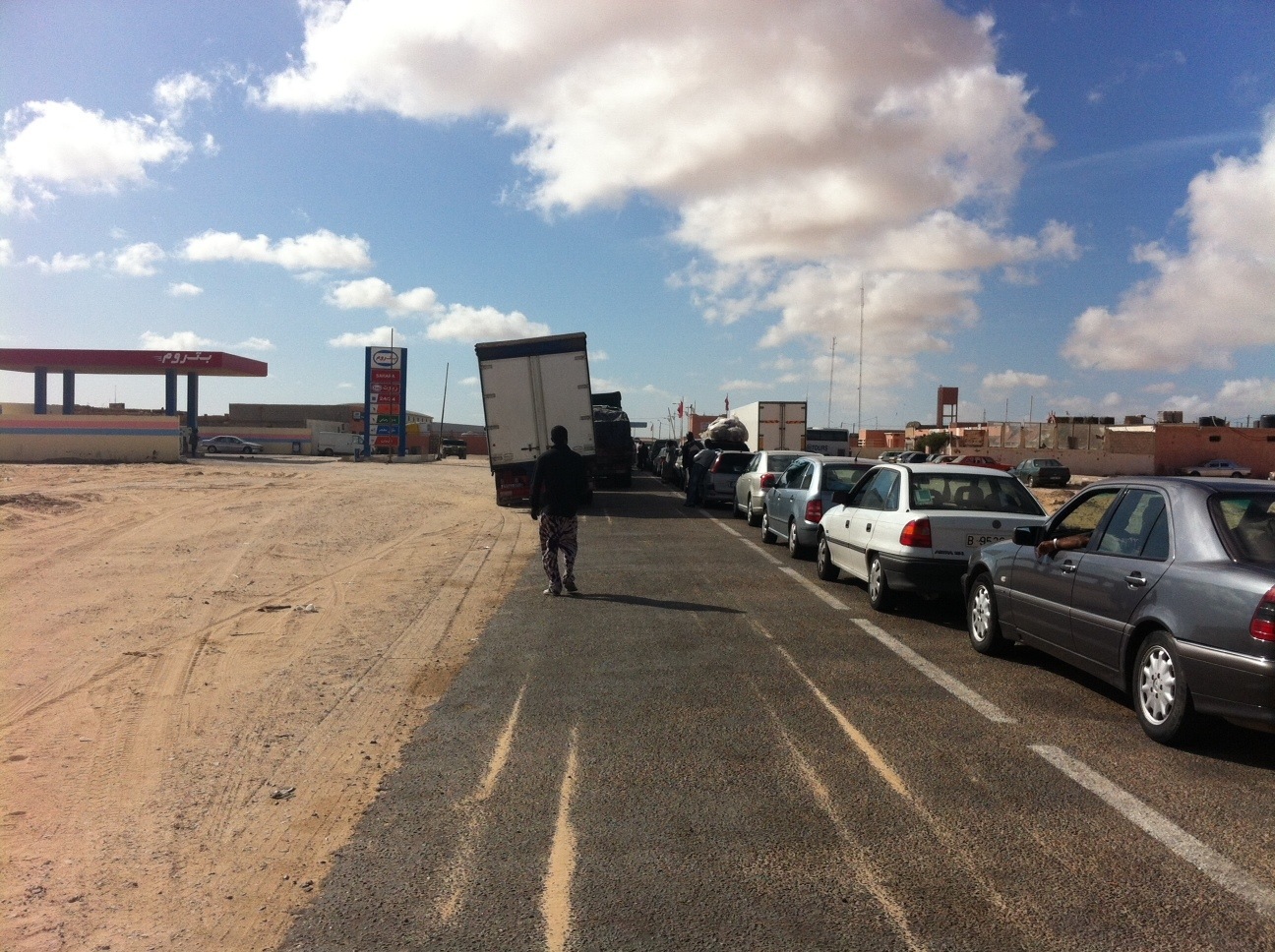
We arrived at the Moroccan border at 9am to find a queue of cars standing still as the border didn’t open until 9.30am. We went off to have a nosey to find a hotel (basic and nasty) a cafe and a shop. I went round to the toilets to find a guy tell me in English that the loo was free. Turned out he lives in Dulwich and Grew up in Peckham. He was hoping to cross the border but hadn’t realised he needed to get a visa in Rabat…

20121109-181811.jpg

We also spotted a petrol station right at the border so took advantage and both filled up. With our full tanks and the extra 10 litres we were carrying we would definitely make it through the day.

The queue began to move around 10am but David’s bike wouldn’t start. A slight panic ensued and lots of playing around; a Senegalese guy from in front came to help. I ran off looking for a screw driver but the problem was discovered. There was a loose connection on the battery and it was soon resolved and the bike was moving again.

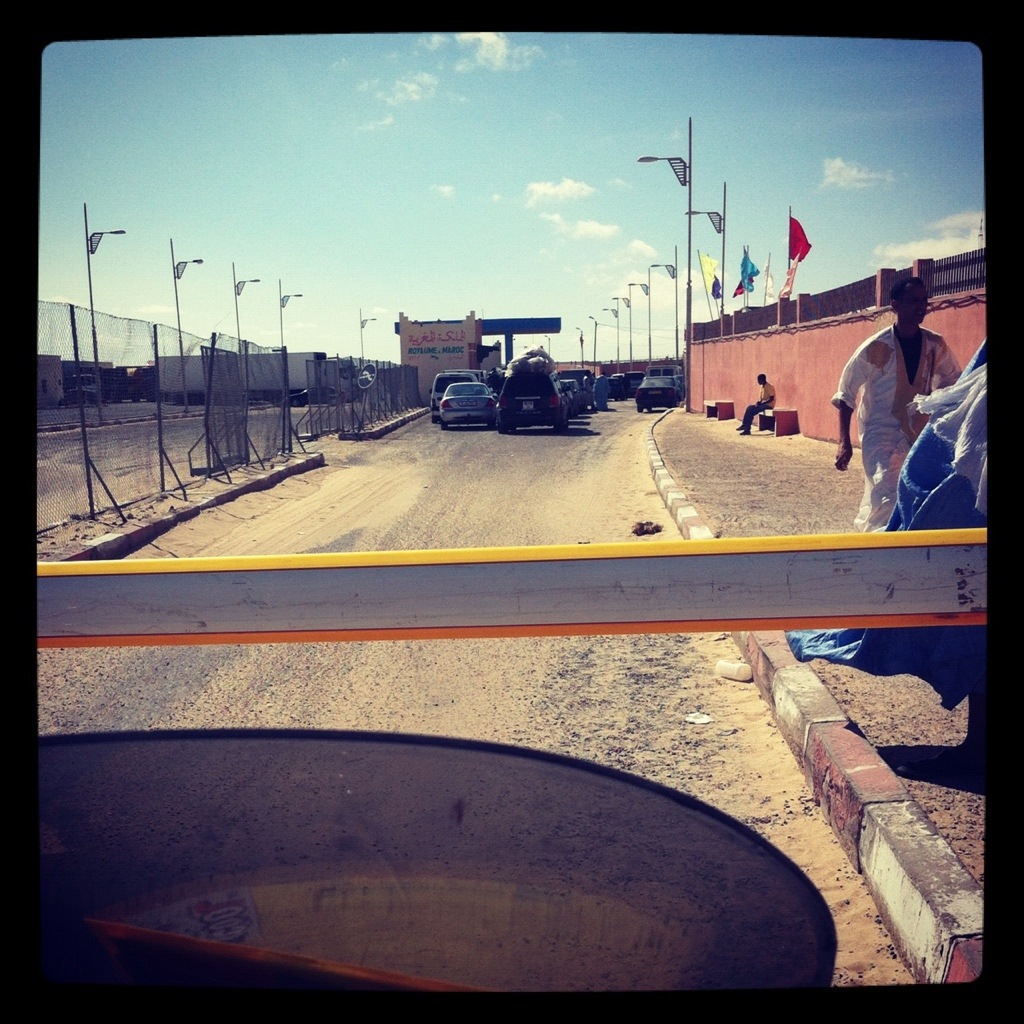
After buying cookies, orange juice and dates from the shop we were told by a local guy that we should queue jump down the right hand side. I went ahead and sure enough, the gendarme let us through. We had one check to be given a piece of paper to complete (and David was asked about his camera and they deleted the film of me showing the border control!). Once through we had to do a police, gendarmerie and customs controls – each organised chaos, with friendly locals and lots of waiting around. I quickly removed the memory card from the video camera so I could show the internal memory images if asked but it was fine.

20121109-181948.jpg

After 4 checks, we bumped into Jule from Quebec, a cyclist we had been told to look out for, and David, a welsh guy who had been riding with Tommy (who’s blog we’ve followed).

The second you enter the no-mans land (5km stretch between the two countries, mostly mined) you’re pestered to change money and have a local escort you through to the border. We decided to change money on the ‘black market’ from a very trendy local (the kind you see in London) but there were disagreements and lots of counting for correct change.

We didn’t cross until 11.30am

20121109-181300.jpg

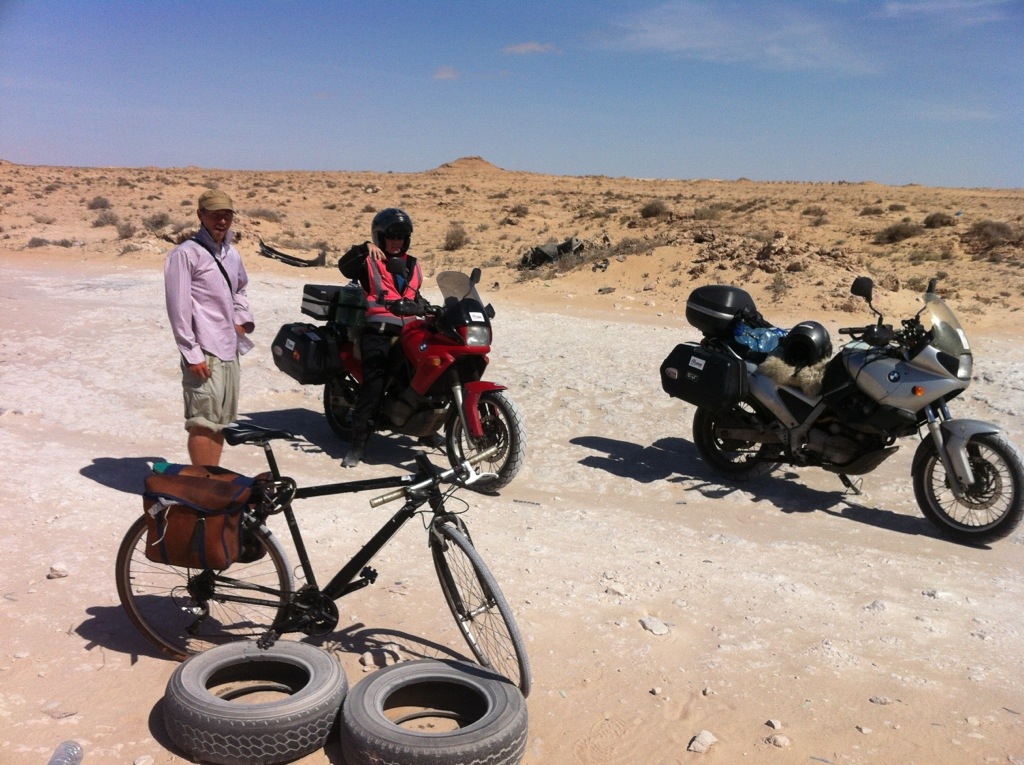
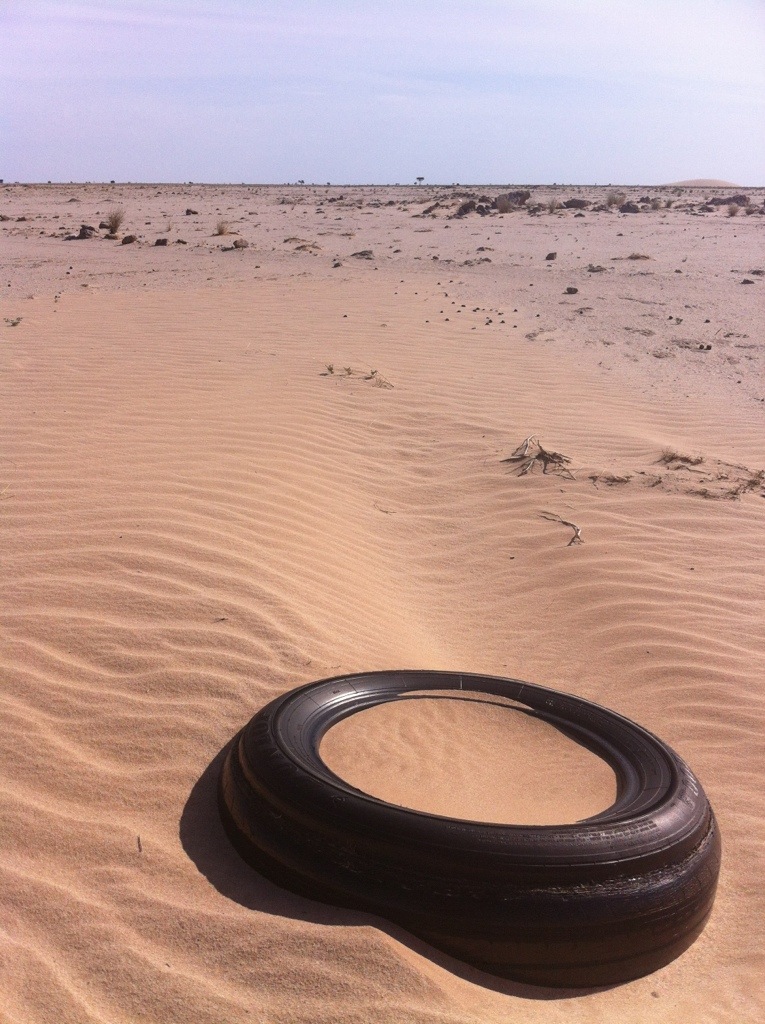
Off we went with welsh David’s advice to stay left to avoid the sand, stay in 1st gear and take it slow. We met up with Jule who was waiting for us in a burnt out car, did some filming and took photos. The desserted cars, broken TVs and tyres were crazy!

20121109-182202.jpg

The 5km was fine. There were a few patches of sand but David was great at guiding me through. Some areas you need to paddle through and accelerate out of any big bits.

It was actually quite fun and we were soon at the Mauritanian border where it suddenly got really hot and barren.

The guys selling money were there again high fiving the officials and there were lots of people walking around selling cigarettes. The police in Mauritania have big, nasty dogs but the officials were friendly and relatively helpful. Again, there were a few checks to go through and I tended to sit in the shade and watch the bikes while David sorted the paper work. The last official guy checked my passport and said something in French which I realised was probably asking for a bribe but i asked if he spoke English and he hurried me on. I parked up ahead which was lucky as he asked David for money but he said I had it all…

Even over the Mauritanian border we had to go and sign a tourist declaration form and then get insurance.

Just waiting to buy insurance was interesting. A little hut on the side had a shop at one end where we could buy cold juice (2 for 400crrenrly) and an insurance ‘office’ with lots of people fighting for attention. All of this time I’ve been the only women…some people have been friendly, some have stared and walked on and one asked if I would be going to his tonight! A few asked if I was married and why I didn’t have a child.

20121109-182317.jpg

It is now 2.20pm and it’s clear we won’t make Nouakchott tonight. Bob ‘the lone wolf’ suggested we camp behind the Total petrol station if we don’t make it and that probably makes sense. It’s boiling hot and we had an early start.

20121109-182423.jpg

Mauritania

Now we’ve definitely reached the real Sahara. Mauritania is magnificent!

We have ridden 500km in the last two days and only seen sand dunes, camels, two settlements/villages, one petrol station and 3 police/officials….

Oh and it’s SCORCHING HOT! Happy to be relaxing at Auberge Sahara in Nouakchott before heading for Senegal tomorrow.

20121109-143955.jpg