Just another day-ride in California, 31 Dec. 2011

2011 having been a good second year of motorcycle touring, seeing us on two wheels in Spain, France, Yorkshire, Devon, Belgium and South Africa, we thought we ought to see it off in a fitting way.

During our 2010 tour of California we had met up with our friend’s dad Walt, ex-motorcross enthousiast who, after some years off the saddle was contemplating going back to motorcycling. Walt had been thinking of buying a touring bike and I think that seeing us on the Harley Electra Glide we had nicknamed Eileen contributed to him taking the jump. In the 18 months since we had last seen him Walt had become a serious tourer, undertaking solo long distance trips from L.A. to Montana on his VTX 1300. Walt also knew all the great riding spots in the area north of the city of angels.

Louise and I were in California for a few days at the end of the year and of course motorcycles would have to be involved… we found what we were looking for at Eagle Rider in Hawthorne. Louise now had her license so we were looking forward to riding on two bikes. I booked myself a silver Electra Glide and Louise a black Honda Shadow for a ride Walt had kindly suggested to organize on 31 December. We were very excited about the prospect of spending the last day of the year on bikes under the glorious So Cal sun. Back home our compatriots were most probably thinking about the insoluble logistical problem of every 31st December; party shoes and sleet.

8am saw Louise and I fully suited and booted in our friend’s apartment in Santa Monica. We had opened the window to hear the rumbling of the “Walt and Cindy Gang” who were picking us up for the day’s ride. After a quick introduction to Steve and Miriam who were joining us on a superb Street Glide we saddled up only to discover that Louise’s Shadow wouldn’t start… Bummer! We tried everything but to no avail. I felt really bad for her, I don’t know how I would have reacted in her situation; she’d only had her license for 6 months and was now already going to ride on her own bike in beautiful California… but the Honda had other plans. Anyway, she jumped on the back of the Electra Glide and we were off.

Walt had planned a 150 miles day trip taking in all the splendor of the region. Our first stop was Paradise Cove, Malibu, where we had a full breakfast at the Beach Café (passengers also had bloody marys…). The road between Santa Monica and Malibu along the Pacific Coast Highway had been a mixture of fog and great views of the ocean. At our first destination, as we parked the bikes the sun decided to finally impose itself and the temperature rose. We filled up on food and coffee, took a little walk on the beach for some pictures then headed into the mountains towards Mulholland Highway.

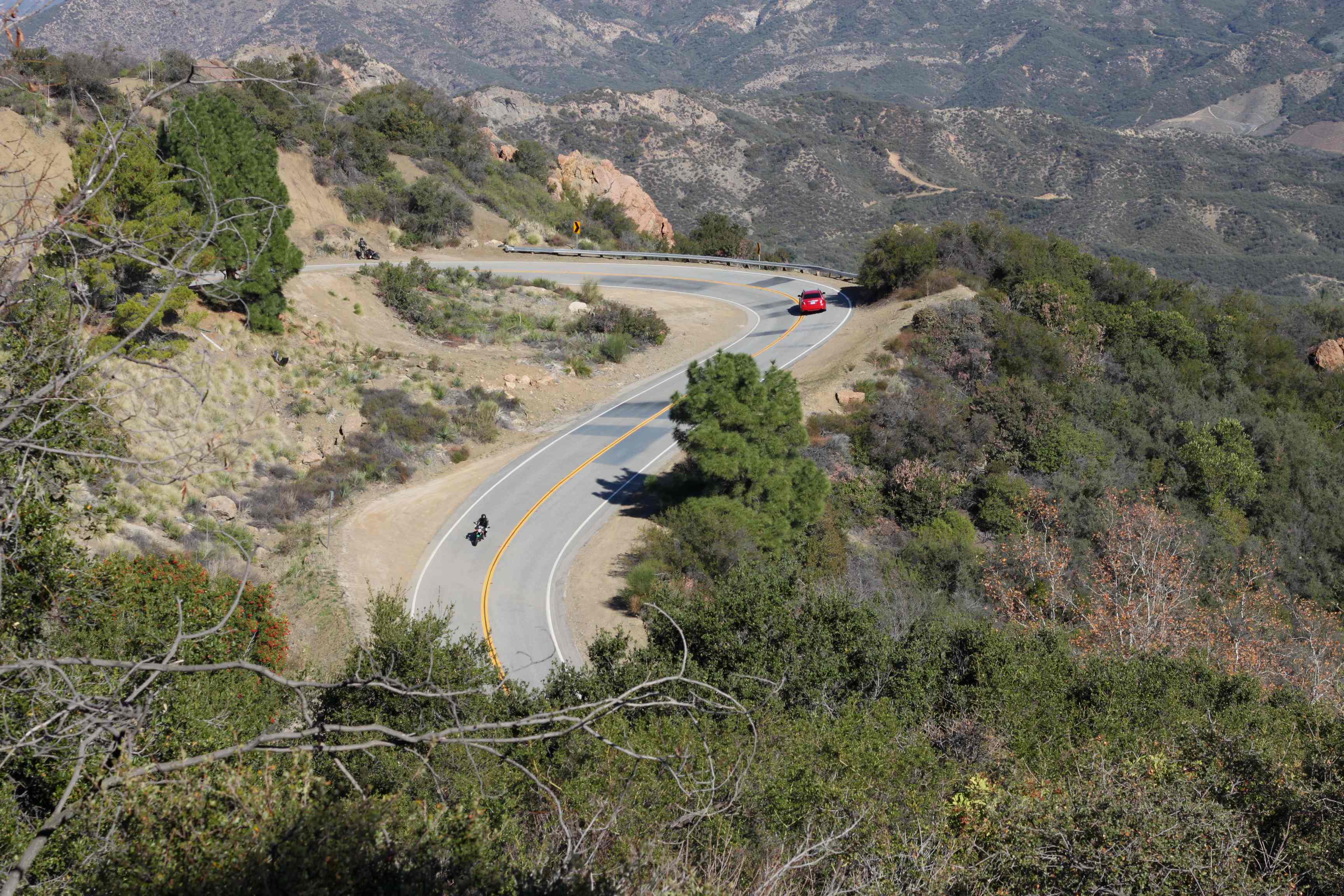
The road climbed steeply through the valleys, giving us fantastic views of the Pacific Ocean in the rearview mirrors. We found ourselves on some pretty technical roads and I soon realized that I was man-handling a 400Kg bike with two adults on the infamous “Snake”! Those of you who spend some time watching bike videos on Youtube will be familiar with this road. It’s famous with sports bike riders who try to beat their fastest lap but often “lowside” their bikes and end up with a mouthful of gravel. We parked the bikes and took in the views of the valley and witnessed one such incident. The guy was fine thanks to good protection but it was quite spectacular.
Next we looped back west through the canyons until we reached the PCH again. We headed toward Carpinteria, passing through Oxnard. The long road gave us the opportunity to ride side by side and take some good pictures of Walt and Cindy and enjoy the vastness of this state while blasting road-trip-appropriate music through the Harley’s sound system. Pure bliss. Before turning inland before Oxnard we followed the magnificent coastline for miles upon miles, past hundreds of parked RVs. Another symbol of freedom and wanderlust, the American Recreational Vehicle is quite a sight for us Europeans. Without exaggerating too much I’d say that half of the RV’s we saw had the same square footage as our apartment in London! One day I would really like to rent one for a few weeks, although I dread to think about the fuel consumption of those behemoths.

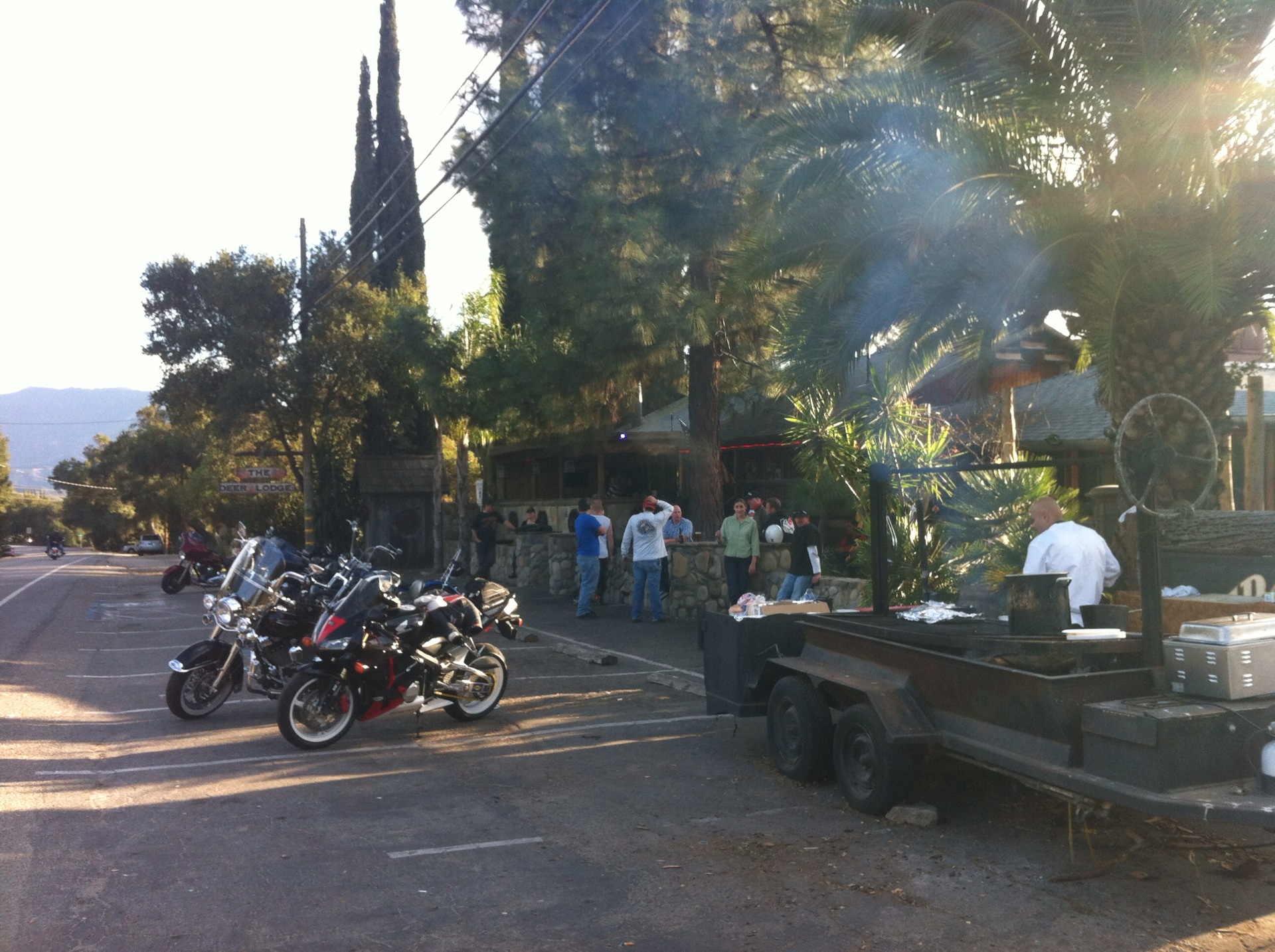
After Ventura we headed back into the hills direction Ojai where we were meeting up with another couple; Mark and Vivian who were joining us on their nicely personalized Heritage Classic. We stopped at the Deer Lodge, a popular spot for local bikers and had a well deserved lunch of barbecued burgers and ribs. This bikers’ pit stop is really friendly and to us Europeans looks like the real deal. Lots of bikes in the front, barbecue smoke, guys with tattoos, girls wearing, lets say, inappropriate riding clothing and a very laid-back atmosphere. I spoke to a guy who had dropped his Goldwing but couldn’t afford the exorbitant price for the replacement of his front fairing. He found the solution to his problem in what must have been about 3 rolls of gaffer tape.
By now it was mid afternoon and we had some miles ahead of us to get back to Santa Monica. We rode through Santa Paula on the E Telegraph Road, losing Steve, Miriam, Mark and Vivian as we made our way to Stevenson Ranch where Walt and Cindy live. We made our goodbyes, thanked them for a memorable ride, promised each other we’d ride together again and made our way back to Santa Monica through the huge L.A. freeway system.

I couldn’t think of a better way to spend the last day of the year and was unsurprisingly envious of Californians who have such an amazing playground at their doorstep.
Intercom systems

Being able to share your riding experience with a pillion or another rider as you go along is, to me, one of the best things about riding. Riding across new territories, or just enjoying a nice ride on local roads is enhanced by the possibility to share thoughts with the person who is going through the same experience. It is also great to be able to communicate to kill the boredom of highways or just to plan a pit stop.

The first trip Louise and I did in California in 2010 highlighted the need for an intercom. I first decided to go for a middle of the range BT Interphone Bluetooth unit. It was the first generation of motorcycle Bluetooth intercoms and frankly I was disappointed. It was OK to chat while in town, but at speeds over 40mph the road noise covered up any sound coming out of the weak speakers.
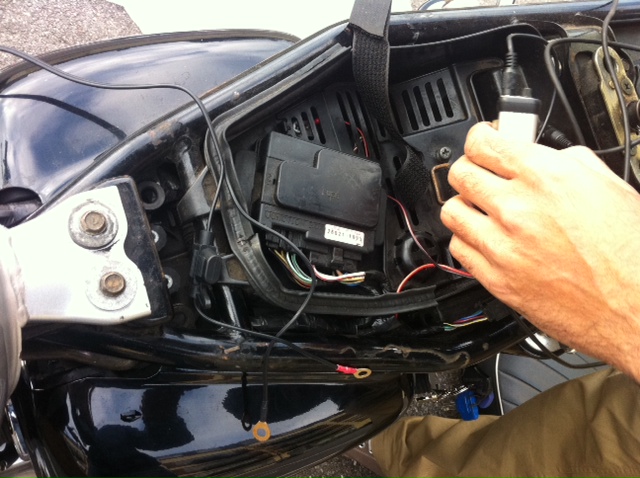
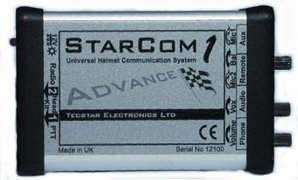
Next on the list was a fully wired Starcom Advance system which was excellent. I installed it on the Nomad and it served its purpose brilliantly. The Starcom unit is really HiFi; the sound quality is great and features such as noise reduction, automatic volume adjustment etc made for a great intercom to use with a pillion. We took it to Spain, France, around the UK and I also took it with me to South Africa where I installed it on our R1200GS. There’s something special about riding through the Prince Alfred Pass listening to Paul Simon’s Graceland album and sharing thoughts with your better half in the pillion seat. The only drawback is that one has to plug in and out every time; but this is offset by the fact that it’s all installed and does not need to be recharged every night like Bluetooth systems.

20120423-204226.jpg

I had to review my options when Louise passed her license and started riding her own bike. All of a sudden we couldn’t speak anymore, only at traffic lights. The joy of riding together on two bikes was dampened by the fact that we couldn’t share our experience of the road. I looked into two-way radio systems and bought a new Starcom system for Louise’s bike. I never managed to make the Starcom work with the two-way radios and gave up. Instead I bought a helmet mic/speaker set which directly plugged into the two way radios which we kept in our pockets. This was operated with a PTT (push to talk) button velcro-ed to the handlebar… not great. It was bulky, had bad sound quality and frankly it was a bit dangerous to have to press a button every time you want to speak. There was a cable going from the PTT button to the radio, and another from the radio to the helmet… We used this system twice and I dumped it. “Serious” riders like us need something much better than that! I think that in this case you get what you pay for so I decided to invest in a more upmarket, new generation Bluetooth solution.

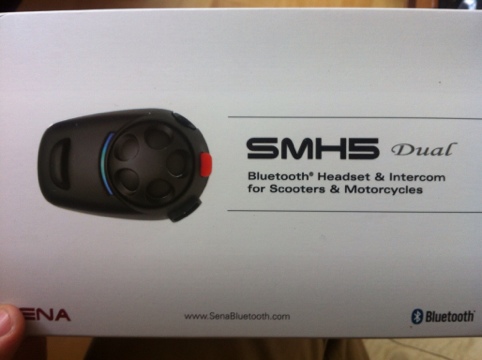
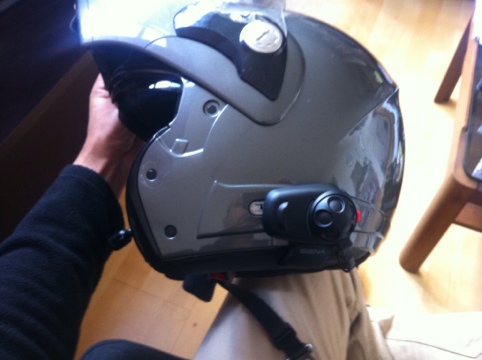
In comes the Sena SMH-5. I always thought that the Bluetooth option was great because of the size of the units and the lack of cables. They are also extremely portable which is great for riders like us who often rent motorcycles abroad. The first generation failed because the sound quality was not good enough, but all the reports I read were saying that the 3rd and 4th generations of Bluetooth intercoms were now much better. I read WebBikeWorld’s review of the SMH-5 which convinced me. It promised excellent sound quality, easy use and durability priced at only £170 for the dual set.

I was one of the first person in the UK to get my hands on one, having been shipped one by the very helpful Cliff of Two Wheels Trekkers. My first impressions are of very good built quality, ease of use and great sound. One of the features I really like is the ability to pair it to my iPhone and make my musical choices through voice commands. Some people may think that listening to music while riding is less than ideal for safety reasons but I think that there’s a time and a place for it. It can be totally safe to listen to your favourite music in the background while riding on long empty roads. The SMH-5 allows you to play/stop/change volume very easily with gloves on using the clever Jog-Dial, so there’s no distracting fiddling.

20120423-203953.jpg

Louise and I tested the SMH-5 on a short ride in town. I was impressed by the sound quality; also, being a full duplex system, sound is always being transmitted. This, in my opinion, is much better than the VOX systems which usually eat into your first words and can be quite frustrating. This said the SMH-5 is very good at filtering ambient noise and only transmitting the rider’s voice. I wasn’t very impressed by its range though; we got cut off at about 100 meters, but to be fair, we were out of sight with cars between us. I suspect that the range will be much longer on open roads. In any case, we like to ride fairly close to each other and the SMH-5 is more than capable to handle the distance between our bikes. That said, if we do get separated and cut off, and we need to speak to each other to regroup, all we need to do is to call each other by telephone using the voice command feature.

In conclusion, I would certainly recommend the SMH-5 to anyone looking for a high-end Bluetooth intercom at mid-range price. It provides great sound quality, great connectivity, robustness and adequate range. All that at a very reasonable price but it doesn’t stop there; Sena will provide regular firmware updates which means that your intercom will become better with time!

20120423-203848.jpg

BMW F650GS

The reason
So, we are planning a bike trip from London to Senegal on 2 bikes… Yep, finally decided to go ahead and plan something really big. The preparations and details of the trip will be discussed in another post but here I will report on a bike we tested while exploring which bike to use on the 3000 miles trip.

20120326-224025.jpg
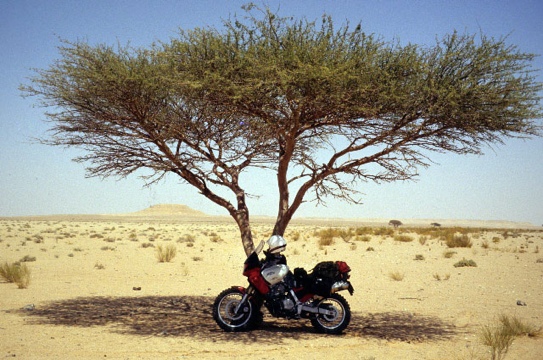
(photo courtesy of Chris Scott,Sahara Overland)

To tell you the truth my mind is set on buying 2 used BMW F650 Funduro. A great, overlooked, dual sport bike which Chris Scott took to the Lybian desert a few years back. If it was good enough for him…It has a very convincing comfort to budget to reliability to ruggedness ratio. We asked BMW Motorrad to test ride the newer model in order to get a sense of the riding position and ergos before buying the Funduros. This is important for both Louise and me; She wants a bike that’s well balanced, not too heavy and easy to manoeuvre. My requirements are comfort, legroom and a bit of wind protection.

We tested the new F650GS which is not exactly the newer version of the Funduro; it has a higher seat and one additional cylinder… And 21 more horses. In a few weeks we’ll test ride the G650GS which is a more direct descendant of the Funduro.

F650GS
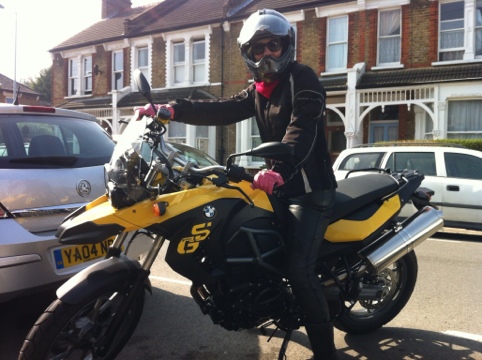
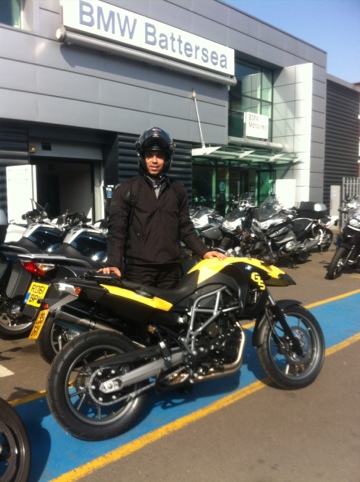
Saturday 24 March was a fantastic day in London; one of those that lures you into a false belief that summer is here and that it’ll be nothing but sun, barbecues and happiness until September. We rode pillion to BMW motorrad in Battersea where Matthew was waiting for us with a beautiful F650GS in black and yellow. After a quick look around the bike and some instruction on how to use all the buttons we were on our way for 2 hours riding around town. Louise was the first to go, with me following on the W650.

Louise’s impressions
The first thing Louise said when we met at a traffic light was “this thing is powerful!”. Indeed, the 650 develops 71Bhp which are all accessible at low speeds. In actual fact the F650GS, despite it’s name is actually a 800cc… It’s basically the engine found in the F800GS which has been toned down for whatever reason.

Being 172cm, Louise did find the 82cm seat height a bit high for her. This being a tall bike with a high Center of gravity, it’s important to be able to put both feet flat on the ground.

20120326-221025.jpg

David’s thoughts
After an hours ride it was my turn to have fun on the BMW, and, well, in three words, I was impressed! Very impressed actually. I found the tall riding position extremely comfortable, giving me a sense of total control over the bike and a great view of what was around me… it allowed me to see past the car in front of me which is great. Though the saddle is a little hard, I think I could last a couple of hours on it before needing to dismount.

The feel of the bike under me reminded me strongly of the R1200GS which I rode in South Africa. One immediately recognises the built quality which characterises the German make.

20120326-221636.jpg

The engine of the F650GS is pure pleasure and I can only imagine how good the F800GS must be. It has plenty of torque and there’s plenty of power from about 2500rpm. I also love the sound of the parallel twin; they certainly got that one right. Added to this great engine is a beautifully smooth 6 speed gearbox. I think that the gear ratio is great; a lot of use of the first 3 gears for town, and good, long 4th, 5th and 6th for out of town and longer journeys on the highway. Louise did find the first gear too short though…

In a few words
We were both impressed by the F650GS. I think that it would make a great everyday bike that can be taken on a long tour around Europe (in the summer) and could certainly tackle many African gravel tracks.

We’ll be back at BMW Motorrad in a few weeks to try out the G650GS. It’s the single cylinder “baby” BMW. It has a seat height of 78cm which will be great for Louise. I will be testing the G650GS Dakar which is taller. They both do 70mpg, compared with 55mpg for their twin cylinder sister which would be a great advantage in far away places like the western Sahara where petrol stations are few and far between.

20120326-224207.jpg

Canyon carving on a Ducati 750 Monster

There is definitely something to be said about sports bikes…! I’ve never been a fan of them, I guess it’s because they are scary, usually painted in fluorescent colours and look terribly uncomfortable. This does not mean that I would say no to a ride on a pocket rocket (or whatever they call them).

20120109-212637.jpg

<a

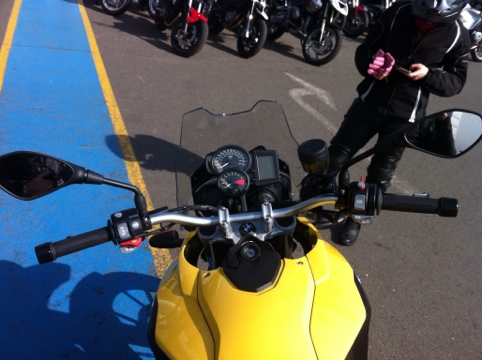
This is exactly what happened. I didn't say no to our friend Scott's offer to take his Ducati 750 Monster for a spin along the northern shores of San Francisco. To be fair, I have always liked the looks and sound of the Monster; aggressive look yet very minimal, with it's exposed frame, and a fantastic throaty Vtwin engine noise that should be trademarked! (the Ducati 90 degree engine makes the best noise in my opinion).

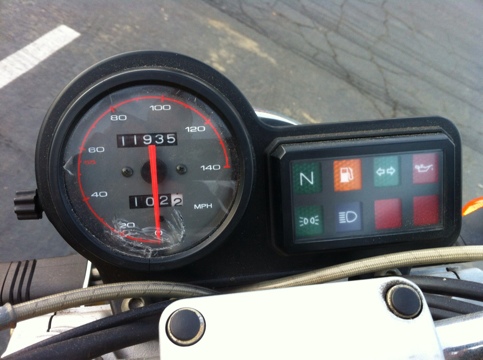
First impression when I lifted the cover was that this bike is made with cheap fittings (look at the console; The 80s called and want it back!) and mid-range finish. It also looked like it was going to be an uncomfortable ride, with that small saddle and a position that put my knees right up by my chin. However, as soon as I fired the engine up all this was put aside. The double Remus exhaust Scott had fitted on his bike brought it to life with an epic sound of thunder that the gentrified neighbourhood of Mill Valley might not have appreciated. But I did!

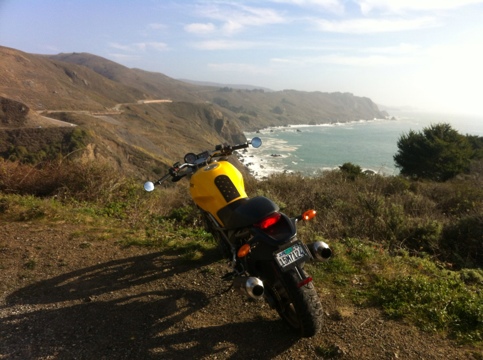
Leg over the saddle, revs up, first gear engaged and here we go. On the road the Monster lets me know instantly that this is no cruiser. Anything under 3000rpm or below 25mph necessitates clutch action in order to keep the engine ticking. My habit of cruising along lazily at near idle will not work with this bike. Instead what the Ducati wants is to be revved; give it some go and it will reward you with incredible torque fast acceleration and precise handling. This bike really comes to life when pushed hard. Hardcore. Exactly the kind of qualities you're looking for when carving through the amazing CA 1, also known as the Shoreline Highway. Past Muir beach, Reyes Point Station was the best road possible for this bike.

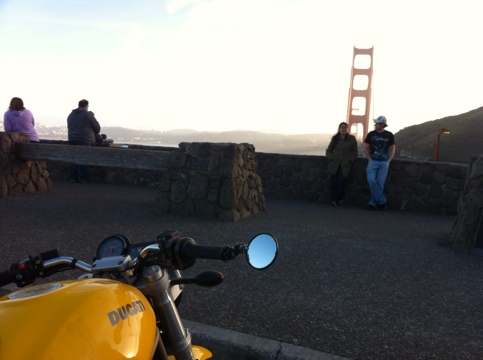
I spent 100 miles on this superb bike and loved nearly every minute of it. It's such a fun toy to have and blasting through the Golden Gate bridge on this Italian naked bike is quite memorable. I would definitely add one to my dream garage if I lived somewhere where I could put it to good use.

In the meantime, I'll be nursing my knees and wrists…this bike certainly gives you loads but you have to suffer to get it.

20120109-212720.jpg

20120109-213322.jpg

48h moules-frites run

After a short, agitated night sleep the alarm clock rang at 6am. We were up in a matter of minutes, excited about the weekend ahead. None of that drifting in and out of sleep, eyelids glued together behaviour that usually characterizes Monday to Fridays…The panniers liners were packed and ready in the hallway and the biking gear neatly laid out in the guest room. 30 minutes later we were on our bikes and ready to hit the road.

The plan was simple. Blast out of London, enter “Chirac’s 200mph a*s*h*le” at Folkestone and from Calais enjoy a nice ride on small coastal roads to our place on the Belgian seaside. The Sunday would see us ride to Bruges, be tourists for an afternoon and head back to London. Getting out of London was uneventful, if only very quiet and therefore less painful than usual. It is when we hit the M20 that the ride became splendid. Although we were on a boring motorway, we were surrounded by beautiful countryside covered in low fog and heading straight towards a fluorescent orange sunrise. Beautiful; we were in the “zone”.

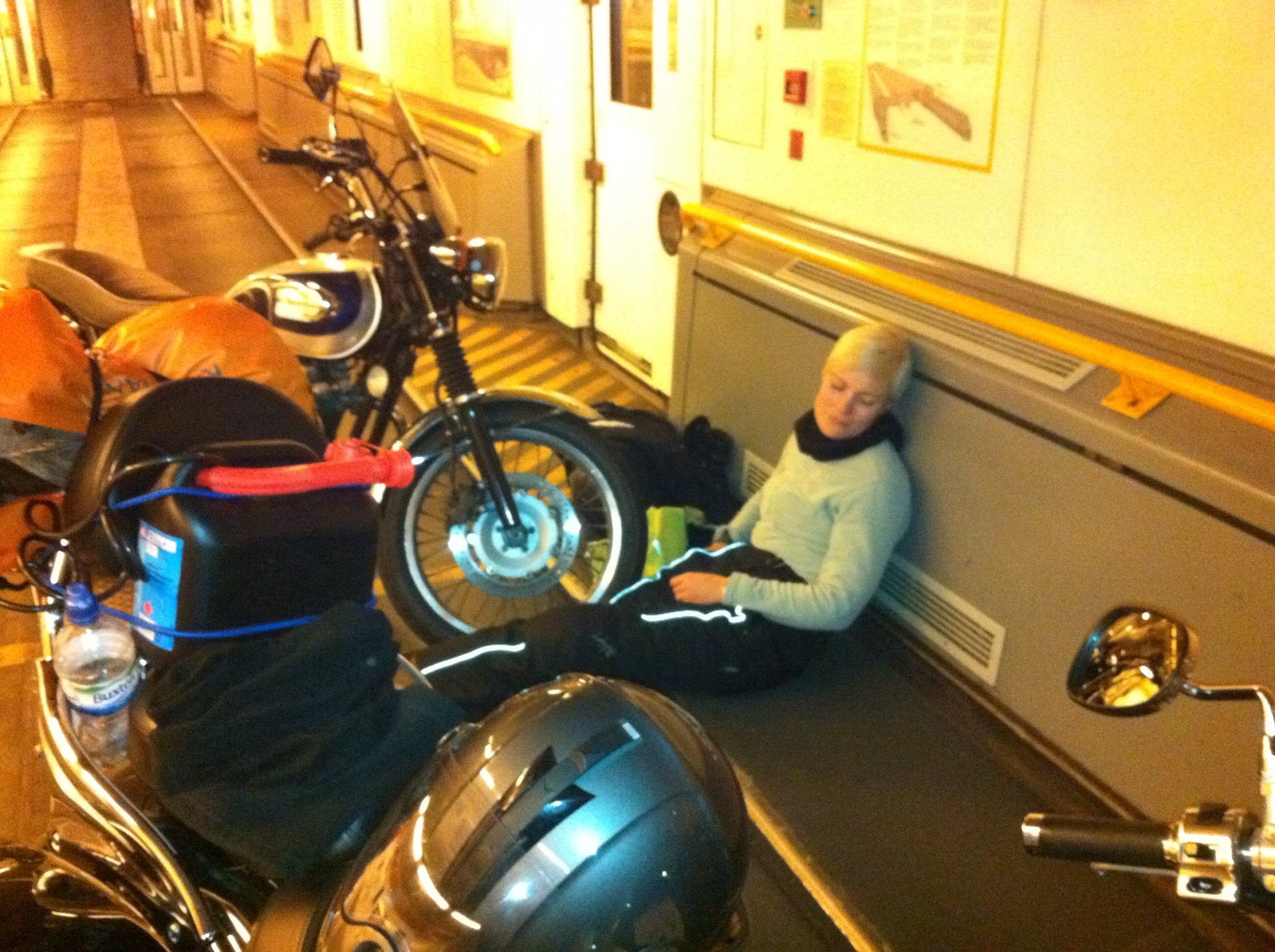
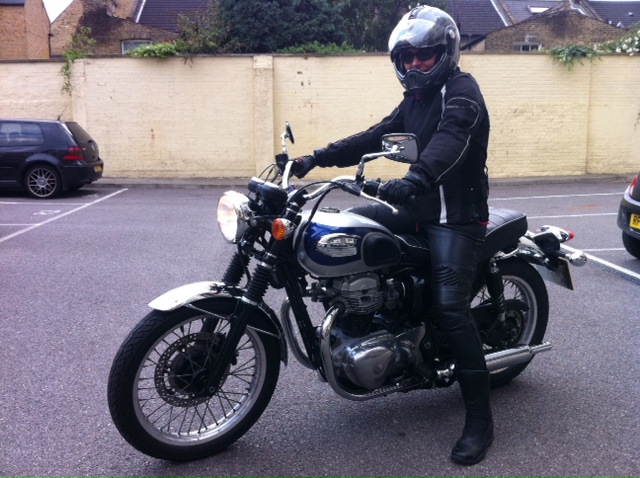
We had covered about 40 miles and had another 20 to go when the W650 broke down… at 70mph on the middle lane of the M20… ouch! We managed to pull over and quickly discovered that the tank was empty. Pff! Well done us! Everything had been carefully planned except for fuel. I will digress here and complain about the W650 (blame the bike not the rider); I love the whole retro look Kawasaki was going for and they did a great job, but no fuel gauge? Really?? Not even a low fuel warning light?? To be fair, you’d have thought that after 4 such occasions in 6 months of ownership we would be more careful but nope, not wired this way… Anyway, we decided to adopt a positive attitude and walked about a mile back to a petrol station where we filled a jerry can. The whole operation only delayed us by about 30 minutes and we managed to get on the following train. The shuttle is very good like that with bikes, you just show up when you want, regardless of your reservation and they’ll put you on the next available train.

We got out on the other side of the channel to find the kind of fog Europeans always associate with London. The visibility could not have been more than 500 meters. We rode on b-roads from Calais to Dunkirk. This part of France is very….French. It’s amazing how a narrow stretch of water can make such a difference. 30 minutes away from Folkestone we were now riding through quaint French villages with people queuing in front of the local “boucherie”, older gentlemen with berets and Peugeots with those yellow front lights from the 80s.

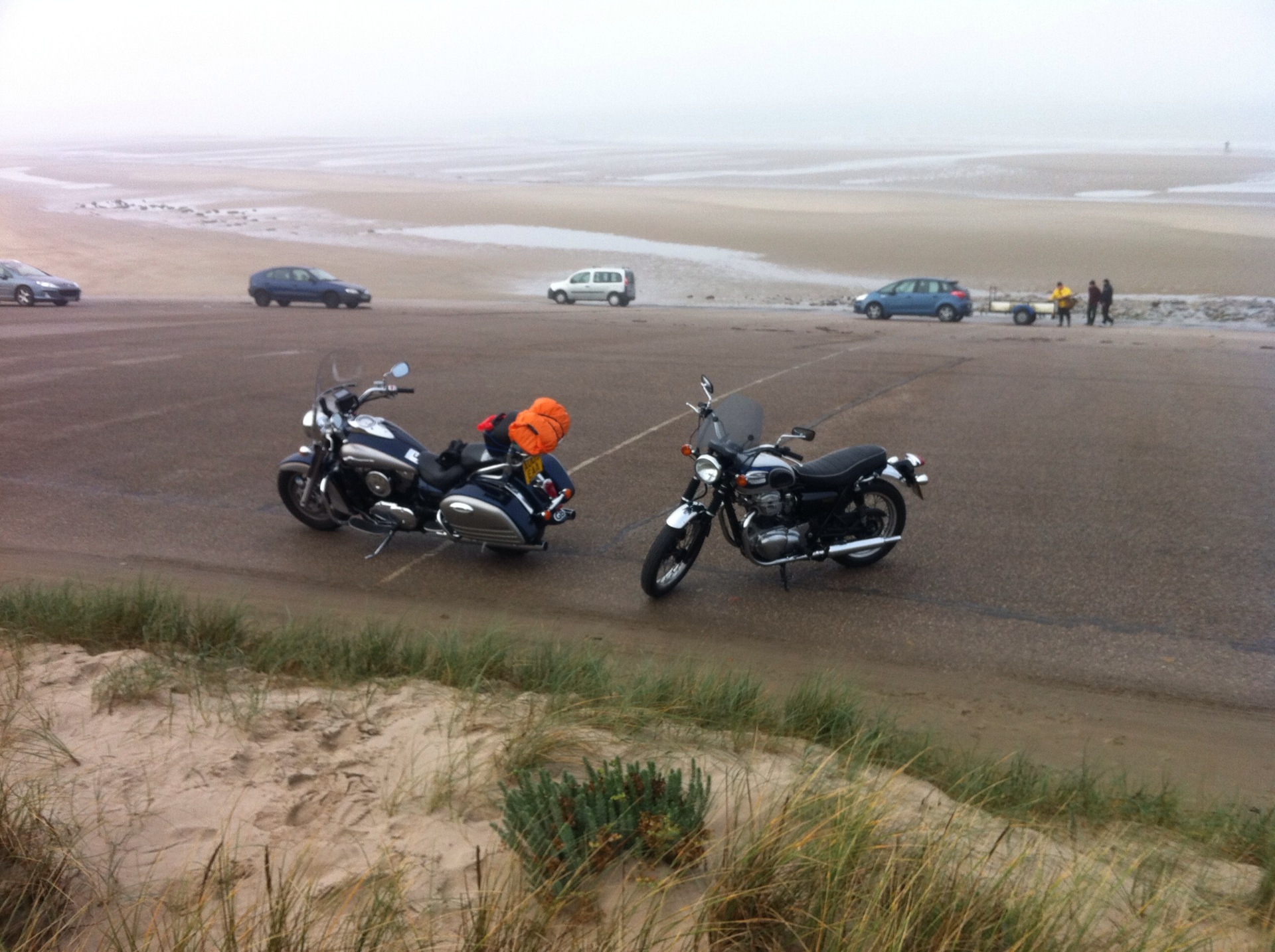
In Dunkirk we made a little detour to ride a road I had spotted on Google Maps; the Route de la Digue du Braek, essentially a narrow road on an artificial sandbank about 2 miles long. On one side was the Channel, on the other the port of Dunkirk. In the middle sand patches. This is a very unusual and beautiful road and I would recommend it to anyone who rides in the area. We arrived in time for lunch in Oostduinkerke where we parked the bikes in the underground garage. We met up with Lucie and Karim, friends from Brussels who came up to spend some time with us and went for a long, foggy walk on the beach. We had a great time catching up and filling up on Belgian beers and moules-frites.

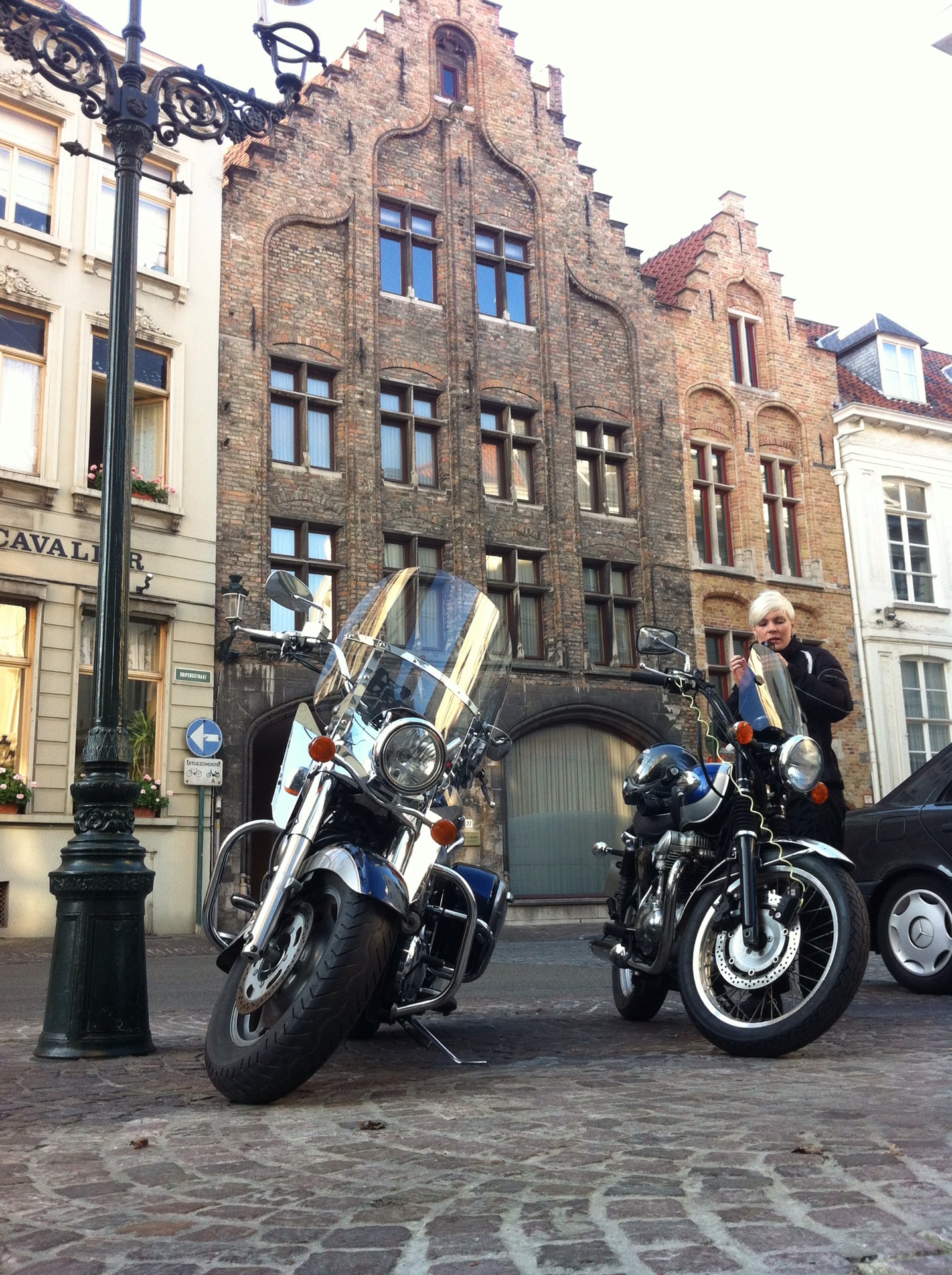
Sunday morning was radiant. The sun was finally out and the views of the sea were fantastic. We rode the 25 miles to Bruges following canals and carving through the infamous fields of Flanders. Bruges was the way I remembered it; incredibly pretty and full of chocolate. We played tourists for the afternoon and then headed back to London. This time we took the E40 highway to Calais because we were short on time and it was getting dark anyway. This time though, we were riding into a beautiful fluorescent orange sunset; a fitting end to our 48 hour weekend trip to Belgium.

South Africa 2011

Ever since our first tour in California in 2010 we have constantly been planning our next trips. In the 12 months following California we had gone up and down the UK on several long weekend rides, been to Paris, Brussels, and spent a week touring the North of Spain.

In July 2011 my work was taking me to South Africa for a conference and of course in our minds this became our next touring destination. It was a fantastic opportunity to do some biking in a country both of us knew very little about. We had sketched a rough plan; spend some time visiting friends in Cape Town, and rent a motorcycle for a 5 day tour. But that was as far as we had planned… We knew nothing of South Africa and all we could do was ask our non-biker South African friends to recommend some destinations and read guide books; all very helpful but not geared towards a motorcycle holiday.

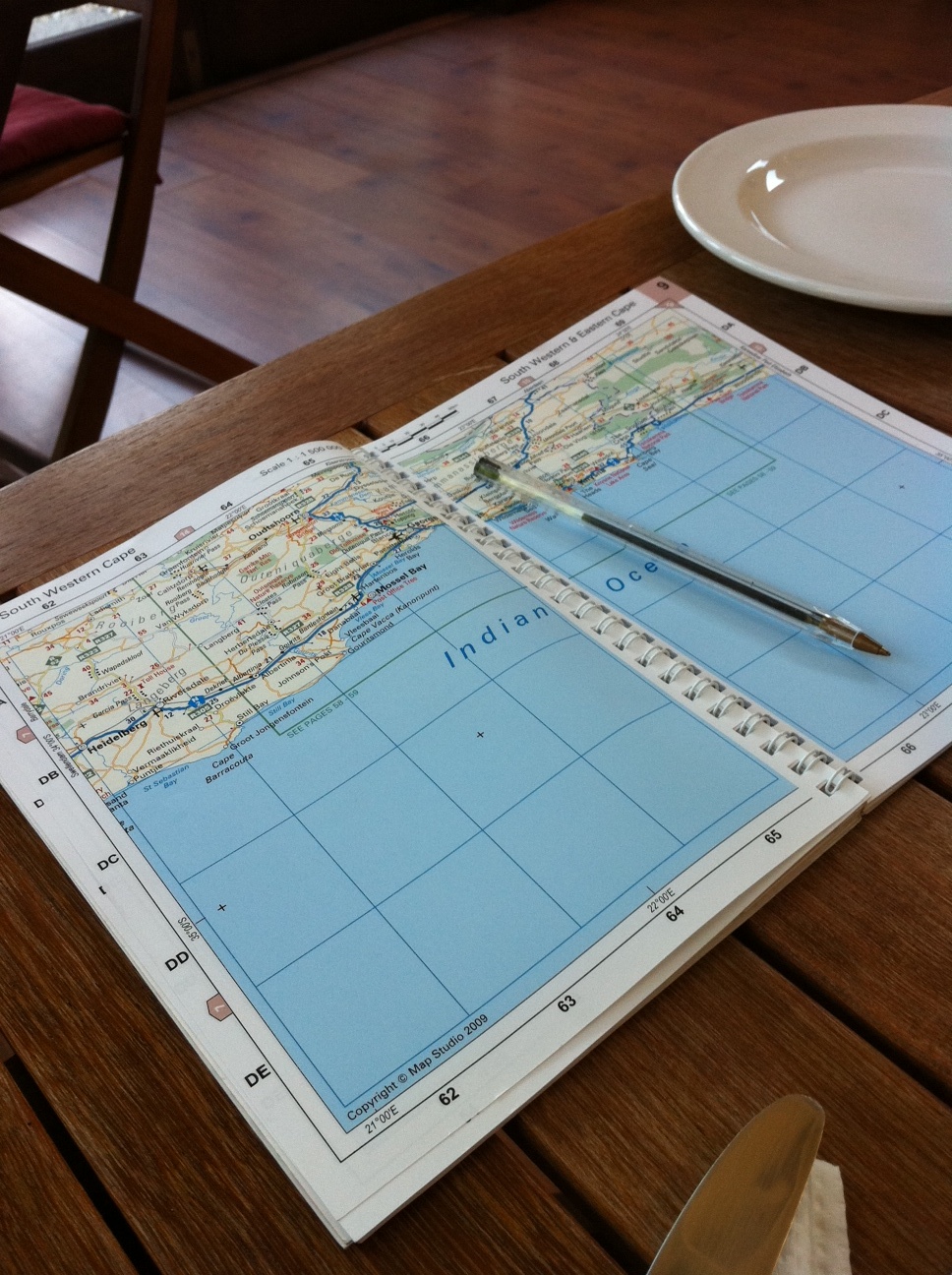
4 weeks ahead of the planned trip we ran into Alex at the Adventure Travel Film Festival organised by the iconic Austin Vince and Lois Pryce. We had come prepared with a map of South Africa, hoping to find someone who had ridden there who could give us some tips. We met Alex and was the best encounter we could ever have hoped for!

Alex runs Kaapstad Motorcycle Adventure Tours, a company specialised in tailor-made motorcycle tours in the Western and Eastern Cape regions of South Africa. He has spent many years in South Africa and knows the roads like the back of his hand. He is also a ranger there so has an intimate knowledge of the country. Alex was at the festival to promote his company but unfortunately he could not accompany us on such short notice. This, however, did not stop him from taking the time and effort to help us plan the coolest motorcycle trip we’ve done so far! Within minutes of meeting him we were all looking over a map of South Africa; Louise and I were frantically drawing on it and taking notes of Alex’s recommendations on routes to takes, places to visit, accommodation, people to meet etc. After about an hour we had our trip all planned and couldn’t contain our excitement for the trip ahead. Alex went so far as to email us a couple of days later with links to Google maps and guesthouses and a detailed itinerary for the 5 days; talk about a useful encounter!

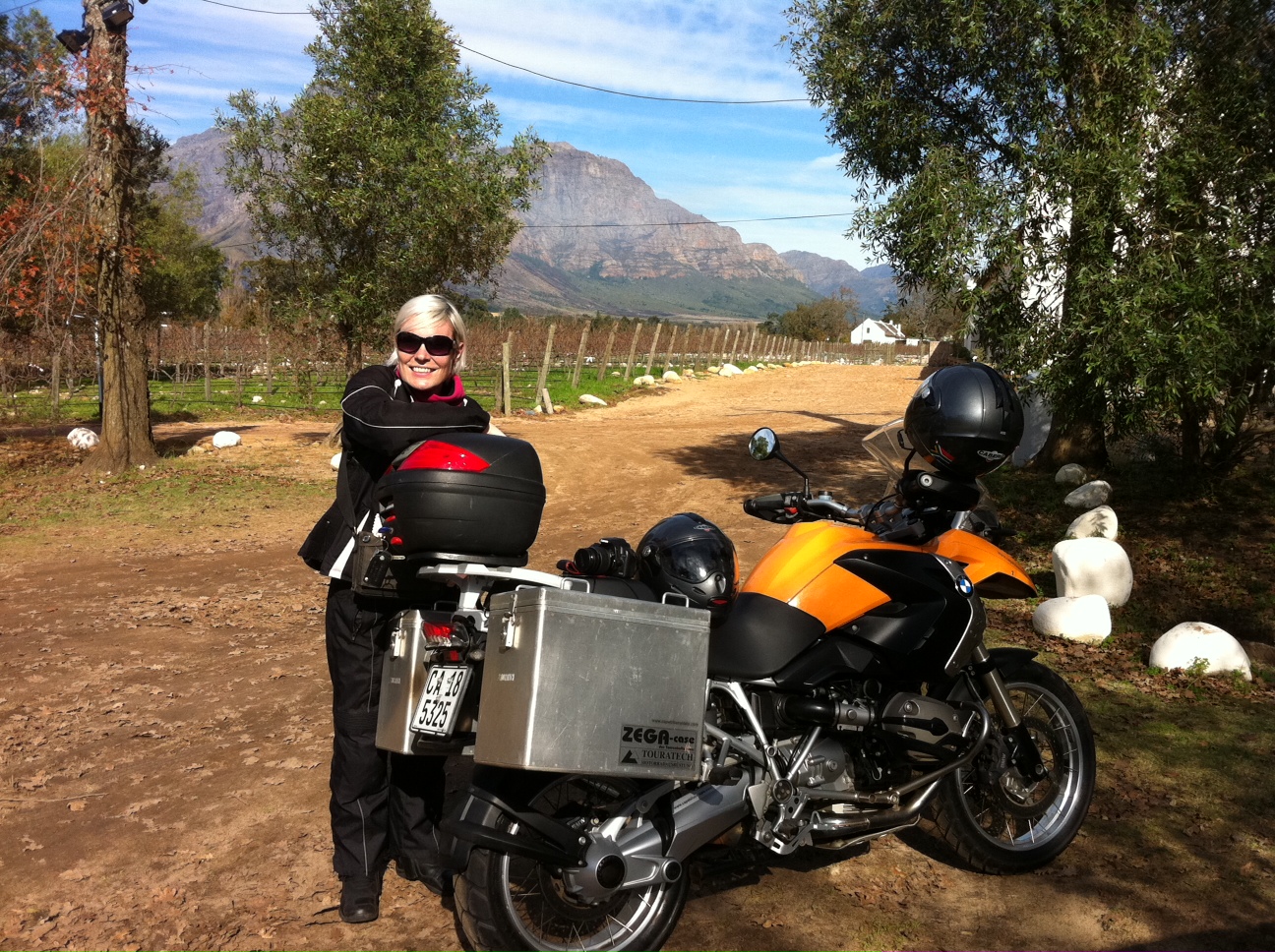
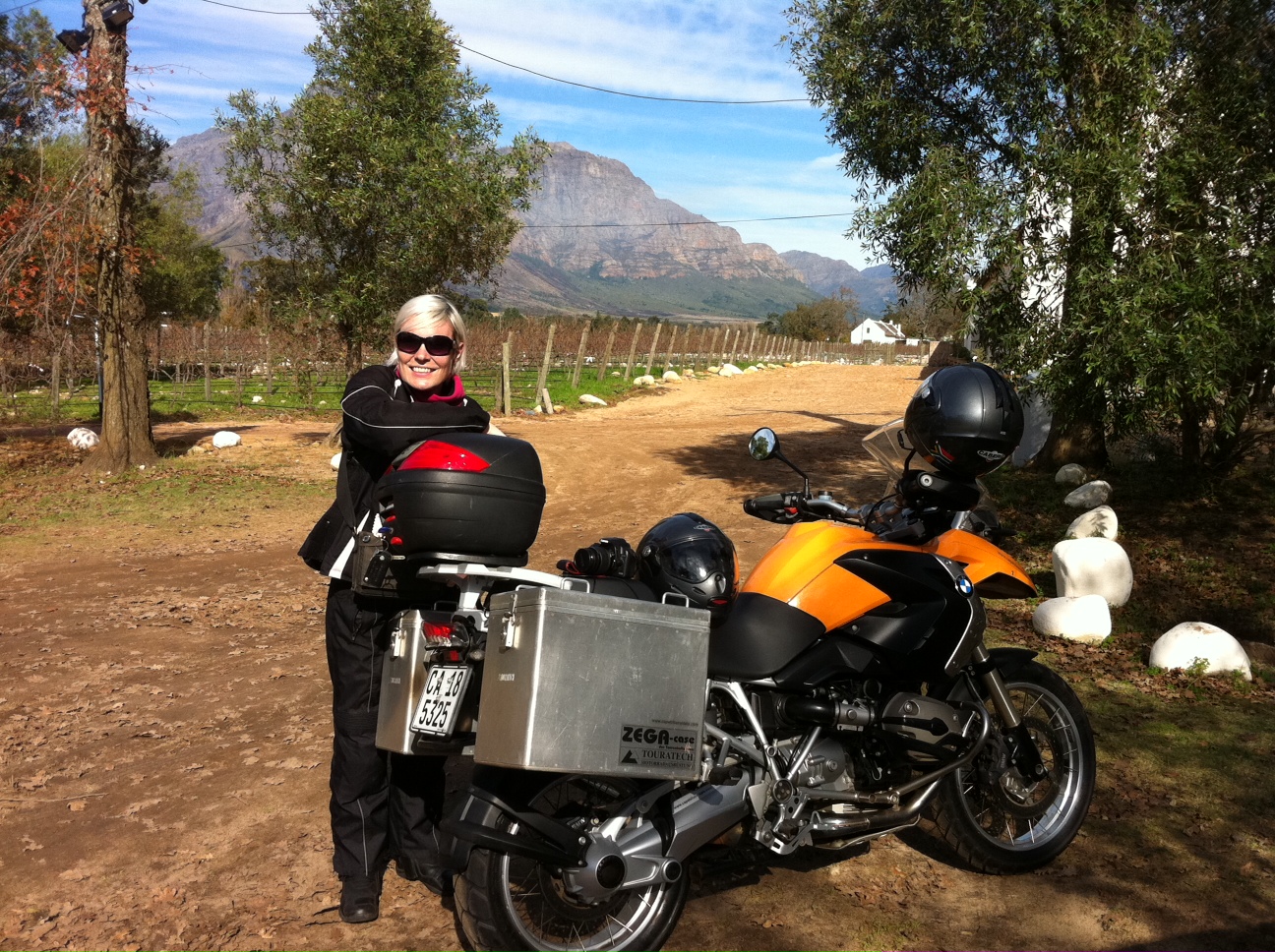
I met Louise in Cape Town after my conference and we spent 4 great days discovering this fantastic city; but neither of us could wait for the Monday morning when we’d pick up our bike. Monday came and at 8am sharp we were standing next to a BMW 1200GS, being taught how to unlock the aluminium panniers and where all the buttons were. Now; I know that some people have views about the 1200GS but we were going to ride for 5 long days, 2 up, with a lot of distance to cover, so we decided that it may be the best option; and we were not disappointed. I ride a Kawasaki Nomad 1600 at home so I am used to big bikes and had no problem handling the GS.


Day 1

Once all the paperwork was signed and my credit card swiped through, we pointed our front wheel north out of Cape Town and headed for the mountains. Whoo hooo! This was going to be fun!

The first destination was Hermanus, on the coast, south east of Cape Town. As we rode out of the city, heading north we were both overtaken by a feeling of elation; the weather was fantastic, the bike felt great and we were finally riding in Africa! We made it out of the urban traffic, past the dockyards onto the N1 highway and towards the Cape wine region. Because Hermanus is only 1h30min away from Cape Town we took to the long way round and took in some beautiful scenery. As soon as you are out of town, and in the mountains leading to the wine valleys the scenery changes completely and you could be excused for thinking you are in the Rioja region. We stopped at the Solms Delta winery for a taste of local wines, surrounded by historical Cape Dutch farm buildings.

After we tasted and bought some wine (the rider spat it all out, I promise) we headed towards Hermanus, our destination for the night. Alex had recommended we stayed in Aloe Guest House which we did (www.aloe-guest-house.co.za/). It was an unassuming building from the outside but the inside was great. The guest house has secure parking for the bike which we appreciated and offered great big rooms with even bigger bathrooms; all fitted to modern standards. After a drink and a look at the map of Hermanus we headed out to the centre for a well deserved dinner. Hermanus was pretty quiet that night; I guess it’s understandable for a Monday night in the height of winter…but we found a welcoming Italian restaurant, had our food and headed back to the guest house to call it a night….And enjoy the totally underrated comfort of a hot water bottle! Now, whereas the weather in South Africa in July is comparable to spring in the UK, it does get pretty cold at night. And South Africans, instead of wasting energy on heating have just continued using the old system of the hot water bottle. It’s cheap, easy and it works wonders! As a matter of fact I’ve decided that it might be a biker’s best piece of equipment when touring in the colder months; small, robust, cheap, easy to use and very effective. Enough said.

Day 2

Morning number 2 saw us departing from Hermanus, riding through the waterfront. We didn’t spot any whales (bit too early in the season) but couldn’t help stopping to take in the beauty of the coastline and the warmth of the splendid morning sun. We had a long day ahead, 360km to Oudtshoorn; the Ostrich capital of the world. The road took us passed Swellendam, before which we had decided to do some off-road… We took some dirt roads and got totally lost. Not a problem though because in the middle of nowhere, surrounded by miles and miles of fields we came across the smallest train station. It was a bit surreal, there it was, a miniature stone built, victorian style train station… It must have been used to transport crops in the past. In any way, the railway helped us find our position on a map and soon enough we were back on the tarmac. We stoped for lunch in Barrydale, a small town on the R62, and one of the first nice surprises we cam across; imagine a small isolated village, with only a couple of tarred roads, but with a quaint deli in the middle. After lunch we still had quite some way to go and we decided that our last stop would be Ladismith where we stopped for tea and cake. The weather was becoming quite cold and the sun was now pretty low. We still had a couple of hours of riding before reaching Oudtshoorn. We rode the last hour in the dark, not recommended on a bike but the winter sun sets early in South Africa, and I guess we were fooled by the vast distances to cover 2 centimetres on a map of the UK looks ok; on a map of South Africa it’s at least  an hour’s ride!

First impressions as we entered Oudtshoorn were not great. We were cold, tired and did not know where our guesthouse in the dark of the night. We stopped on the side of the road to read our guidebook but were on our way quickly as we had attracted some dodgy characters… To be fair, if I was a dodgy character I would certainly be interested in 2 lost Europeans on a £12k bike… Anyway, after some searching and a bit of luck we found our guesthouse. Lavender Guest House had been recommended to us by Alex and we were not disappointed. It was a beautiful old stately home that had been converted in a guesthouse. We were the only guests that night and after giving us the keys the landlady’s mother, a lovely lady who spoke little English, left us alone; Goeie Nag!

We dined at Jemima’s  which had a fantastic menu. This was to become a habit in South Africa, but this restaurant was really top notch. I had the mandatory ostrich steak which was a delight. We highly recommend you have dinner here if ever you are in Oudtshoorn, it’s the kind of quality you get from high-end restaurants in Europe, but about 2 or 3 times cheaper.

Day 3

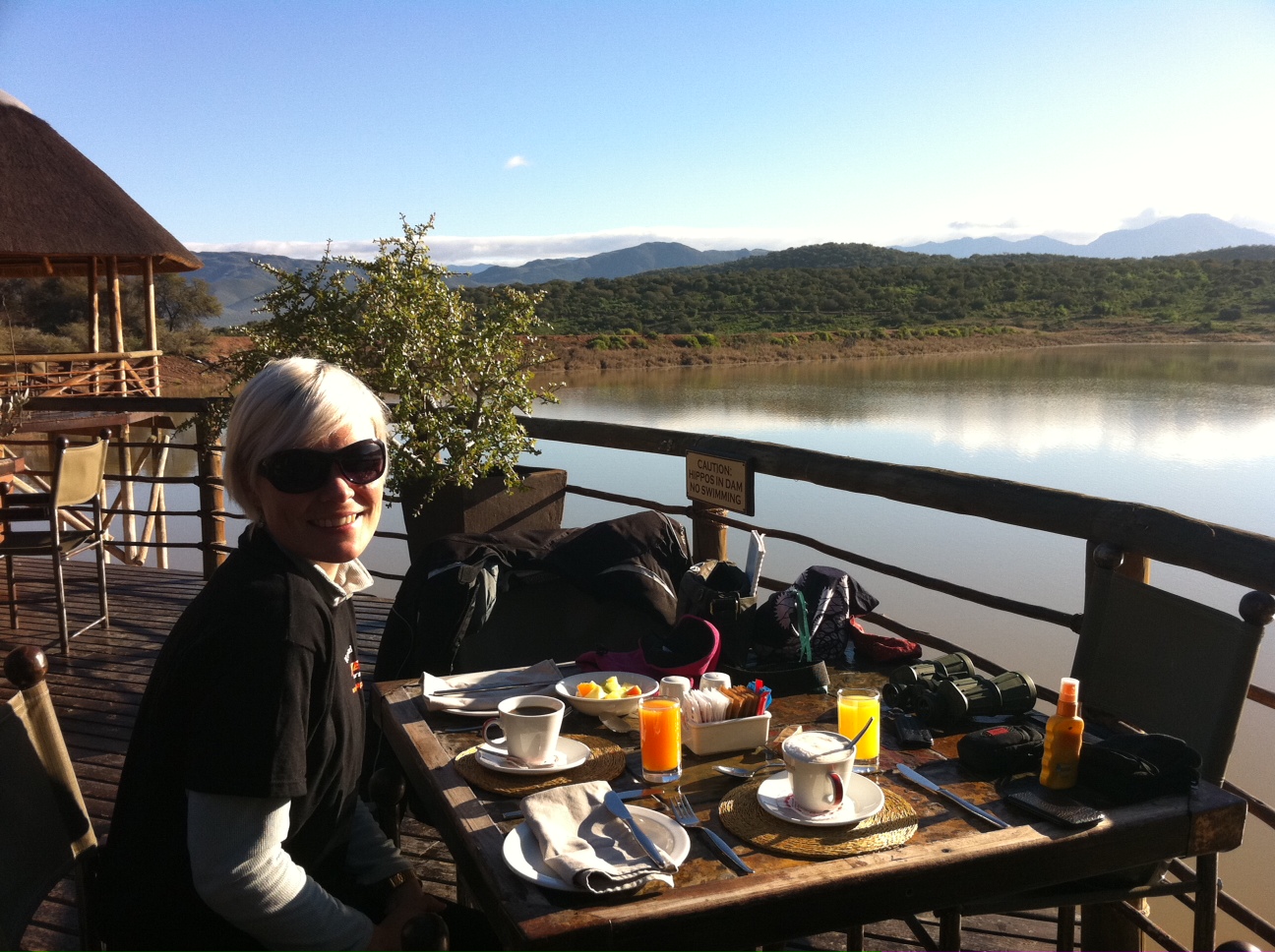
We woke up quite early and decided that we would not have breakfast at the guesthouse. Our guidebook recommended to pay a visit Buffelsdrift game park and we decided to try to get a breakfast there. Great idea! On arrival we were seated on a sun drenched terrace/observation deck overlooking a natural pool with hippos on the opposite bank. The breakfast was “international hotel” style, ie good and plentiful and once again very affordable.

Roxter heated grips

Though it was an unseasonal 18C this Sunday we can’t hide from the fact that we are in the middle of November and the weather is bound to turn polar very soon. I’ve already located my snood and the liner is back in the waterproof jacket.

I usually have no issue riding in the cold because with the right equipment one can really isolate themselves from the cold. And that’s the secret; using the right equipment. It’s like in construction, having the correct tool makes the job ten times easier.

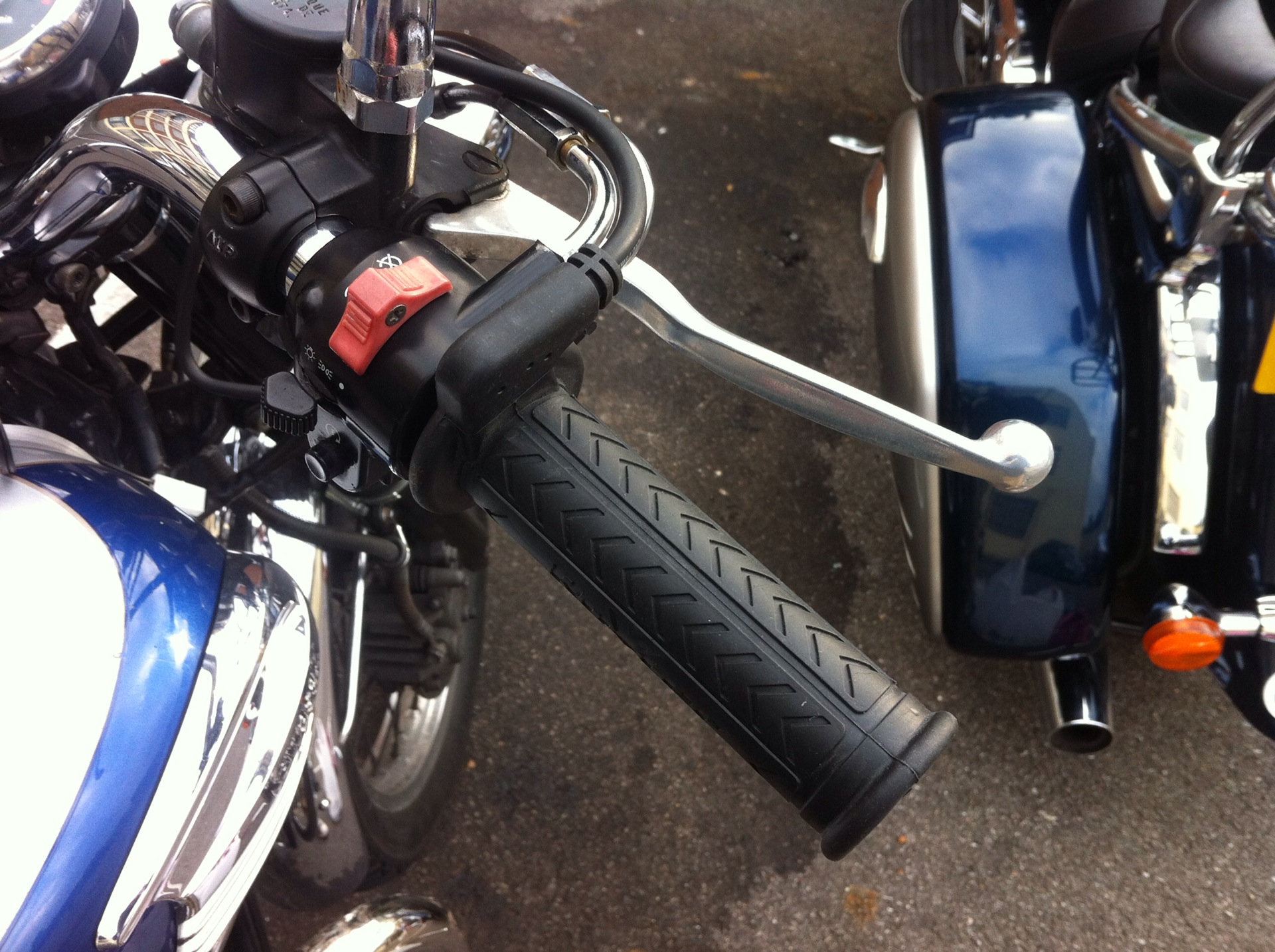
One great piece of kit that I first experienced on a 1200GS in South Africa this year is heated grips. It’s one of those things that can only be appreciated fully once tested. It’s unbelievable how much comfort they bring to a cold ride and how much further you can ride with heat being transfered to your body through your hands. It’s no coincidence that these days all the top touring bikes come with heated grips installed on them. They even have heated seats…

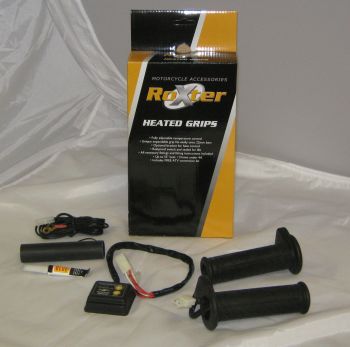
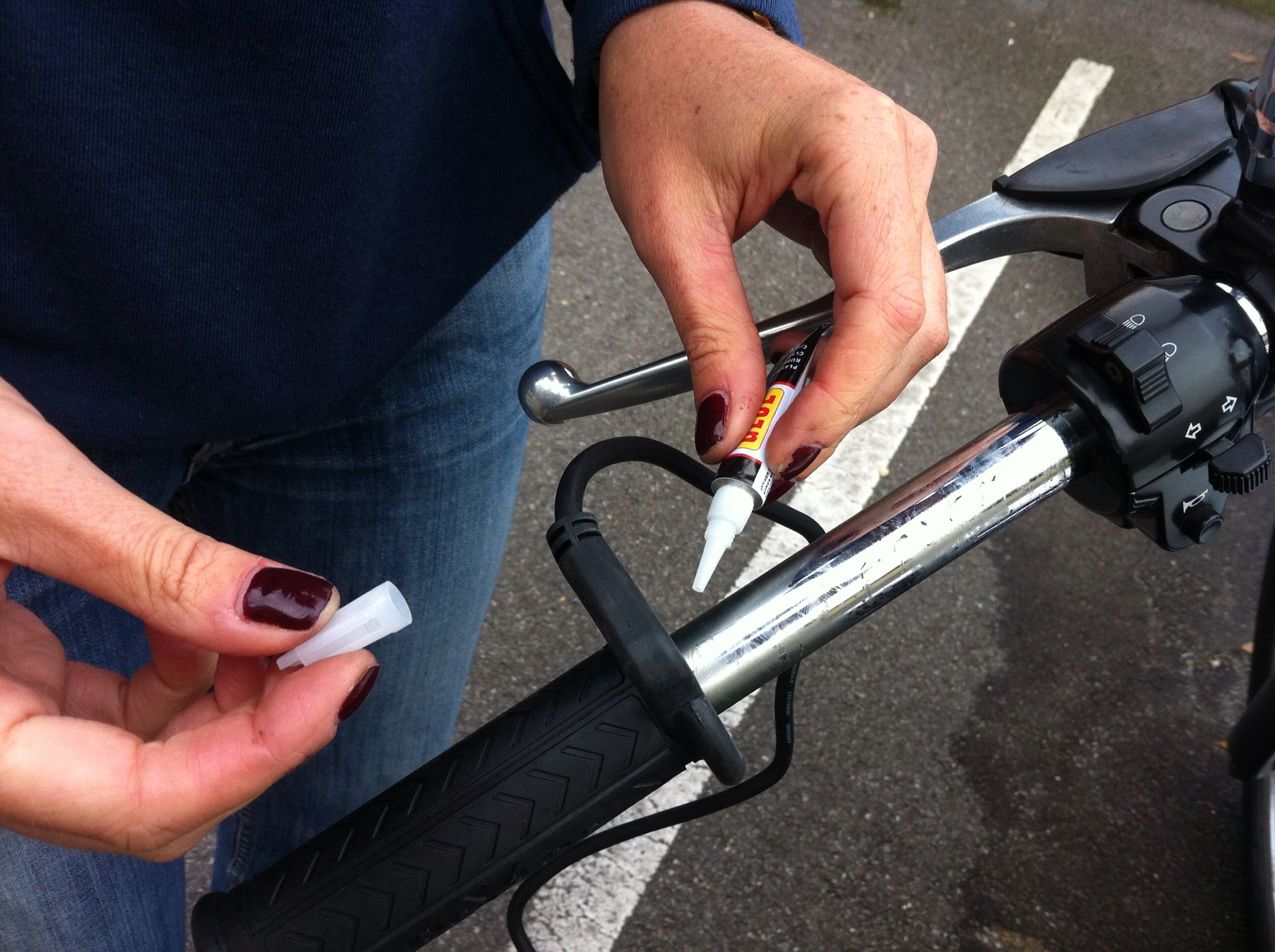
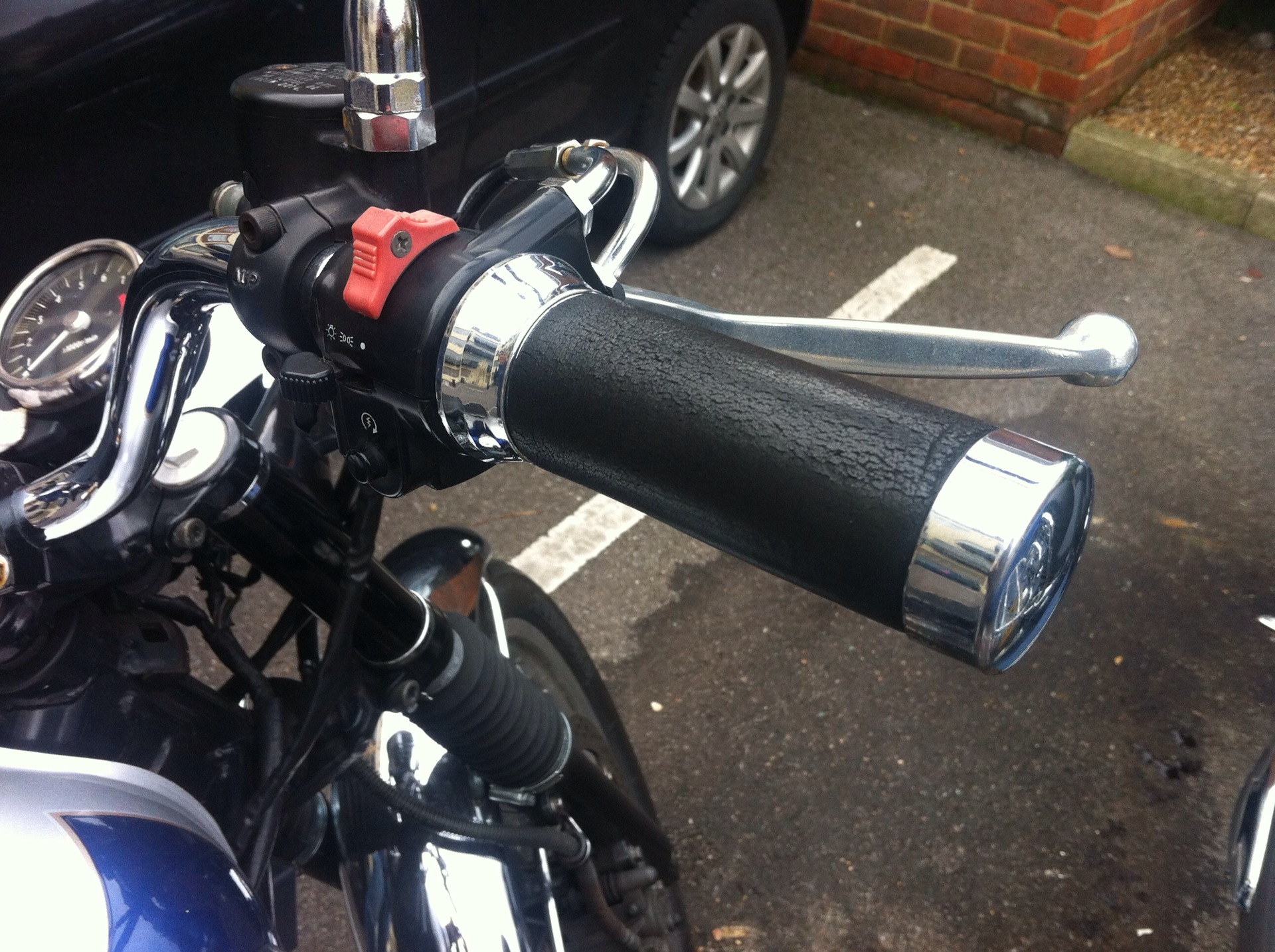
In anticipation of cold weather and a weekend trip to Belgium on 2 bikes we decided to install some heated grips on the Kawasaki W650. I looked around on the web and most reviews of the Oxfords were very good. I also discovered that Oxford produces a sub-brand called Roxter which is 30% cheaper but built identically.

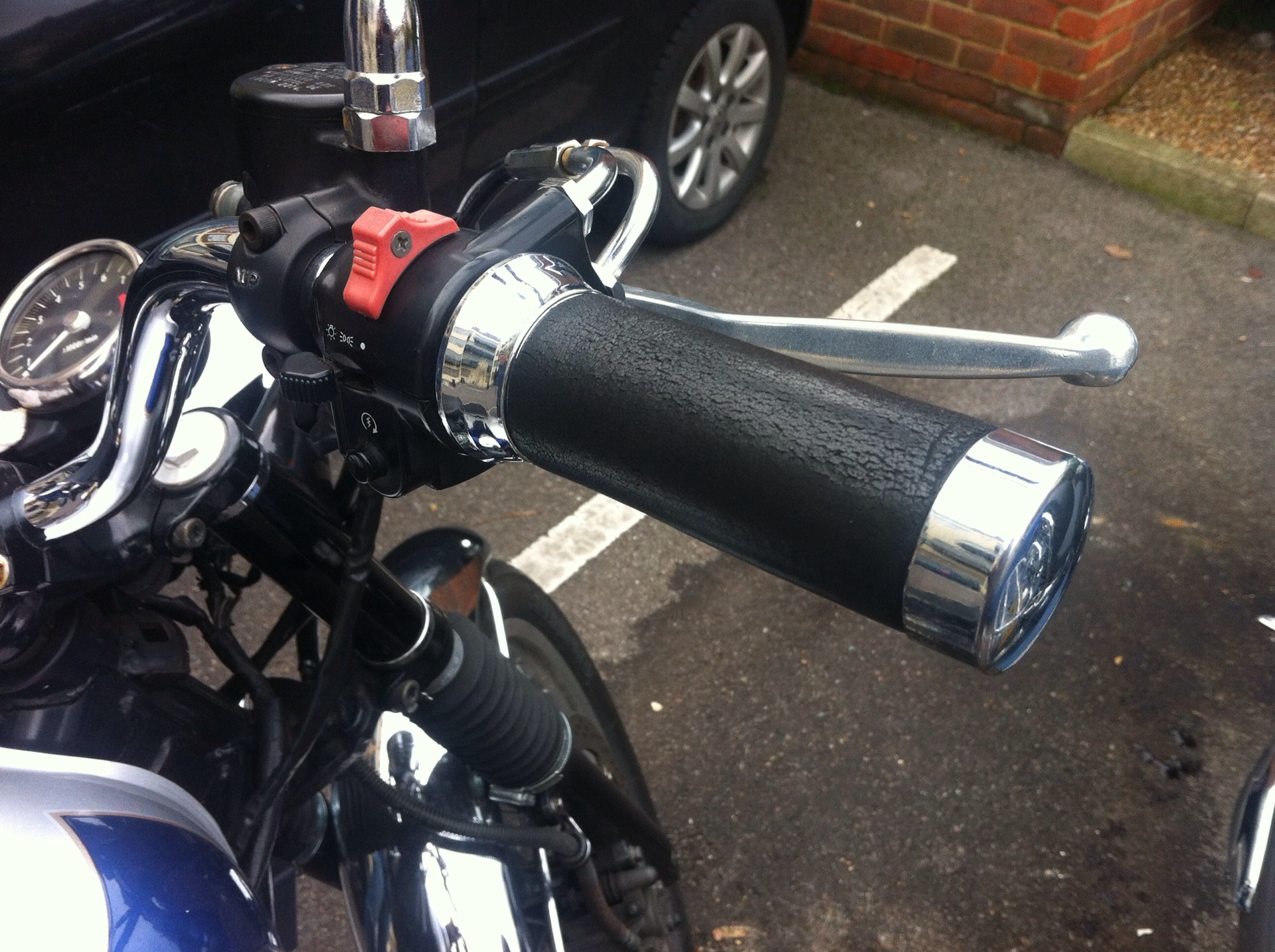
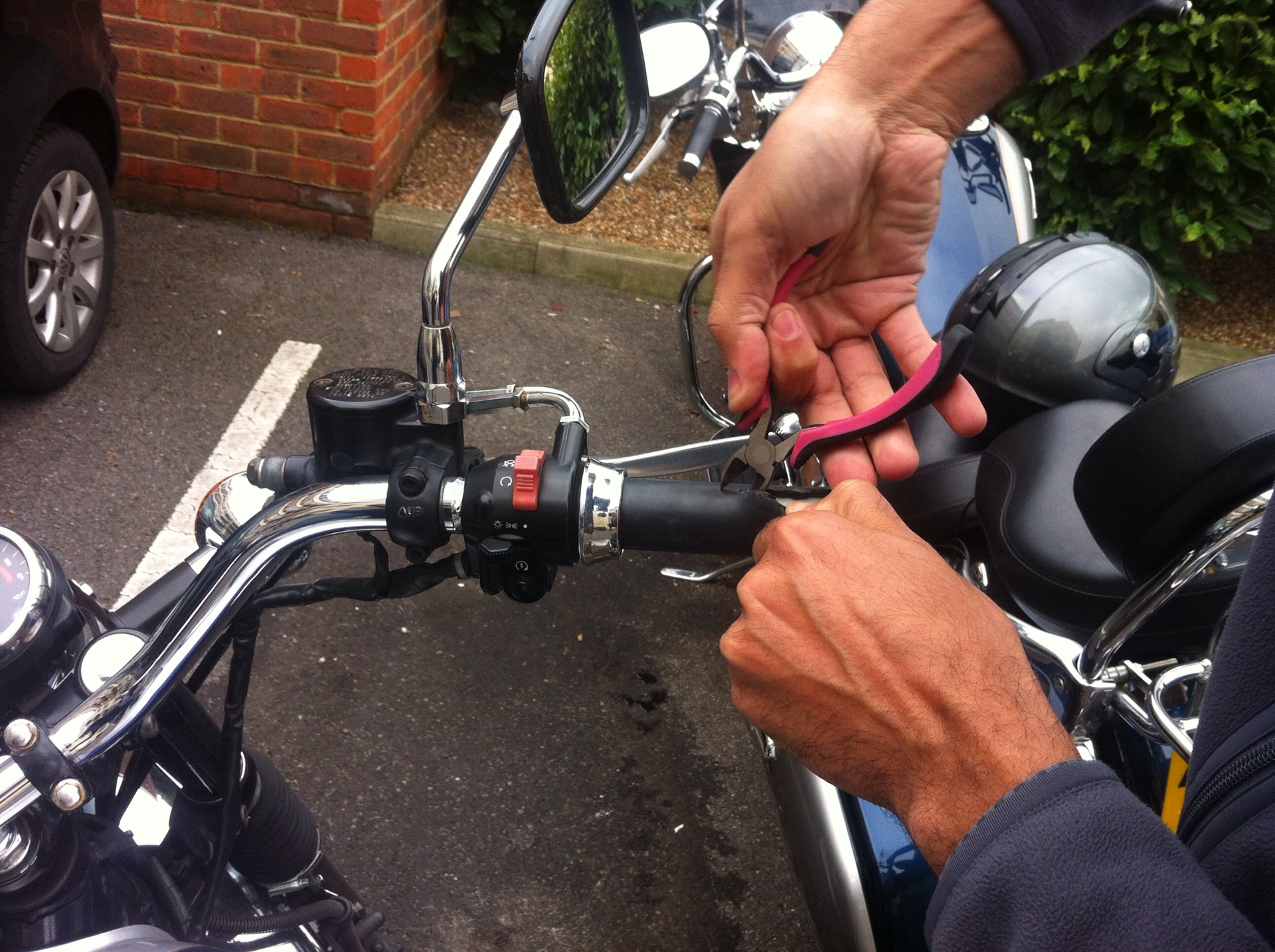
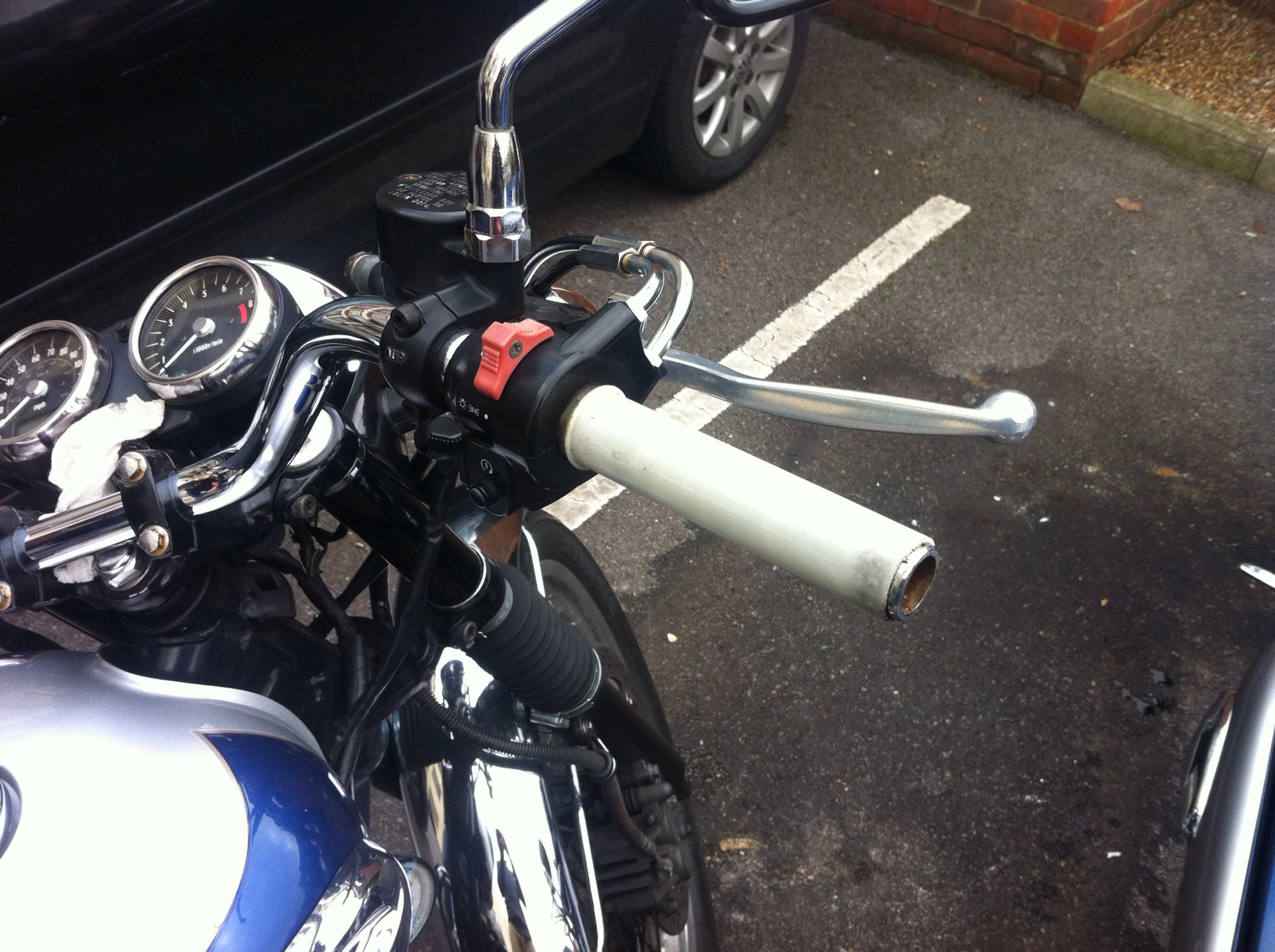
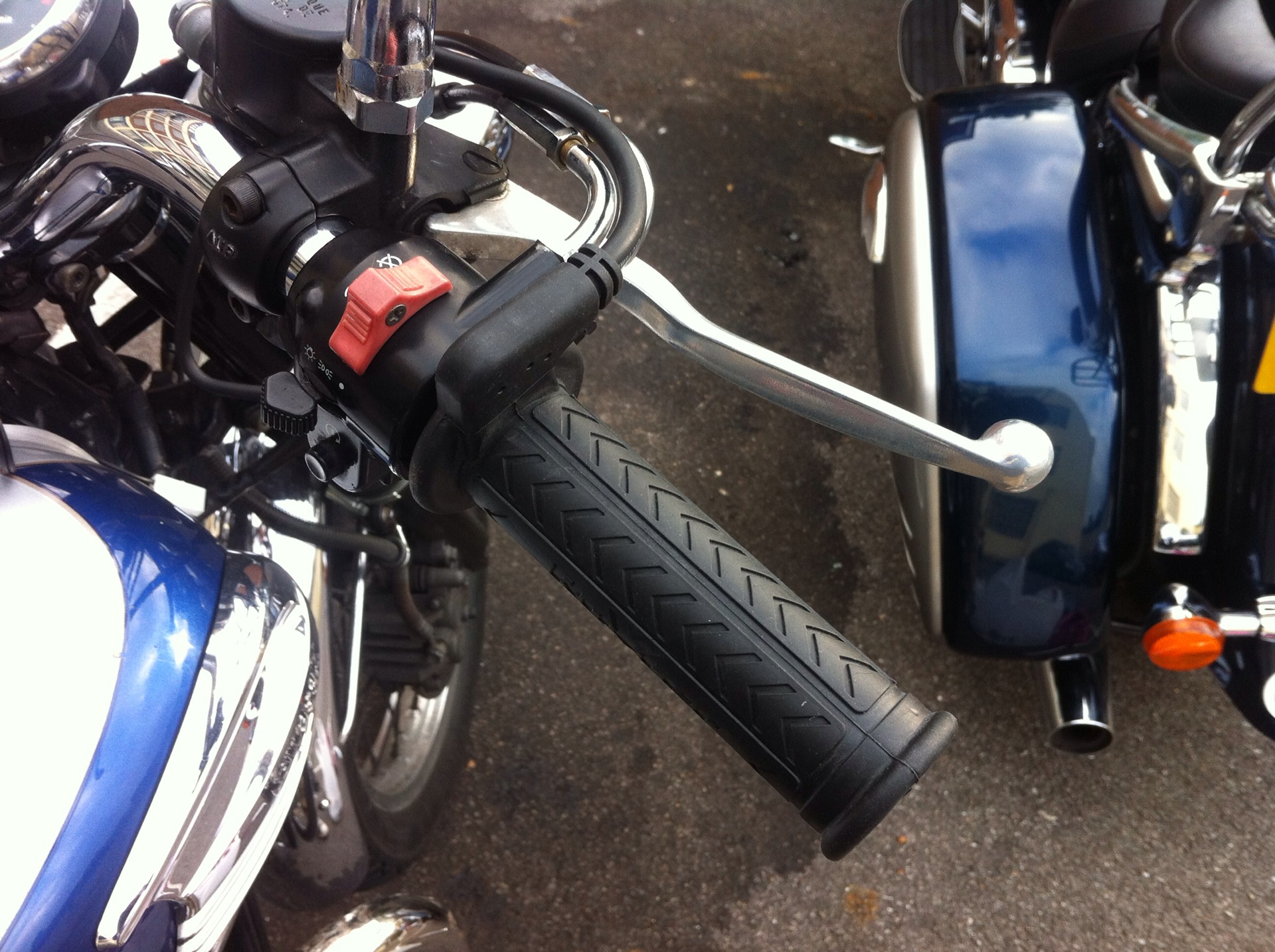
The first step was to get rid of the original soft grips. This was done rather easily with some cutters and we soon had bare handle bars ready to be fitted with the heated grips. We did a mock installation before glueing anything to make sure everything worked correctly. The main issue we had was that I wanted to instal the system on an ignited wire; ie it would cut off when the bike is swithed off. This means that there cannot be any incident where the grips are left on all night to drain the battery. After some searching and thinking like electricians we decided to attach the positive wire to the wire of the back light. Fingers crossed when I turned the bike on… nothing blows up…good… and the grips become warm. Nice!

Now the W650 is all set up for the winter!


Kawasaki Nomad 1600

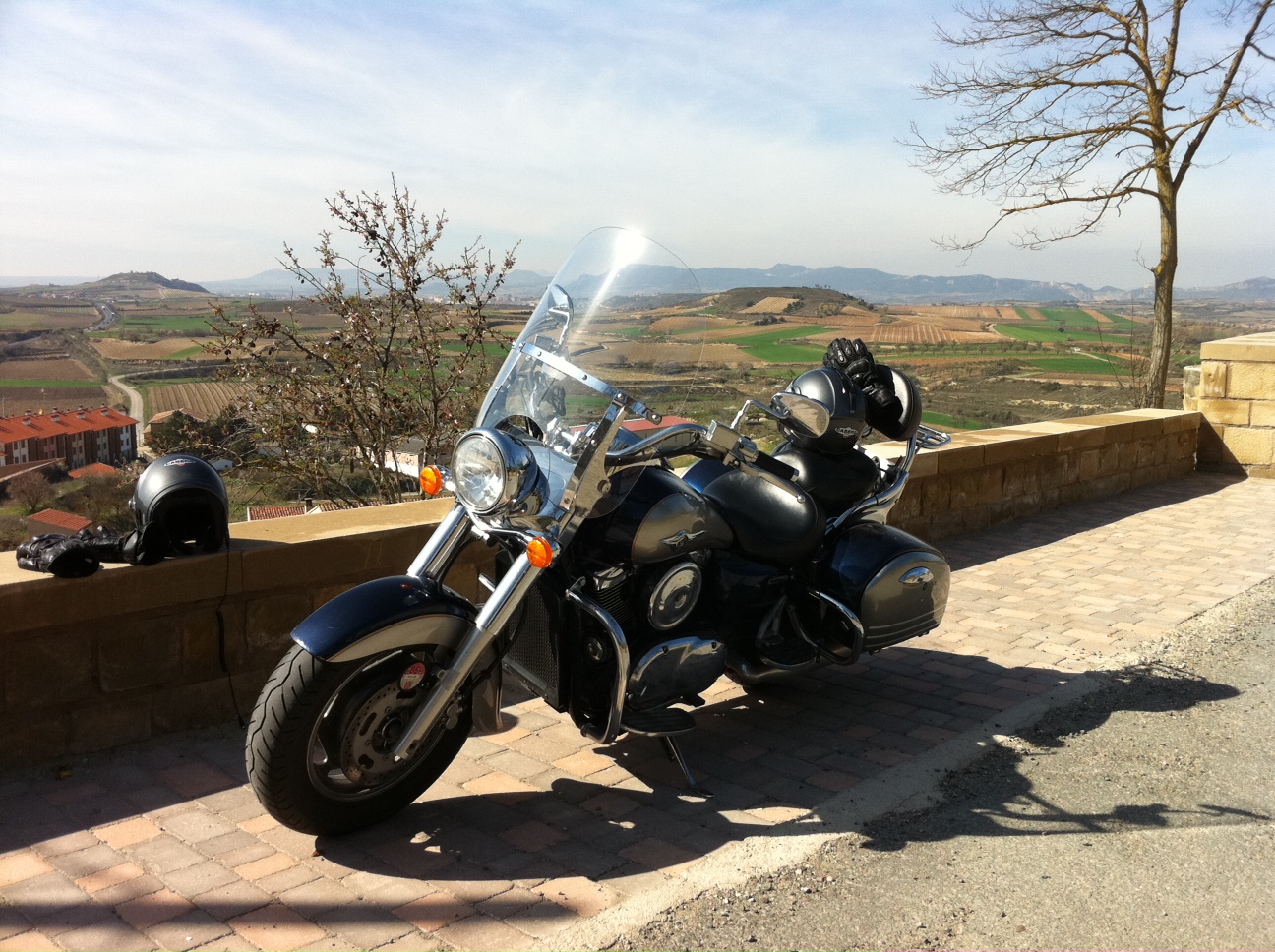
The bike I currently use for my tours is a 2005 Kawasaki Nomad 1600. I’ve come to realize that it is one of the best bikes to tour Europe and it really does it for me. Other choices would have been a BMW 1200, either the GS or the RT but I do enjoy a bit of chrome and a bit of noise…

I didn’t buy the Nomad with the view to tour much on it. I guess the idea was to treat myself to a big beautiful piece of machinery.  And I quickly found out that out on the open road this thing really comes to its own!

Once you get used to the sheer size of it, the Nomad is a very comfortable bike to ride. It is quite impressive at first; the wide handlebars and the huge tank give the rider the impression that they have bitten more than they can chew. But once you’ve covered a few meters you realise that it is a surprisingly well balanced machine with very stable and light steering. The saddle is very wide, giving the rider plenty of space to move around. Same for the big floorboards. The passenger is treated very well too, with ample seating space and passenger floorboards. One thing to note is that the Nomad is so wide and stable that adding an average sized human on the back of it does not affect it at all. No change to handling, no change to power.

The engine is impressive as well. But one has to remember that this is a big bore V-twin. This is a class of its own and should not be compared to other engine architectures. I have to say that I was a little confused in the beginning. I was expecting a 1600cc engine to blow my socks away; after all, it’s nearly 3 times bigger than a Honda Hornet so it should go 3 times faster right? Nope. What it does is give the rider tonnes of torque to play with. And that’s how it should be ridden.

The Nomad ticks many of my boxes and it has a lot of the things I look for in a bike; style (debatable for some), space, noise and a certain degree of practicality. I know the latter may come as a surprise to some but with such big hardbags the rider can take whatever they need for any type of trip. This is actually one of my criteria for bikes; storage. I hate carrying gear in a rucksack, or having to loop my chain around the handlebar while riding. Each pannier carries about 35L; plenty for anyone! In addition to that there are lots of places where one can add power plugs, or fix a GPS etc…

 Accessories

I’ve added a few bits to my bike. It is a good tourer out of the box but it can do with a few more touring essentials.

The first change I did was to add a SwitchBlade 2up windshield by National Cycle; it is a really tall screen that can come off the bike in seconds. Helmet buffeting is a big problem when touring for hours; it can really ruin your experience. That’s why I think is is essential to have good wind protection.

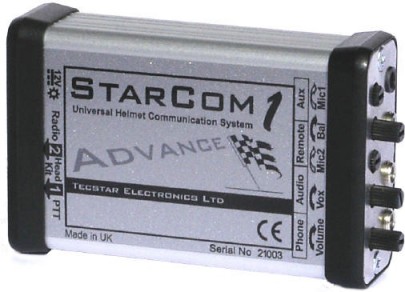
The second addition was an intercom system. I had tried a Bluetooth system and, while they are good enough for around town, I quickly found that it was useless on the highway. So I invested in a Starcom Advance system. All hard-wired. These things are great! It’s basically a little aluminium box with lots of plugs that you hide somewhere in your bike and connect to when you want to listen to music, speak to your passenger etc… Mine came with a Bluetooth option which means it connects to my phone (although I’ve never used it). The sound quality is excellent and one of the clever tricks is that it automatically adapts the volume level to compensate for surrounding noise. This is really a must have for long tours. Listening to music (in background) and being able to discuss with your passenger really enhances the touring experience. I would recommend it to anyone. You can find second hand units on eBay for around £100, and seeing that they are bullet-proof you can’t go wrong.

Next on the list was a GPS unit… Yep, I know that one of the joys of touring on a bike is to take the road less travelled and to get lost on purpose… But I have such a bad sense of direction that I always get lost… especially in London! Like everyone I enjoy using maps of countries I visit to plan my trip and to visualize the roads ahead. But nothing can beat the practicality of a GPS unit when you are looking for your hotel in the centre of a city you’ve never been to at the end of a long day in the saddle. I didn’t buy a motorcycle specific unit. I thought that they were too expensive for the use I’d make of it. So I bought a Givi S950 pouch and a TomTom One XL that I attached to my handlebar. This GPS set-up works really well for me, the TomTom has a big screen which I find great. I enjoy having all the information on speed, speed limit, ETA etc etc right below my line of sight. I think it actually makes me safer as don’t have to look down to the instrument panel on the tank. The only issue I have is that this unit is very basic. It’s difficult to plan an itinerary with stops along the road. It also can’t record where you’ve been, what your speed was and “essential” information like that. But it always brings me to my destination safely.

I recently found a pair of SwitchBlade lower wind deflectors on eBay for a bargain. These are chromed lowers which, as the name suggests, deflect the wind that otherwise finds its way from under the windshield to your face. I have to admit that I’m not a huge fan of the look but they make an enormous difference in terms of wind protection. I can honestly say that now, riding on the highway at 70mph I find myself in a cocoon and I love it. “Fair weather” rider you say… Well, maybe that’s correct but frankly for me this really enhances my biking experience on long rides.

1990’s Harley softail

Take a look at this bike. Pure American iron shake and bake!This bike belongs to a distant uncle in Curacao. He told me it’s 15 years old and he spends thousands in replacing chrome bits that get bitten by the salty air. You have to love the fin-tail exhausts and tassles!

I took the bike for a ride and it really feels like a 1990s Harley… Old school chassis which is less than confidence inspiring. That being said it was a blast to take it on the coastal road and scare all the local dogs.

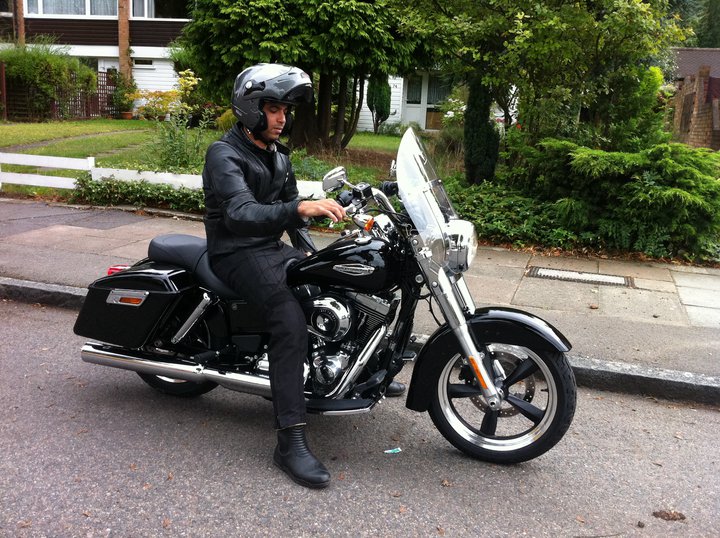
Harley Switchback

I recently test rode the new Harley Davidson model for 2012 – the FLD Switchback. It’s a Dyna based bike which wants to be a Road King. And it works! I think the Switchback will prove very successful with shorter guys or women who are looking for a touring bike that’s lighter than the Road King or the Electra Glide. It definitely fills a gap in HD’s range. It comes with detachable hard bags, windshield and the 103ci engine. At £13k on the road it’s a lot of Harley for your buck!