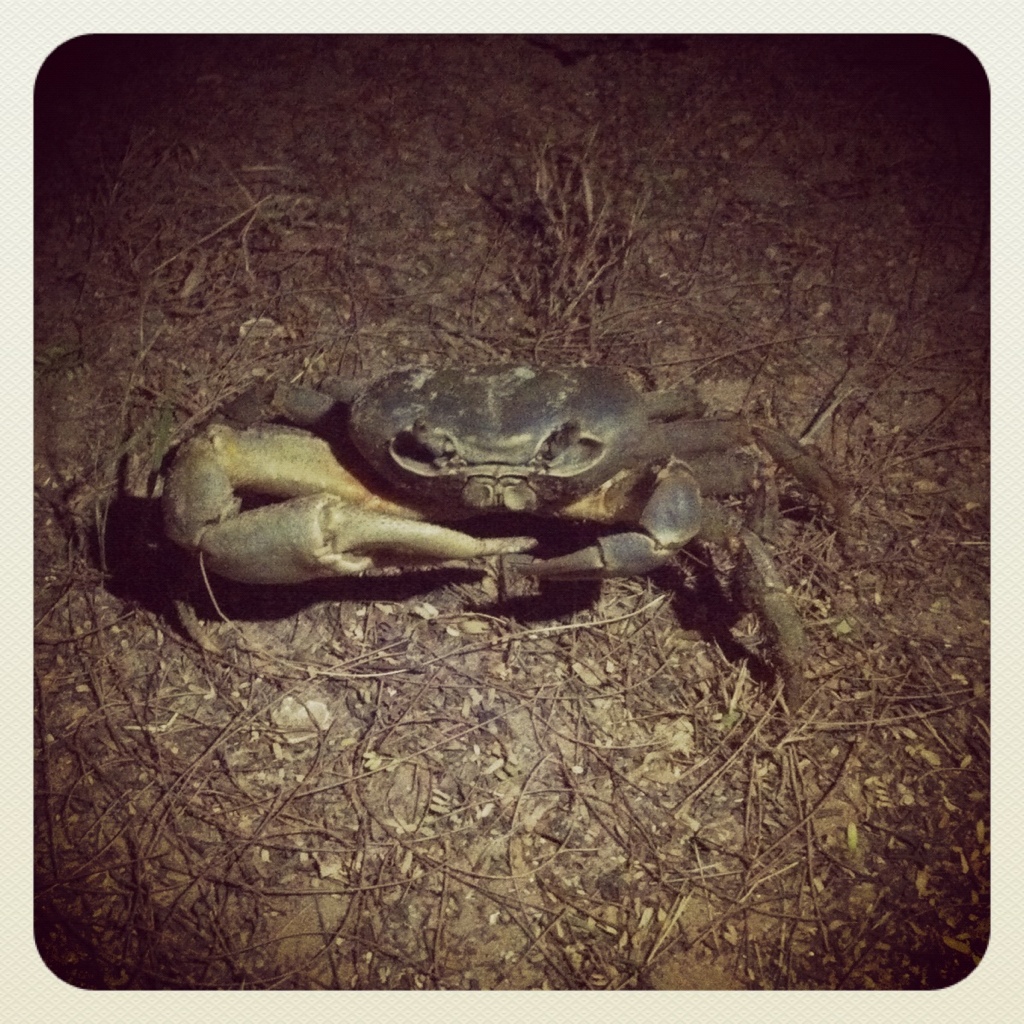
The quiet side of Dakar

A guest blog by Louise Wilson

We woke up to find the ‘dead’ cochroach under the sink was still on its back but somehow had moved from its originally place. It’s legs were now moving all over the place; a sign of how even the insects here are determined to never give up.

After discovering that the Internet wasn’t working in our hotel (not uncommon in Senegal) we decided to wander to the cafe next door for a coffee and WiFi. And that’s when the annoyances started. Within a second of leaving the guest house a taxi driver had pounced asking if we wanted a taxi. A simple ‘no Thank you’ wasn’t good enough as his reply was ‘why not?’ seriously, ‘why not?’ are you not allowed to do anything here without being questioned? Then we had a couple of ‘orange top-up phone card’ sellers waving their cards at us and this was all before we’d achieved anything for the day.

We had tossed the idea of going for breakfast at a particular patisserie in the Medina which was recommended but after reminding ourselves of how annoyed we’d be with being bothered we decided on a leisurely breakfast at the hotel (this was the first place we had been given fruit for breakfast!) before taking a taxi direct to the port for a boat to the island ‘Goree’, south east of Dakar.

The island of Goree is less than a kilometre in length and only a 20minute ferry ride from the mainland. It’s famous for its slave house and as there are no cars on the island, makes for an nice day out. Apart from being befriended in the ferry terminal by people with shops on the island, the ferry ride was pleasant and an interesting way to catch a glimpse of Dakar’s busy shipping port.

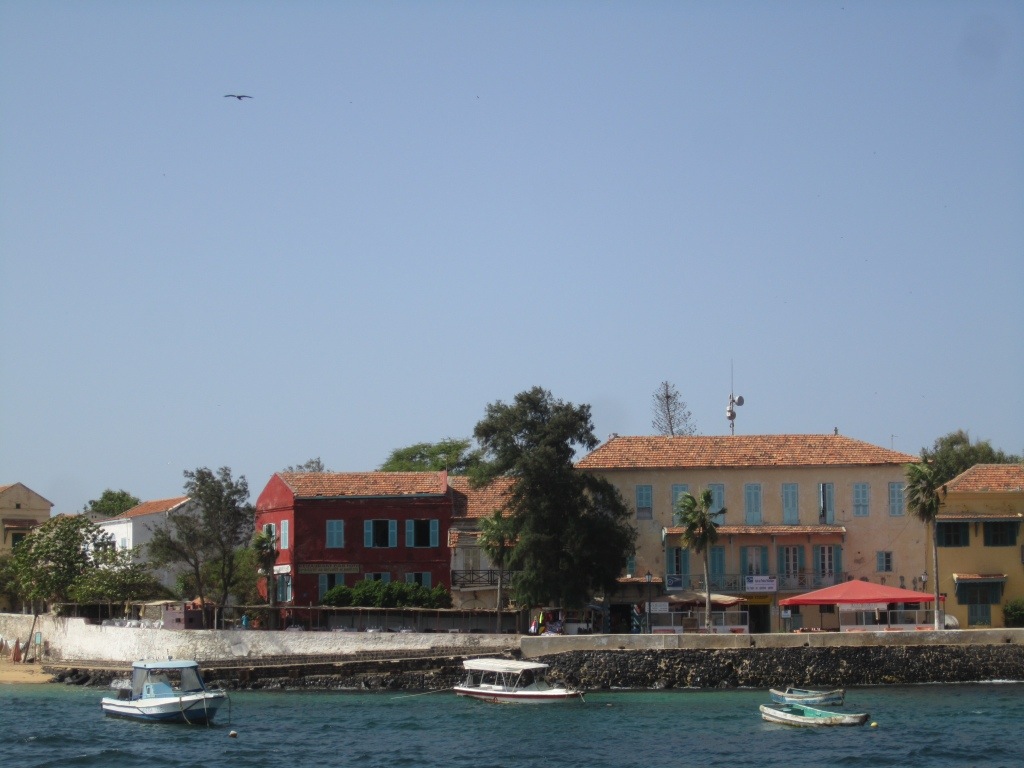
The island was beautiful. Colourful buildings with bougainvilleas lining the streets and wonderful views back to the mainland from the castel.
20121118-074804.jpg
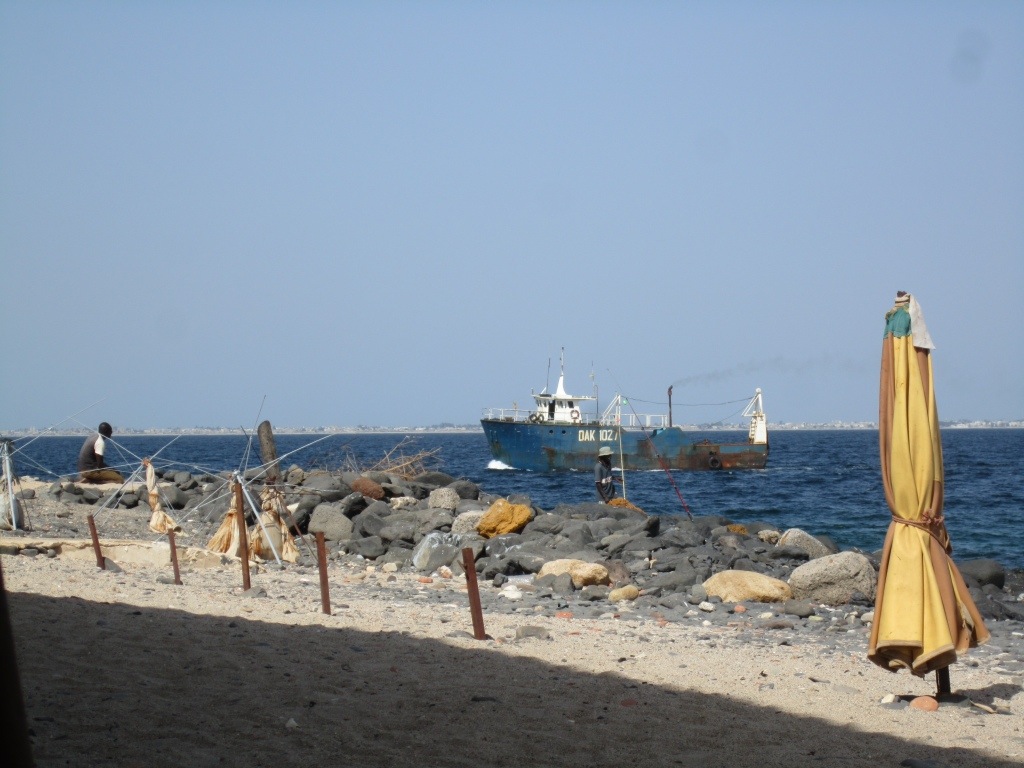
We had a wander around to get our bearings and check out the views then headed for the beach to read our books over lunch time while the museums were closed. The beach on the bottom corner was quiet and lined with old, rusty looking sun parasols. After looking around for a moment a guy jumped up from his sun lounger , opened up a parasol and laid out a mat for us to sit on. The ‘old, rusty’ looking parasol was actually well looked after and we saw a team of guys restoring them. We had intended to have a snooze on the beach but there was too much going on for me to sleep.

The guys restoring the parasols were fascinating. The spider web like frames were opened up and each piece was being under coated. It helps when the sun is hot and the paint dries in a few minutes. Numerous coats were being painted and clearly, like the Severn bridge, when one set are completed, the next set need renovating. The salt air must rust the frames in a matter of months. The other guy was checking over the ones being used for any damage that needed seeing to. Of course, mid work was the obligatory prayer to Allah. One of the painters knelt to prayer and I must say, of all places I’ve seen people pray, this was a beautiful setting looking out to sea on the edge of the island peninsula. A beautiful sight.
20121118-075003.jpg
There were also fishermen catching their meal/earnings for the day and it was clear when they had caught something good. A loud cheer was heard and the parasol guys would raise their arms in recognition.

A few guys came down to the beach to cool off in the water and carry out a few push ups. It’s fair to say the Senegelese are very fitness conscious and working out on the beach is a regular occurrence.

Possibly the most intriguing moment was the kids who came with their goats to, I guess, clean them in the sea. The goats (although I later discovered they were sheep with no coat) knew what was coming and did not want to go into the water. It’s clearly a cultural thing but I find it difficult to watch how they treat their animals. You could argue that forcing them into the water is good because it cleans them but dragging them backwards by one leg seems cruel. Anyway, the cleaning took quite some time. First they got them wet and rubbed them all over, then the sheep would come out of the water and be rubbed all over with sand, then taken into the water to rinse off, then the process was repeated. The sheep came out looking very clean but still they bleated and hissed the entire time.

After our relax on the beach we headed for the slave house. It was restored about 20 years ago and although small (it held about 100 slaves) is very good, if not a bit too good at showing what conditions the slaves would have lived in. Small, dingy, damp cells for men, women and children and even smaller rooms for those that protested.
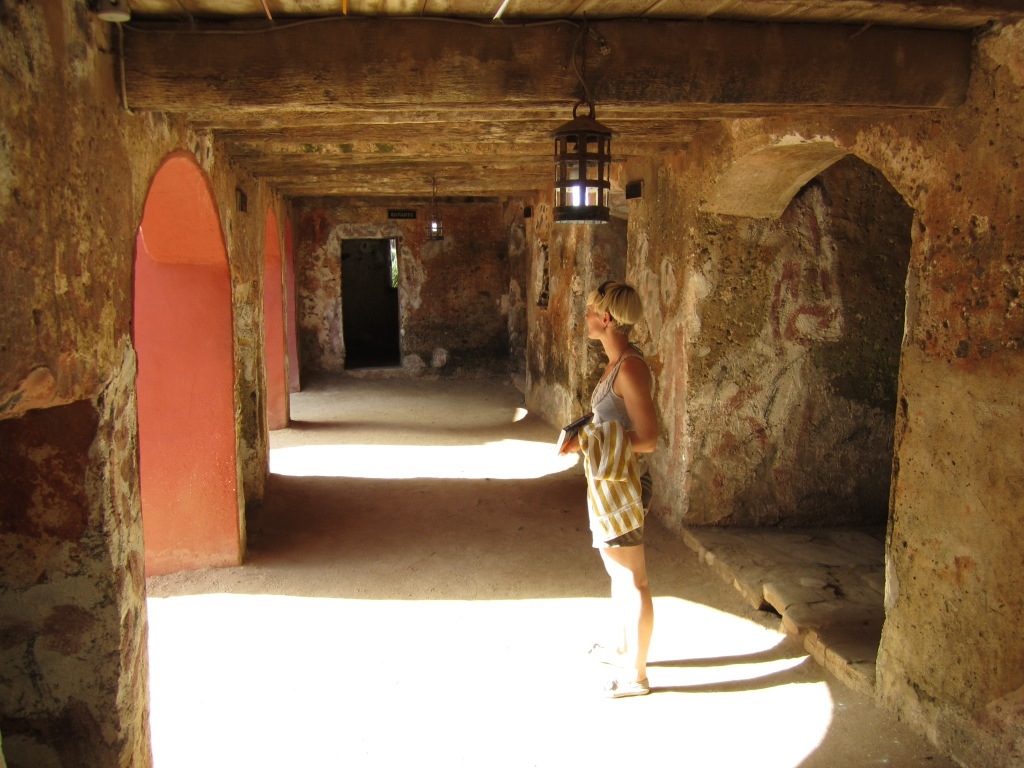
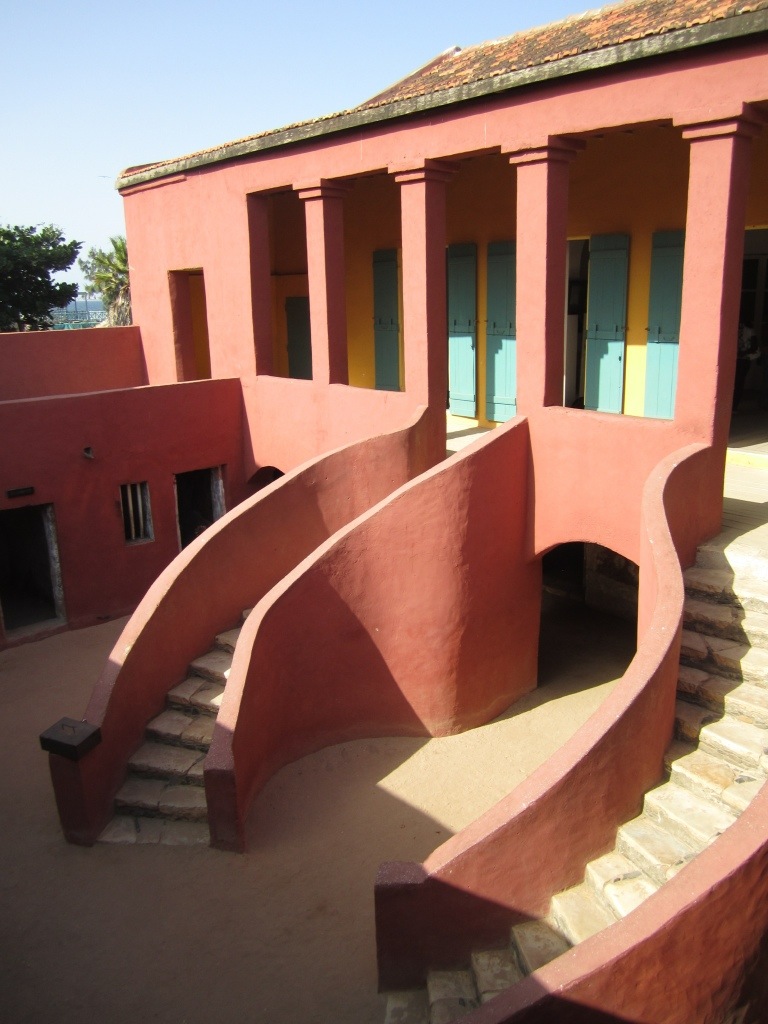
20121118-075408.jpgThis house is famous for its “door of no return” which looks out to the sea. It’s a strong symbol for the condition of slaves and their harsh life to come across the ocean but it turns out that slaves never went through it…On a positive note, the slave house has a wonderful staircase up to the first floor of the building!
20121118-075221.jpg
Before our ferry back we had time for one last drink by the beach in one of seafront the restaurants. A kid who we’d seen carrying a fish around had found a knife and a good spot by the water to gut it. All we could see was bits of fish being thrown into the water, a local cat looking for some food and about 10 birds of prey (buzzards?) circling above ready to swoop into the water for a meal. While this was going on we could hear the sound of the maracas style hand held instrument the guys were selling. We were glad to leave the sound behind but to be fair, Goree was a dream come true after such a difficult day in Dakar the day before. You can stay on the island and wish we’d arranged to do that. Having said that, I have no idea what we would done with our motorbikes and the reality of ‘we’re not normal tourists’ rang home!
Have you been to Dakar?

A guest blog by Louise Wilson

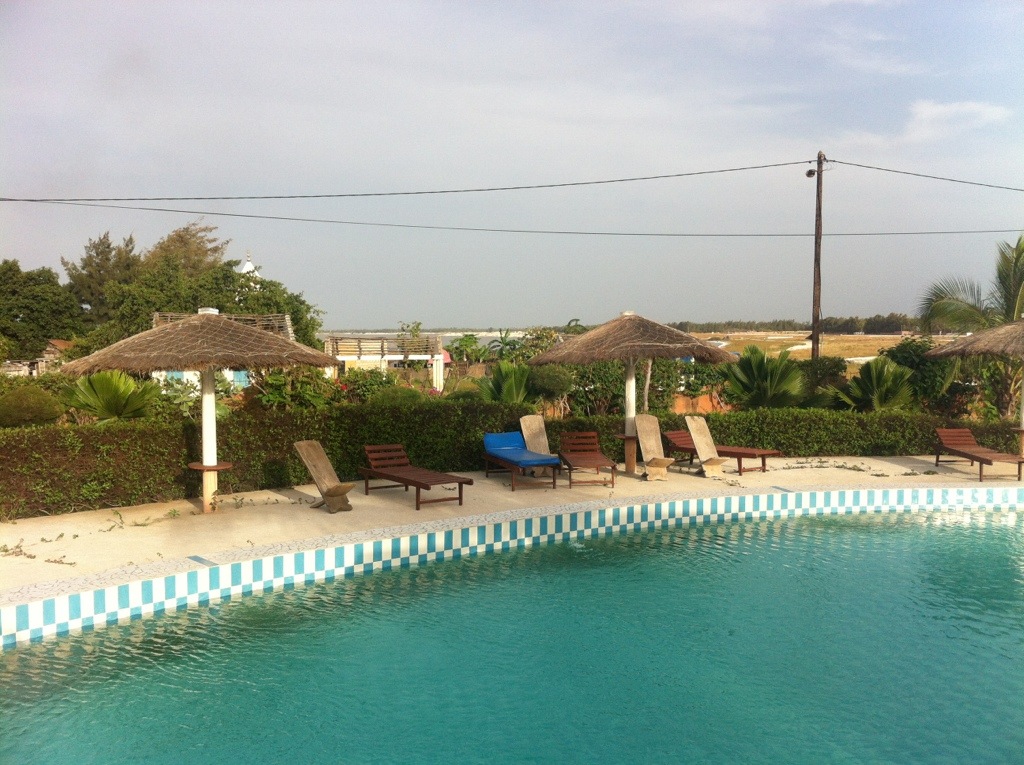
We had to visit Le Lac Rose seeing as it was the finishing point for the famous Paris-Dakar race and because we wanted a stop off point before tackling the Dakar traffic. Maybe the off peak season isn’t the time to visit or maybe it just simply isn’t that magnificent. We had been told that there is too much water in the lake at this time of year for it to look pink so weren’t too disappointed and instead tried really hard to find a rose shimmer. The lake is a salt lake where many workers go and dig for the salt to sell. Apparently you can swim/float in it but the edges aren’t very inviting and anyway we found a hotel with a swimming pool…!

20121115-091611.jpg

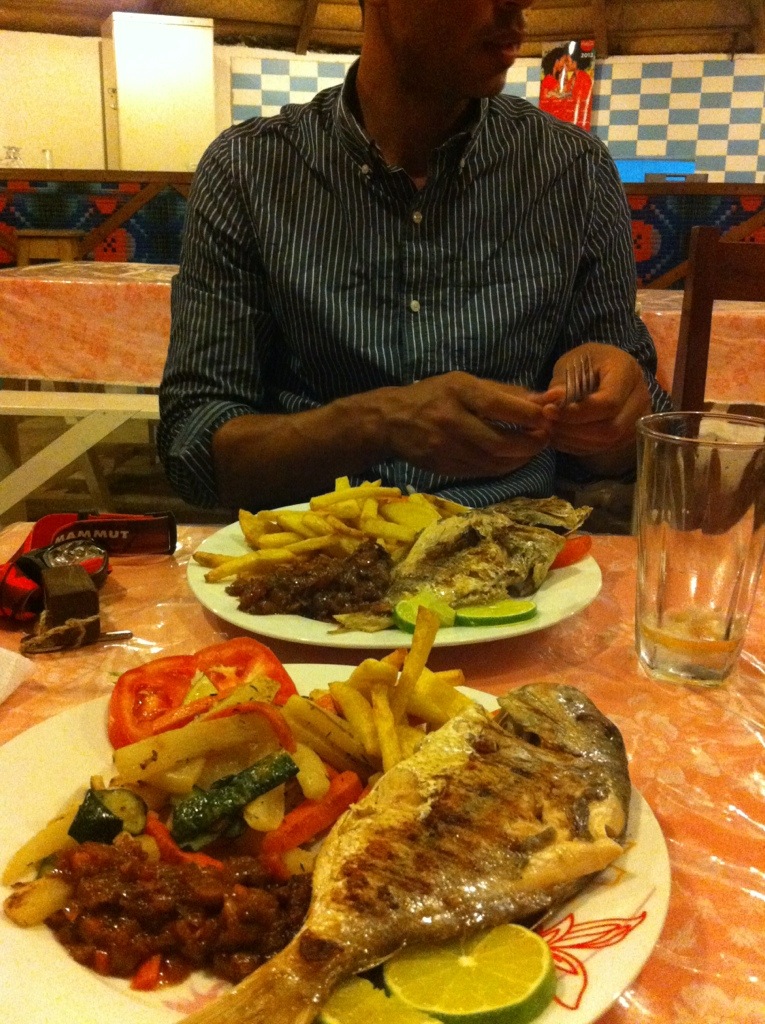
As we approached the lake, from Saint Louis, there was nothing to be seen and the piste was covered in sand (for non motorbike riders reading, riding in the sand is no fun as the bike either sinks or slides). We were hot, tired and not massively inspired by what we saw. Then the touts appeared! Senegalese are very friendly but they can also be annoyingly over the top when they want to sell something. I keep telling David to say he doesn’t speak French to try and deter them but they are persistent. After a tout insisting on showing us to the hotel we wanted and after many negotiations on the price and choice of room, we came away happy with a good deal. A round hut with en suite, air con and breakfast (not forgetting the pool) all within budget. They even opened the restaurant and produced a wonderful grilled fish meal for us.

20121115-091243.jpg

We had an interesting set of visitors. Along with the usual stray cats, a group of frogs were jumping around beneath our table.

20121115-090905.jpg

The only other guests were an Italian man with his Senegalese girlfriend. He turned out to be a motorbike lover and insisted on showing us his photos of his motorbike trips to Morocco. He owns 20 bikes, one of which is an ex-Paris Dakar bike that was ridden by Meoni!

The next day we were up early, had a wander over to watch the salt being collected (only to be bothered by touts) had breakfast and headed to Dakar.

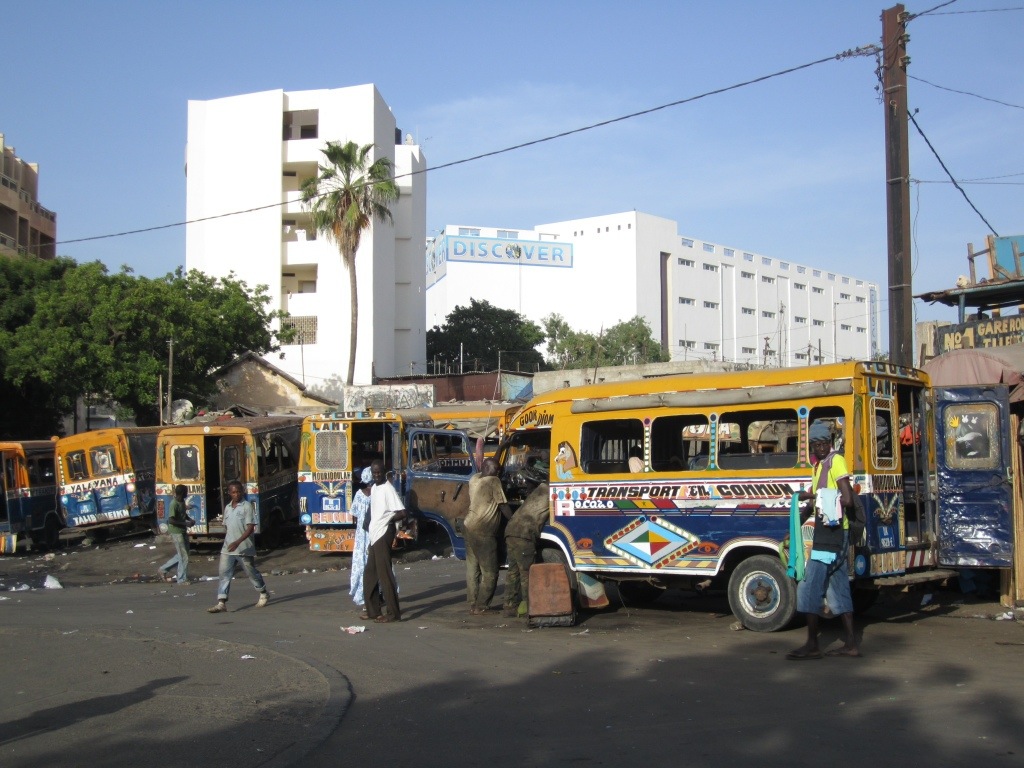
It’s a good thing we decided to stay by the lake so they we only had 60km to do to reach the city. It’s notorious for its traffic jams because of the peninsula geography and therefore one road in and one road out. The hardest thing we found was the lack of street signs. Senegal isn’t very good for road names and or direction signs.

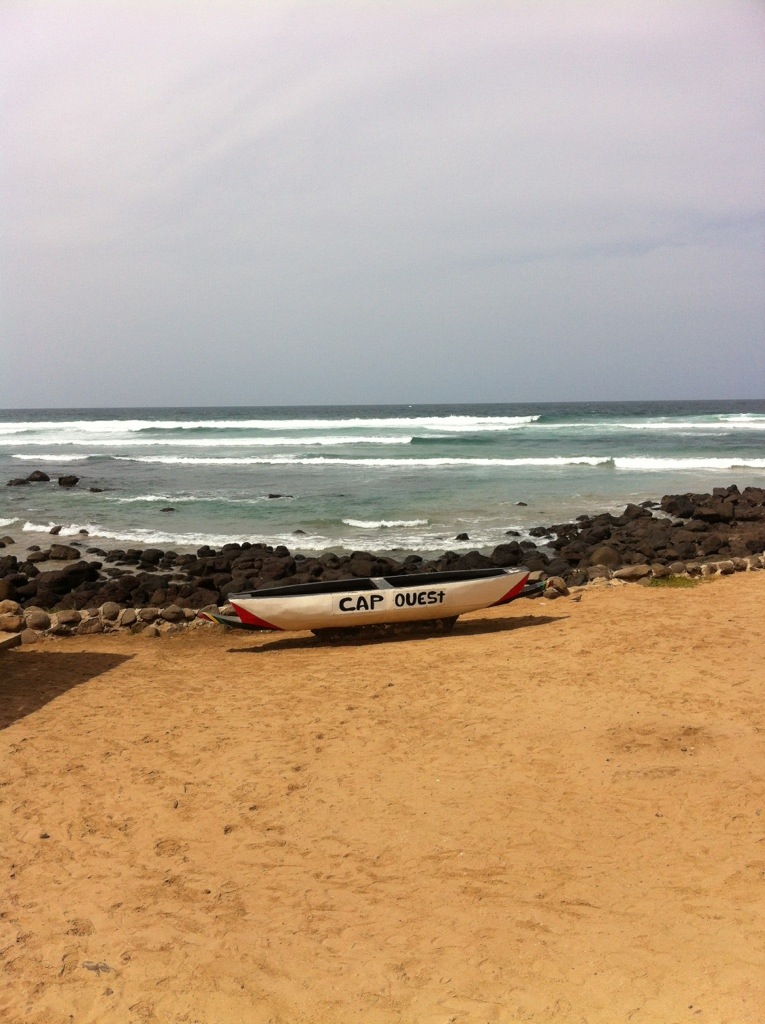
After a number of stops to ask for directions, a few checks of the iPhone GPS, some close shaves with traffic and the odd swearing, we made it to Cap Ouest, a guest house recommended in the Lonely Planet which is on the north side of the peninsula. It had been suggested by a number of people that we stay slightly out of the centre to avoid the traffic and have somewhere to escape in the evenings.

20121115-091357.jpg

We dropped our kit, showered and jumped into a local taxi for the 15min ride into the centre.

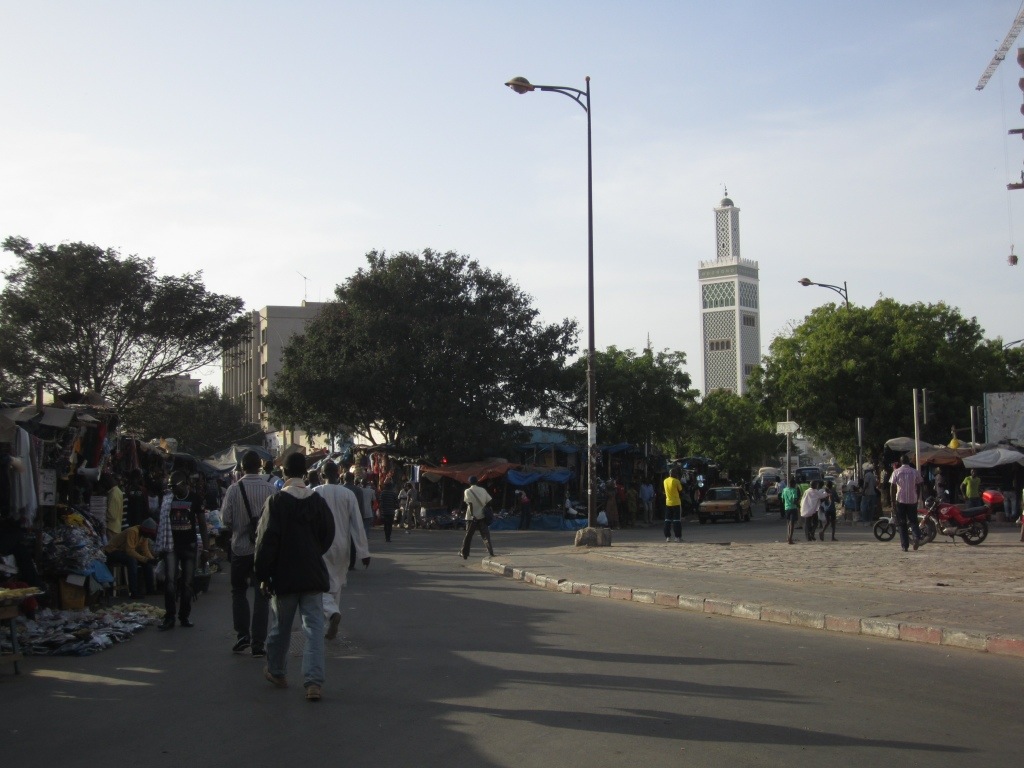
At first it was quite pleasant. We were dropped by the Place de l’independance and decided to wander around to absorb the atmosphere. The covered food market was well worth a visit to see the women with fruit and veg piled high and then men hacking away at meat. We wandered down to the French Institute to enjoy a drink by which point we were feeling confident to venture into one of the markets. That confidence lasted about 10minutes when the first guy insisted on walking with us to his shop, then on the left a guy came wanting to sell us wooden carvings, behind was a guy wanting to sell jewellery (nasty plastic necklaces!) and then a mini argument broke out with me telling them to back off and them annoyed at each other for annoying me. We very quickly spotted N’Ice, an ice cream parlour which was meant to sell local fruits ice-cream and ran inside.
!

20121118-082236.jpg
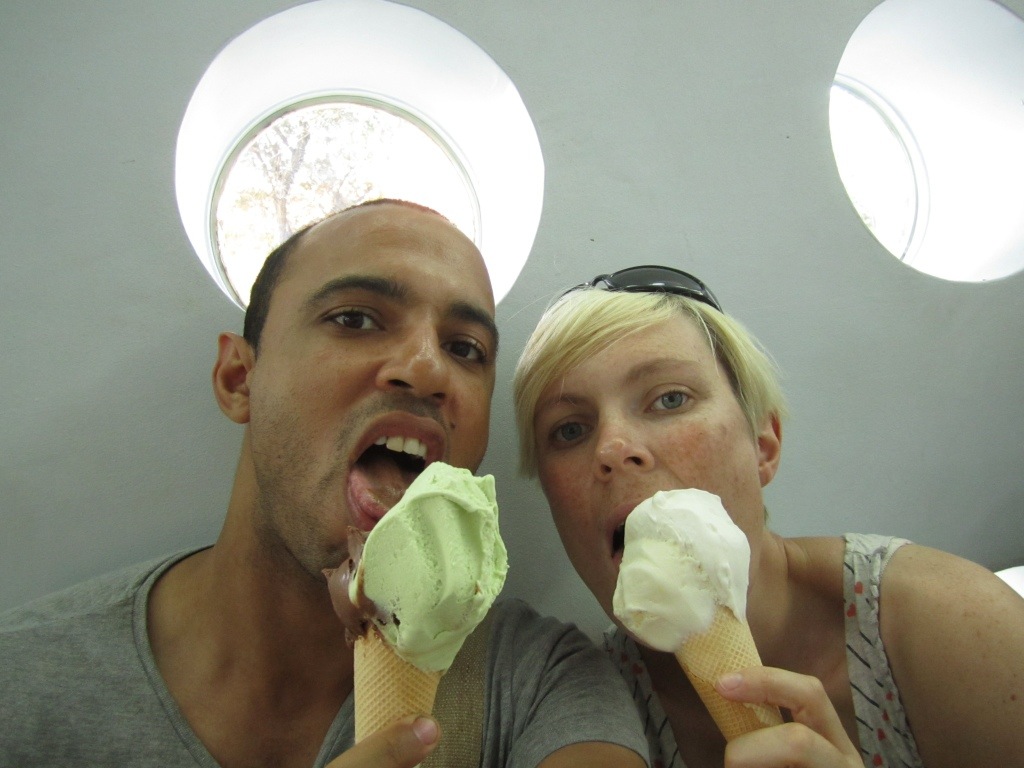
The ‘Obama’ chocolate flavoured ice cream made us chuckle and the touts were left well behind.

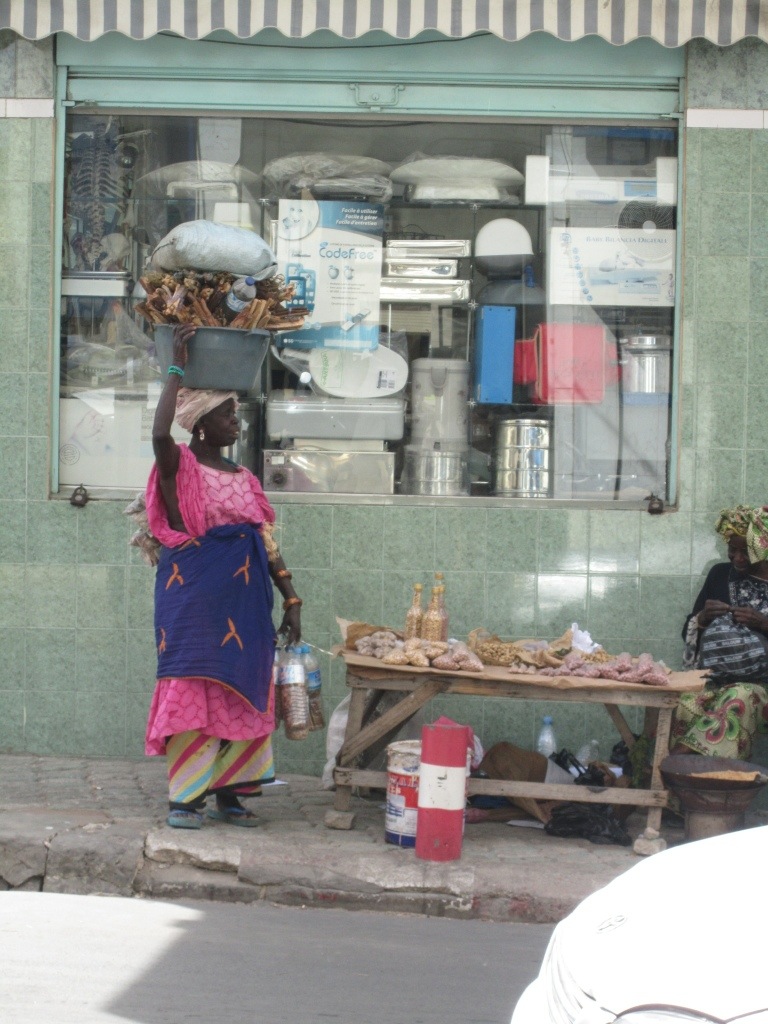
Post ice cream we walked away from the centre towards the Grand Mosque through streets with kids playing table football, men welding in the street, women roasting peanuts, taxis honking, numerous Orange phone card topup sellers, Nescafe instant coffee kiosks (Senegal needs to learn a thing or two about coffee from Morocco) beggars, a man trying to sell me socks, men selling shoes on the bonnet of someone else’s car and a man proudly displaying his selection of digital calculators.

20121118-082732.jpg

20121118-082404.jpg
We jumped back in a taxi and headed to the guest house for some peace and quiet. On the way we saw a man standing on a busy street corner holding three analogue clocks for sale. David said he was just being Flavor Flav’. The highlight of the day was the guys selling oranges (although they were green) that they peel in a thin, continuous spiral. It looks amazing and it wasn’t for knowing I’d be pounced on by a tout if I stopped, I’d have bought one purely for the skill!

The lows were how, as a westerner walking around, you spend 40% of your time trying to shake off touts…Unfortunately this makes it difficult to be open and get to know locals. The heat, smells and dirtiness of the city also make it hard to relax but it’s fascinating to experience a big African city

20121118-082544.jpg

Our man in Saint Louis

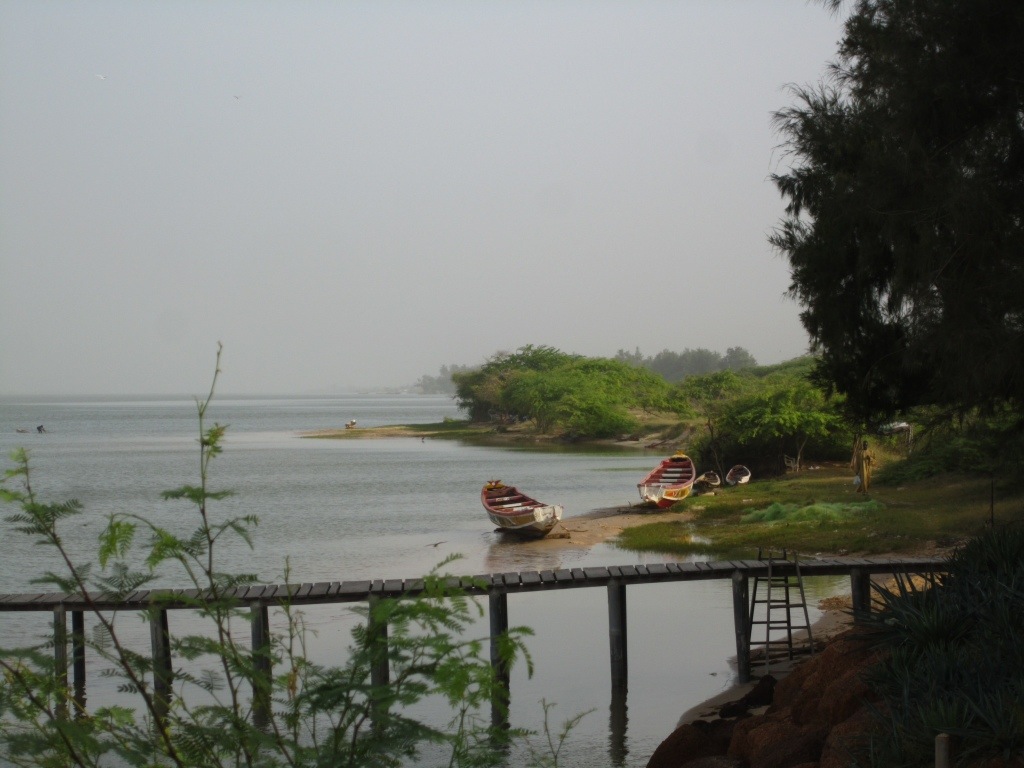
Zebrabar was exactly what the doctor ordered and there’s no doubt why it’s so popular with overlanders who have just crossed the Sahara. It is a campement right by the water with a choice of cabins. We booked ourselves into a lovely bungalow and parked the bikes in the soft sand right in front of it. We jumped in the water as soon as our bike kit was off and then joined the other guests on the long table for dinner. Everyone seems to be on the same wavelength here, and Ursula, Martin and their family make guests welcome in a very laid back, hands off way. We shared the table with a young couple from Luxemburg and a franco-canadian couple here to volunteer in a school. Present were also an Austrian couple who were about to begin a university exchange programme. They had a lot of very good advice about Saint Louis and Dakar. Fabian had wanted to overland it to Senegal but it didn’t happen. He did know all about temporary import of vehicles etc though… I had my first taste of a Gazelle beer which I can’t really tell whether its good or not (its been so long). It did the trick for me though! We spent the next 24h doing absolutely nothing except for swimming and reading. We had breakfast on the terrace overlooking the water and were greeted by local fishermen passing by in their colourful pirogues. We were actually very lucky because our first day in Zebrabar coincided with the visit of about 30 kids from a local orphanage. They were spending the day by the water and playing with the instruments and toys Martin has lying around. It may sound like a bad thing to happen when one is looking to relax but these kids were very well behaved and brought a lot of life to the site. We made friends with a few of them, doing tumbles in the water and showing them the bikes. We sat them on the bikes and let them rev the engine too. I know I would have loved that as a kid myself! Seeing their excitement was priceless. 20121114-192806.jpg

During our second day we focused on getting an extension on the 48h temporary import for our bikes. This was an interesting process to say the least… Apparently the local customs office won’t give you an extension (this is debatable though) and one has to deal with the infamous…let’s call him Mister M. Mister M is the son of an influential person in Senegal and he’s got connections… We were given his number and called him to arrange a meeting. We then waited on he terrace of the Hotel De La Poste when, an hour late, a car parked, doors opened and a smartly dressed businessman stepped out followed by an entourage of 3 minions. We shook hands, he asked what we needed and sent a minion away to make copies of our documents. When he came back the price negotiation started… Prices had come up compared to the usual rate. He explained that a third of it was for administration and the rest was for his effort. Louise began using her charm and bargaining skills and he got up and shook her hand at 38€ per bike for a 10 days extension. He then drove off with our paperwork and the promise to be back around 4pm. That left us a few hours to visit Saint Louis which is worth doing. It’s a long and narrow island which, like Manhattan is organised around a grid of streets. That’s where the comparison ends though… It did have some resemblance with another American city; New Orleans, with a certain French colonial feel and beautiful balconies on the first floor.

At 5:30pm, after a few reminders, Mister M. arrived in his car and didn’t get out; he handed us the paperwork, an “exceptional” authorisation to temporarily import a vehicle older than 5 years old, signed by some colonel…

All in all this was pretty straight forward and it’s evident that Mister M. does this all the time. So, for information to all the overlanders who debate this question on different fora, the answer is this. Don’t worry about the “no older than 5 years old” rule or having a carnet de passage for your vehicle. As long as you can grease Mister M.’s hand you’ll get in. FYI he told us the price for a car is 100€. Hope this helps. If you need to contact him, ask Ursula or Martin at Zebrabar; or for that matter, anyone in Saint Louis… Mister M. is a known and respected man…

The only down side to Saint Louis (and you’ll find this everywhere in Senegal) is the ‘touts’ trying to sell you everything from a horse cart ride to a kitchen sink. They are good at sticking to you like glue, asking your name and listening to what you’re after (this was actually helpful when looking for a Senegal flag for the motorbikes!). After a day of this and of street kids begging for money, we were pleasantly surprised to be greeted by a local guy who spotted our bikes and wanted to come and have a look. He was very friendly and wanted to hear all about our route because although he’s a teacher, he ‘lives for his motorbike’. It’s always nice to meet keen bikers!

Upon our return “home”, we had the very pleasant surprise to meet John, a South African who was spending some time in Senegal waiting to meet with his son Anton and his girlfriend Tina who are driving from London to Cape Town. John was a chemical engineer who came up with a process to entirely recycle cardboard. He was now focussing on creating a totally sustainable farm which could support up to 40 people. Louise had a very interesting g conversation with him as they were totally on the same wavelength and she felt very inspired by him. He also told us about his son Anton who has a fascinating story. John and Anton had been on a biking holiday in Argentina a few years ago when Anton had a terrible accident in which he lost a leg. This didn’t slow him down though, as a matter of fact he embraced the change so much that he became an volleyball athlete. And an Olympian too! He’d just finished competing in the London games before setting off to cross Africa in a 4×4 with his girlfriend. Louise and I were very disappointed that we didn’t get to meet them but John very kindly offered to meet up next time we’d be in Cape Town, an offer Louise and I would love to take up.

20121114-195418.jpg

10€ for each bike; border formalities…

(pictures to follow soon)

We knew that we were to expect corruption on both sides of the border so we devised a plan; good cop bad cop. I was naturally going to adopt the good cop role and Louise that of the unbending, outraged, purse holder white woman whom you don’t want to mess with…

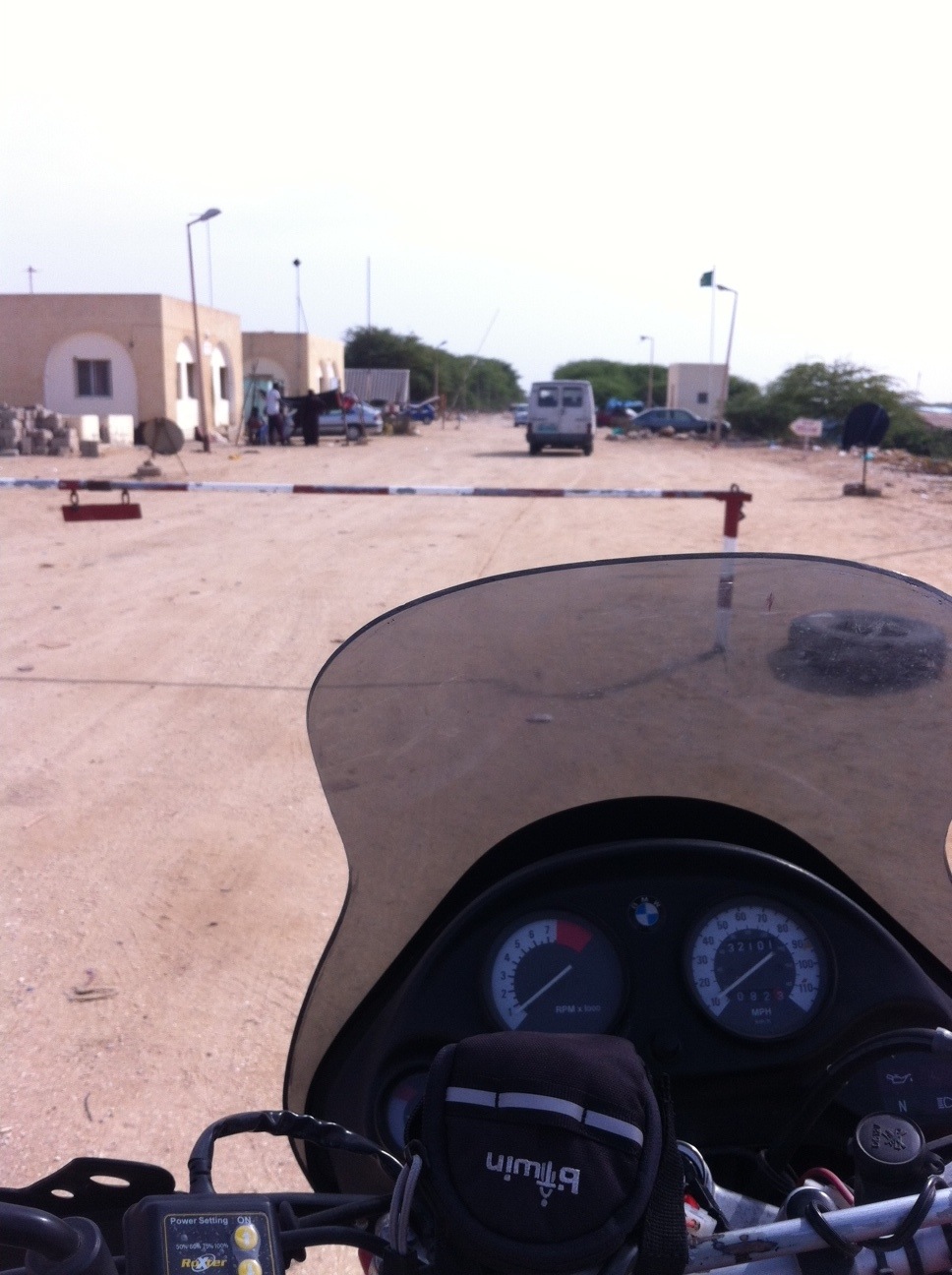
First we came across the Mauritanian gendarmerie who asked me for 10€ per bike. I was on my own because, as the man of the couple, they’d asked me to follow them into their office. I told him I knew this was corruption and he said yes, it’s not obligatory to pay but he’d be very grateful. Nice chap. So I gave him what Mauritanian currency I had left as he asked politely; the equivalent of about 2€ and he thanked me profusely.

Next was the Mauritanian customs. They needed 10€ per bike to let us out… This time Bad Cop was in charge and after much huffing and puffing, and the officer explaining that he’d “been there since 8am so he needs to be paid extra” we paid him 10€. We even got a phoney receipt for it but he wouldn’t give us a bottle from one of the many cases of wine he had stashed in his office.

The third part of the process was to deal with the Mauritanian police. In order to get our passports stamped they needed 10€ per bike… Here both bad cop and good cop were outraged; how could a respectable service like the Islamic Republic of Mauritania’s police be as corrupt as the gendarmerie and the customs?? Louise caught one of them grinning and pointed it out. In the end they said “this is the Mauritanian police, you won’t be given trouble by us, please be on your way and bonne route”. 0€.

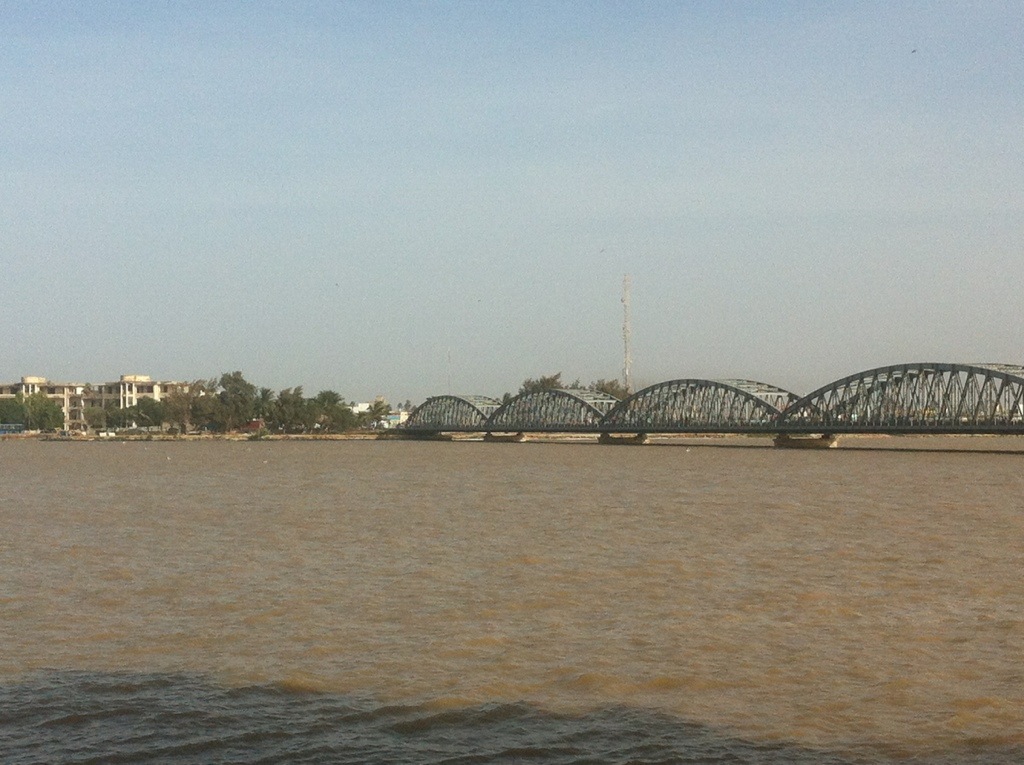
Now came the Senegalese side of the border. But first we had to pay a fee to cross the bridge. This was to be paid either in CFA or in Euro, but it was twice as expensive in Euros. We didn’t have CFA so we were shown where we could get them changed; passed the customs and police, inside the coffee shop. Here we were, walking into Senegal with no one even seeing us, let alone caring. If it wasn’t for the bikes we could have continued walking all the way to Saint Louis!

Now that the bikes were on the Senegalese side of the river we had to contend with the Senegalese police. A very official man in a football outfit watching Arsenal playing Fulham on tv. We tried to hook him by talking football but he was a nasty one. He needed 10€ per bikes to let us in. “Its official, everyone has to pay”. There seemed to be a pattern here… He wasn’t budging and after we argued about us having a reservation or not for our first night in Senegal Louise became the good cop, said we were very sorry we didn’t have a reservation, picked my passport from his desk and pushed me away. He had already stamped everything and he was missing good action on TV so we walked away without giving him a dime. We’ll done Louise! 0€.

The last official process was to get a temporary import for the bikes. This was to be done at the customs and I was concerned about this. I had read many different and conflicting tales about how, without a carnet de passage for the bikes (warranty paid at home) we could be made to pay a high price. I had also read that they didn’t give “passavants” to bikes older than 5 years old. But to our surprise the custom officer was very friendly and professional and gave us a 48h temporary import document for which he asked the equivalent of £12 for both bikes. Seemed legit to me. We had to get it prolonged in Dakar or Saint Louis as he didn’t have the authority to give us more time.

We now went back to our friend the coffee shop owner/currency exchange agent/ lady who bosses everyone around to get our very official looking insurance documents for the bikes. This lady was extraordinary, she wore a beautiful African dress with big sun glasses, two mobile phone and a calculator. She was obviously in charge as she shouted orders at the “helpers” who hung around there. She was very nice to us but she was a keen business lady. The cost of insurance for 10 days was the equivalent of 30€ for the two bikes.

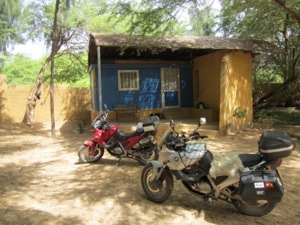
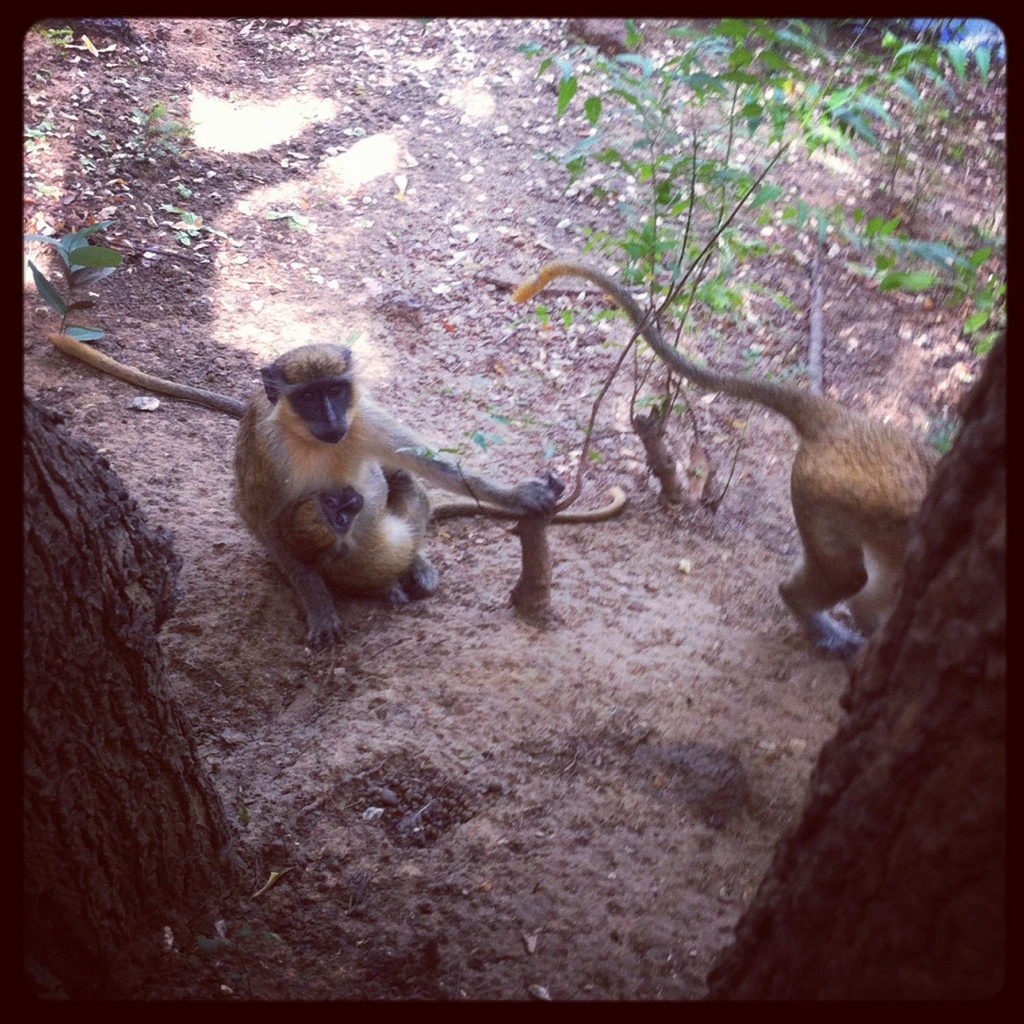
We’d done it! We were in Senegal with our bikes! What a relief. And what a contrast too; the road was in perfect condition and the 30km to Saint Louis were a breeze. So many things were different on this side of the border; we saw many young men jogging along the road, lots of women (had hardly seen any since entering Western Sahara) wearing exuberantly colorful dresses and jewelry. The vegetation was lush, bananas were growing on trees, and roadside traders were selling all sorts of beautiful fruits. We were waved through checkpoints by gendarmes who gave us a welcoming salute and a big smile. After crossing Saint Louis, on our way south to the famous Zebrabar, we came across a colony of apes jumping across the road and into the bush. After weeks in North Africa and in the Sahara we were now truly in West Africa!

20121112-171110.jpg

The Diama piste shortcut…

“150km south of Nouakchott, turn right after the water tower” said one man… it took us a while to find the shortcut but did so eventually. This was after a stop to refuel in a small market village on the way. The fuel pumps looked new but weren’t working. Thankfully the owner had some barrels at the back and we bought 10 litres of his finest “sans plomb”. It was comedy though when he asked me to hold the barrel high above the bike while he sucked the petrol out of a length of hosepipe; he wasn’t very competent at this as he did get a couple of mouthfuls. What wasn’t comedy is when he spilled petrol in Louise’s helmet which was hanging upside down from the handlebar… Schoolboy error. Louise had to stop a couple of km later as she felt her forehead burning and we proceeded to wash her helmet liner with shampoo by the side of the road. 24h later her hair still had a faint petroleum scent to it. Does this make her a ‘petrol-head’?

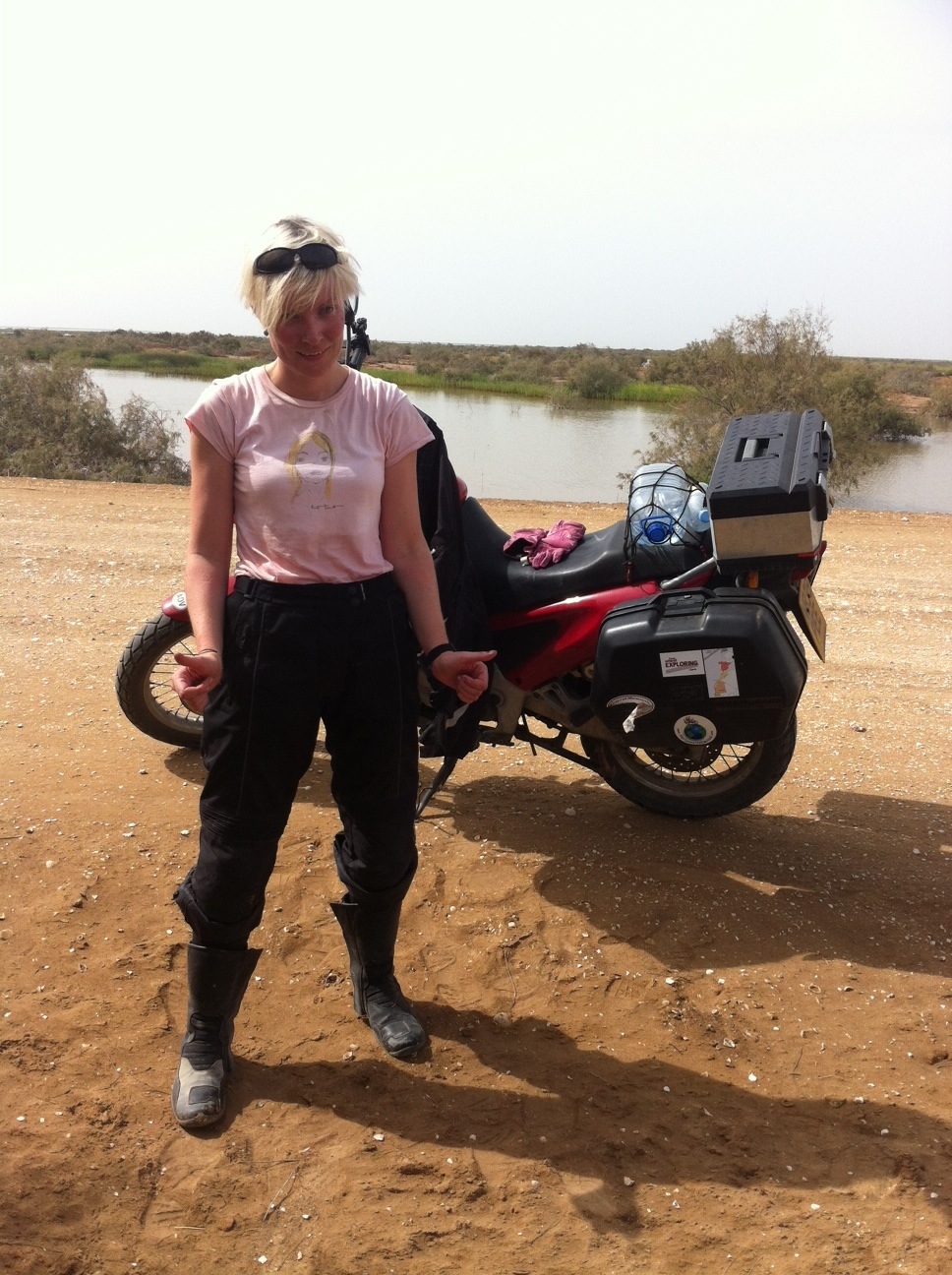
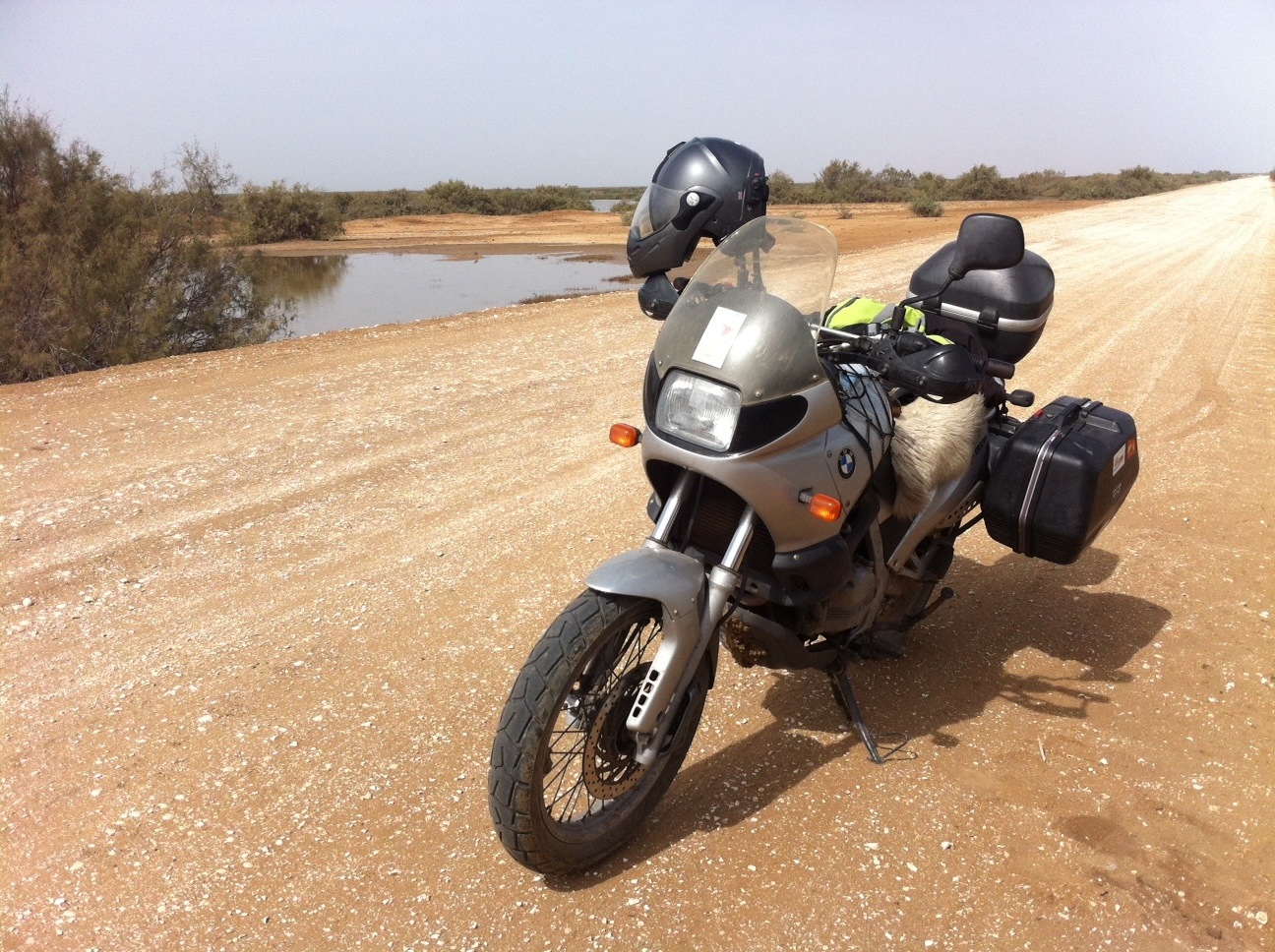
All this delayed us and we only made it to the shortcut around 11am when the sun started beating down on us. The track wasn’t as good as we’d been told. In fact there were two tracks. One was an old track made of dried mud and patches of soft sand, the other was a road under construction which was composed of packed gravel and white sand… We battled with the first track, then tried our luck with the road under construction but the further we went the softer the sand became. I was really impressed by Louise’s riding skills in soft sand, she was nimble and did good progress. I, on the other hand, was trying too hard and battling against the bike. I exhausted myself to a point at which I actually became quite worried about my health; I was out of breath and overheating, there was no way I would make it to the end if I continued like this; I was on the verge of a heat-stroke. We took a 20 minutes break under a tree, I stripped down to my undies and cooled down. The 6 litres of water we were carrying were now down to about 1.5L. Louise then did a recce and found that the mud track which was running parallel was now better so we crossed over to that one. It was indeed easier to ride on but still challenging.

All this was forgotten in the blink of an eye when, after a sharp turn 20km from the border we found ourselves in the delta of the Senegal river and its luxuriant tropical swamp. We cheered when we saw ponds with waterlilies and reeds and I nearly crashed when, through my helmet intercom came the screeching noise of Louise shouting “WARTHOGS!!”. She had spotted 3 of them running into the mangrove. We saw hundreds of cranes, pelicans, cormorants and an eagle. Then we reached the border…

20121112-170437.jpg

20121112-170547.jpg

NKT

(pictures to follow soon

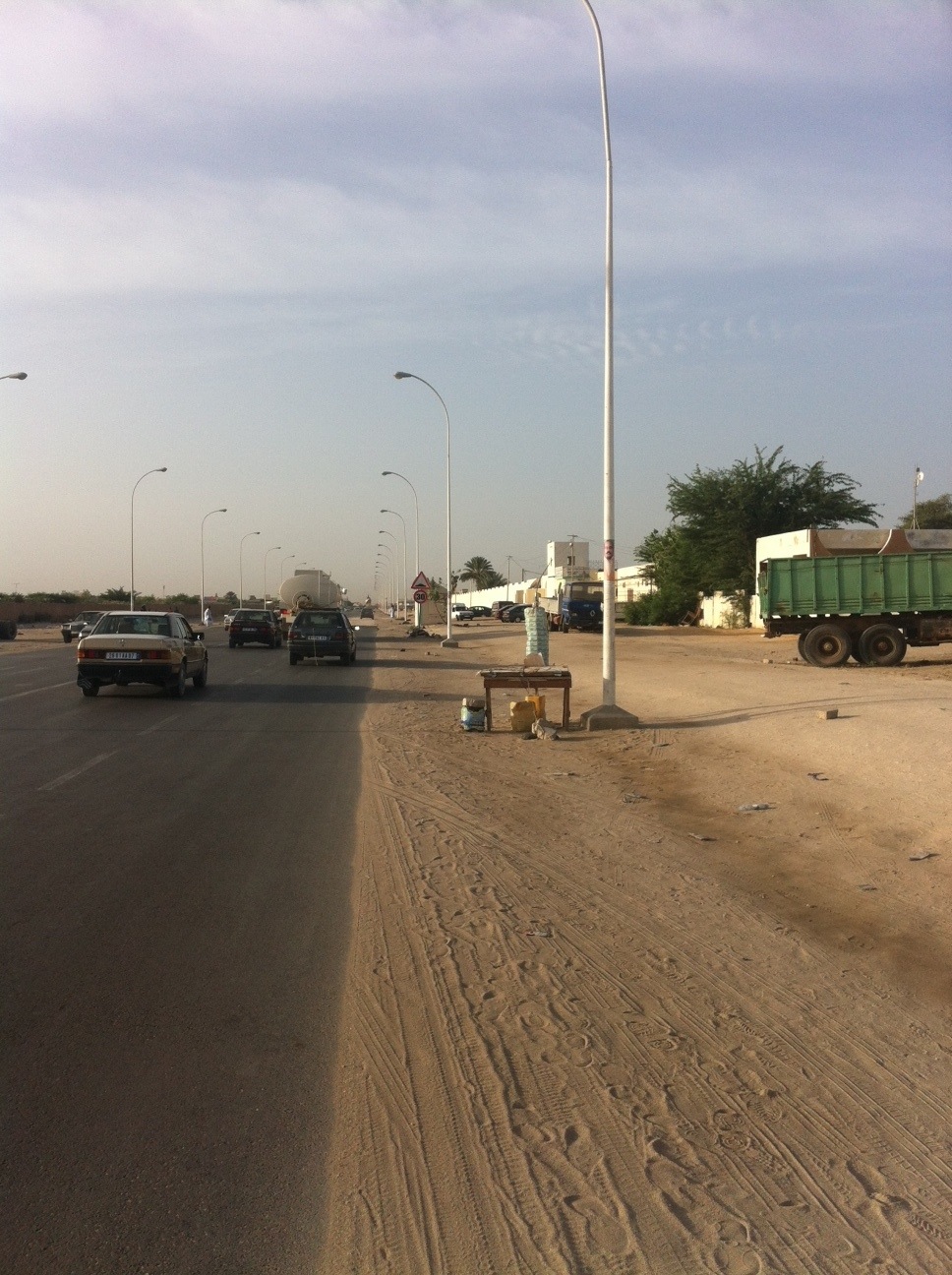
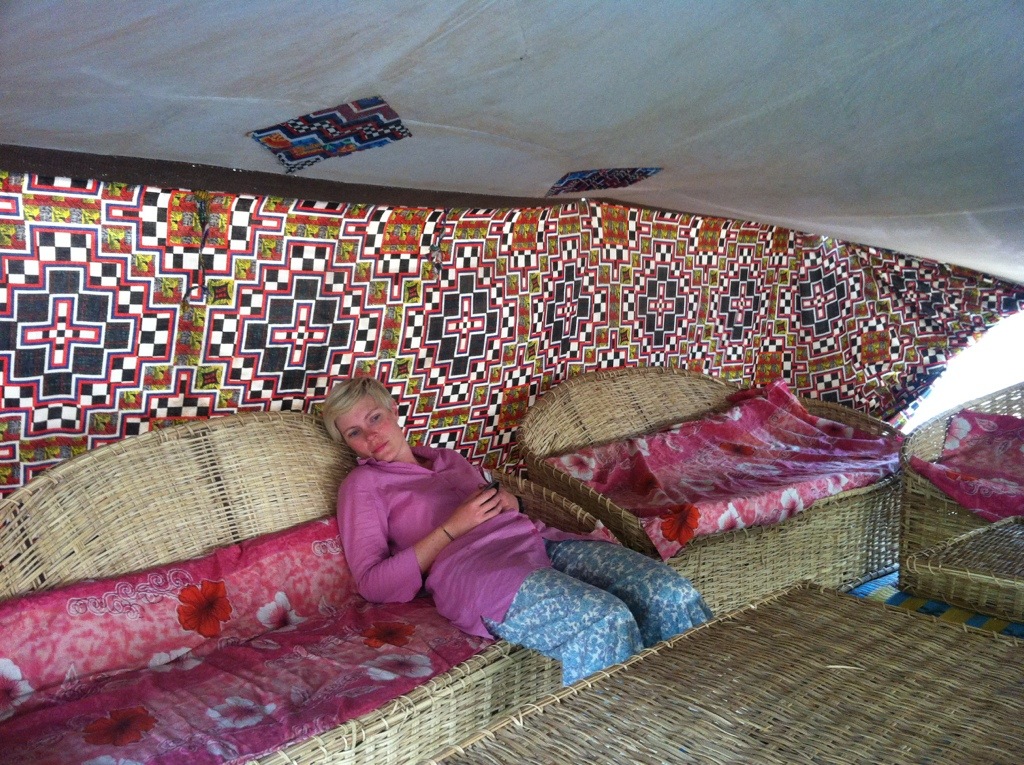
Nouakchott is interesting to say the least, an experience in itself. It is the capital city of one of the five poorest countries in the world, where a scandalous proportion of the population lives in slavery. There seems to have been absolutely no urban planning and the few tarred roads we rode on had potholes the size of a small car. I’ve been in many poor countries before and there is always an interesting history to cities; faded glory or at least evidence of a semblance of organisation in their past, but not here. I can’t begin to describe how poor, bleak, hot and dusty Nouakchott is. Thankfully we stayed in Auberge Sahara which is a little haven. They fed us a nice dinner of vegetables which we had been craving for a few days (there’s only so far one can go on white bread and omelettes). They also had air conditioning and loo paper; the height of luxury.
br />;
20121112-170058.jpg
During dinner we met a group of middle aged French men who were also on their way to Senegal. From the conversations I overheard I could make out that they were married to Senegalese women… nothing wrong with that, but quite interesting when one was the size of his van and the other one had glass lenses like the bottom of coca cola bottles…and a gold chain around his neck. Anyway, I digress, they were very friendly even-though they were carrying a bottle of pastis with them which they didn’t offer to share. We exchanged stories and they spoke about a new shortcut to the track that leads to the border crossing of Diama. There are two border crossing to Senegal; Rosso, which is notorious for its corrupt officials, aggressive touts and where daylight robbery is rampant, and Diama, where little traffic passes as it is at the end of a 90km dirt track. We had made up our mind long ago to cross from Diama but knew that the track would take us a while to complete as we are not experienced off-roaders. So the promise of an easy shortcut to the track which would nearly halve the 90km was alluring. We took note and decided to find it in the morning<;

20121112-170305.jpg

Mauritania propper

(pictures to follow soon)

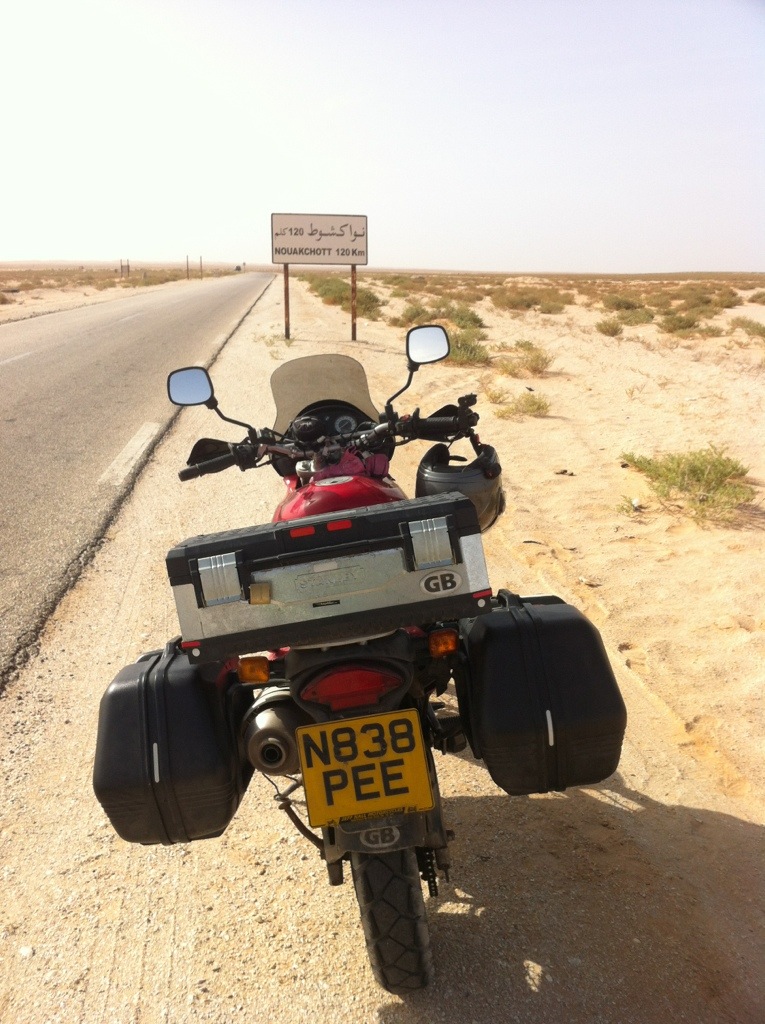
After a bad night’s sleep camping on a sand dune behind the petrol station we made an early start towards Nouakchott, the capital of Mauritania. It was only 250km away and so it was easy riding. We saw different faces of the Sahara desert with rolling orange dunes and flat stretches of white rocks with a sprinkling of vegetation. This was a comparatively deserted desert though, from the border to the capital we only crossed a couple of villages; settlements along the road really. Their wooden shacks were leaning in the same direction as the wind and people were sitting idle in front of them. We did note though that they all had decent cars parked next to them. It was interesting that the Mauritanian desert also felt poorer than that of Western Sahara; as soon as we had crossed the border the roadside was littered with burned out/crashed cars and decomposing bodies of camels and donkeys. I don’t know the explanation for either but suspect that the former may be the result of a late night/high speed encounter with the latter…

Arriving in Nouakchott was very interesting; we weren’t prepared for the heat. I suspect it was in the high 30s Celsius, which is mild there, but nearly unbearable for us riding in all our motorcycle gear. We stopped at a petrol station and were surprised that the pump attendant wanted to buy our euros. Talk of confidence in the local currency! This was the second station we visited though, the first one didn’t have unleaded petrol and the attendant barely got up from the oil stained mattress on which he was napping, right by the pumps. He had been bothered a few moments before our arrival by a man on a camel… Was he picking up diesel for his car? We don’t know but it was funny to see a camel waiting at a petrol station.

20121112-170002.jpg